Objectif 4 2017-2021
Contribuer à la consolidation de la paix, à la prévention des conflits et à la sécurité
L’UIP a été créée sur la base d’un constat: le dialogue est crucial pour la résolution pacifique des conflits. Plus de 130 ans plus tard, le dialogue interparlementaire contribue toujours à éviter les conflits et à rétablir la paix dans le monde. Ce dialogue peut aider les parlements à défendre l’état de droit et à lutter contre le terrorisme. En contribuant à la paix et à la sécurité dans le monde, les parlements peuvent jouer un rôle fondamental dans le développement socio-économique.
Au cours des cinq ans de sa Stratégie, l’UIP a accompagné les parlements en renforçant leurs capacités en matière de législation, de préparation des budgets nationaux et d’exercice du contrôle parlementaire. L’UIP a également soutenu les parlements dans leurs efforts de lutte contre l’extrémisme violent et le terrorisme, et d’action sur le désarmement, la non-prolifération et la maîtrise des armements.
Promoting cooperation and co-existence
Parliaments help to build peace and resolve conflict through dialogue and their legislative, oversight and representative functions. The IPU has a special role to play in countries at risk of conflict and, during the period in question, supported parliaments in Burundi, the Central African Republic, Guinea Bissau, Madagascar and Mali, recommending solutions to help end the countries’ political crises.
Parliamentary diplomacy can help protect international peace too, building bridges where governmental initiatives have failed. On this basis, the IPU facilitated talks between North and South Korea, and between the two communities of Cyprus. It also supported parliamentary discussions in the Middle East, unlocking concrete measures to tackle the water crisis and to prevent further regional instability.
Countering terror and pursuing disarmament
Peace and security are fundamental pre-conditions for development. For more than 20 years, the IPU has supported parliaments in tackling global terrorism and developing parliamentary strategies for comprehensive disarmament, non-proliferation and arms control.
Following its resolution on Terrorism: The need to enhance global cooperation against the threat to democracy and human rights, the IPU established a formal body, the High-Level Advisory Group on Countering Terrorism and Violent Extremism (HLAG). The HLAG serves as the global focal point for parliamentary work on counter-terrorism and the prevention of violent extremism, promoting cooperation and information exchanges. It also facilitates dialogue between MPs and experts and guides the Joint Programme on Countering Terrorism and Violent Extremism, a tripartite programme involving the IPU, the United Nations Office on Drugs and Crime (UNODC) and the United Nations Office of Counter-Terrorism (UNOCT).
The joint programme has organized counter-terrorism conferences for the African, Middle Eastern and Asia-Pacific regions and supported the establishment of a parliamentary committee to combat hate speech and extremism in Egypt.
In 2021, the joint programme also organized the First Global Parliamentary Summit on Counter-Terrorism, which highlighted parliamentary efforts to support the victims of terrorism as well as to prevent terrorism, radicalization and hate speech. The Summit saw the launch of the Call of the Sahel appeal for resources to fund specific projects in the region aimed at preventing terrorism. The Summit also saw the IPU unveil a suite of digital tools, including an interactive map and mobile application, allowing parliamentarians to coordinate their counter-terrorism legislation and strategies.
Model legislative provisions (MLPs) were an important initiative of the joint programme, offering a basis against which to review existing laws and procedures to protect the victims of terrorism. The MLPs were developed in line with the latest thinking to help countries without legislation on this issue. They help with the sharing of best practices and draw attention to the urgent needs of terrorism victims.
On disarmament and non-proliferation, the IPU supported parliaments and UN Member States to operationalize their commitments. Working with partners, the IPU ran various campaigns between 2017 and 2021 to raise parliamentary awareness of the UN’s disarmament treaties.
These campaigns led several countries to sign or ratify both the Comprehensive Nuclear-Test-Ban Treaty (CTBT) and the Treaty on the Prohibition of Nuclear Weapons (TPNW). The IPU also mobilized MPs to engage with UN Security Council Resolution 1540, preventing non-state actors from accessing weapons of mass destruction. Finally, the IPU helped to eradicate illicit arms flows by encouraging parliaments to sign or ratify the Arms Trade Treaty (ATT).
To support the UN Secretary-General’s new disarmament agenda, the IPU helped produce a guide, Assuring our Common Future, explaining disarmament and highlighting examples of successful treaties and policies. Subsequent webinars showed the role that MPs can play and outlined the links between disarmament and sustainable development, including climate protection. Complementary digital products were designed to highlight the link between parliaments, good governance in the security sector and human development.
“Faced with pressure to decrease military defence spending, governments acknowledge that threats like the COVID-19 pandemic cannot be handled with military- type responses and there is a clear imperative to shift budget priorities to meet the new challenges”.
Anusart Suwanmongkol Senator from Thailand
(April 2021)
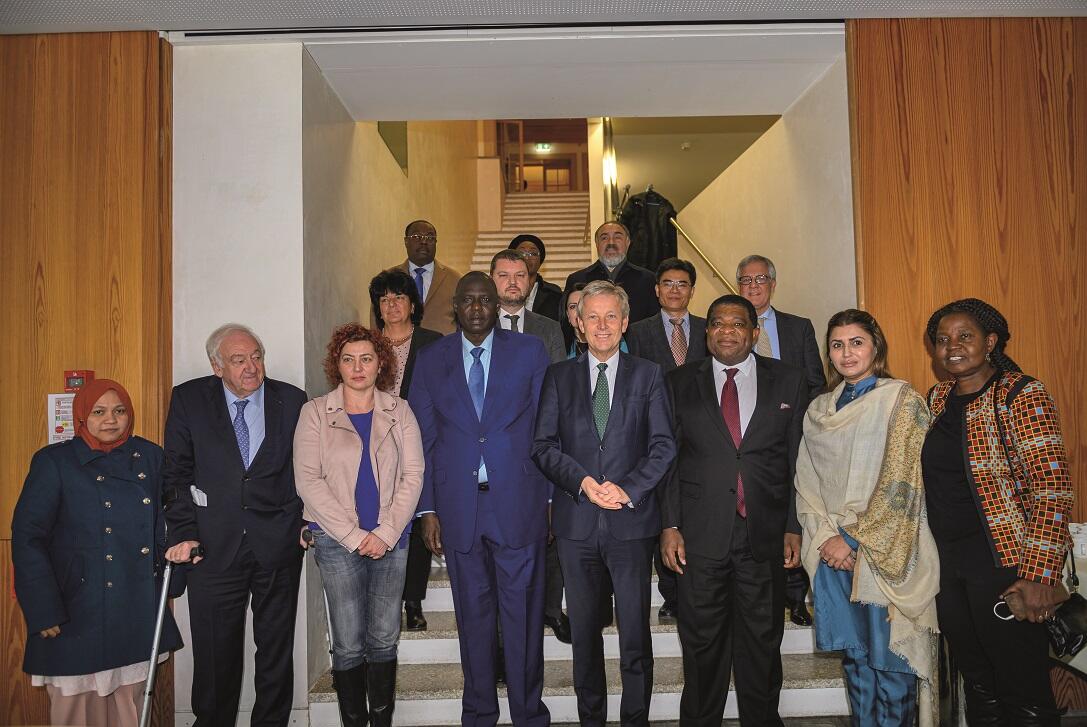 In January 2020, the IPU held the fifth meeting of the HLAG, in Geneva. The HLAG serves as the global focal point for parliamentary work on counter-terrorism and the prevention of violent extremism. © IPU/Pieyre-Bernard Castelier
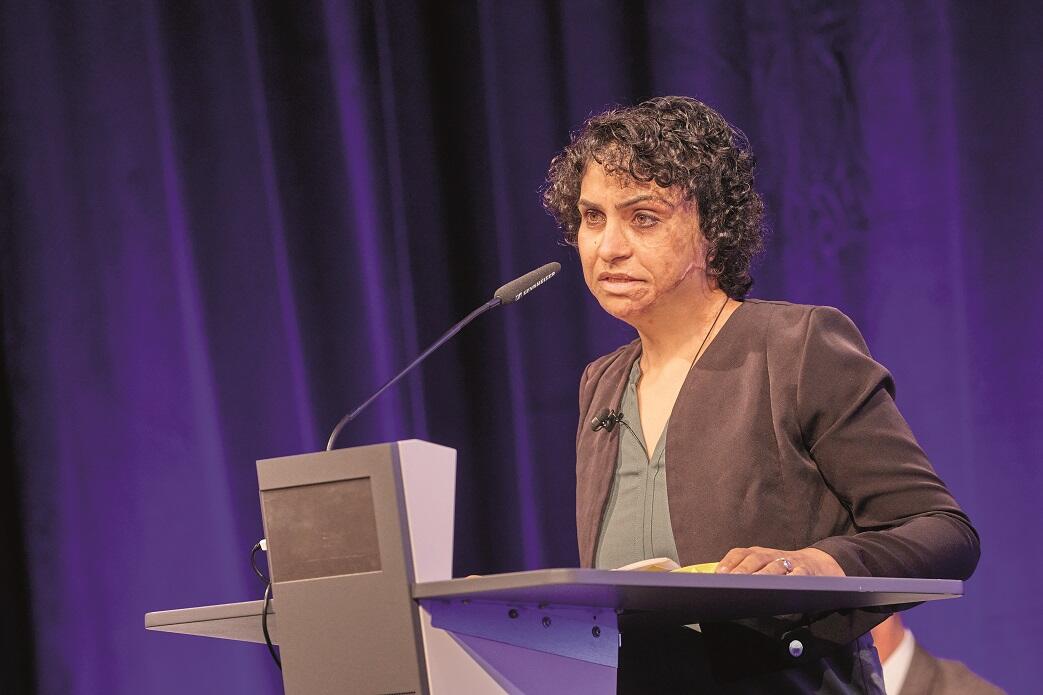 Nadia Ghulam Dastgir, a victim of terrorism in Afghanistan who spoke at the First Global Parliamentary Summit on Counter-Terrorism. © Parlamentsdirektion/Thomas Topf
Étude de cas
Disarmament to advance sustaining peace; implementing the human security approach
IPU activities on disarmament, non-proliferation and arms control link to a broader prevention agenda, which is based on the principle of humanity. The latest parlia- mentary guide on disarmament, Assuring our Common Future, opens doors to discussion of the need to reduce military spending in favour of long-term investments in health, education and social security.
L’impact de l’UIP
Innovation, science and technology for peace
The 2017 Middle East parliamentary roundtable on water showed how science-based solutions could transform disagreement and conflict into opportunities for cooperation and co-existence. It paved the way for the launch of the IPU Science for Peace Schools and the establishment of a Working Group on Science and Technology. Partnerships with CERN and the Geneva Science and Diplomacy Anticipator (GESDA) reinforced the IPU as a platform for parliamentary cooperation on science and technology.