get involved
You have a right to say how much you want to change or reshape your life, your community and country. Whether you are a voter or elected office-holder, use International Day of Democracy to engage positively with political change.
Six ideas to get you started
1
Embrace digital technology
As a legislator, you can strengthen your voice and express yourself more frequently through social media and other digital channels where more and more of your voters are active. In many countries, you can learn quickly about the nature and benefits of new communications technologies and how to use them to connect with your constituents.
2
Seek out your elected representatives
As a voter, you can get tips from your MP on how to strengthen your voice. Parliamentarians are well-versed in many practical and useful matters of political organization. Your city or region will have representatives in parliament who are likely to respond positively to requests for advice and assistance from constituents like you.
3
Request advice on political organization from the experts
When asked, many parliamentarians will help citizens develop political platforms and the skills to campaign democratically for the causes and issues they support. Voters can use more and more online resources to help study how this is done, through real-life examples from different countries and cultures.
4
Illuminate some basic issues of democracy
15 September is a good day to discuss key issues facing democracy. These include how to promote mutual respect and dialogue with opponents, honest governance, accessible and accountable parliamentarians and parliaments, the effective participation of women, the young and minorities in local, regional and national politics, and how to make elected officials more responsive to voters' demands and expectations.
5
What and where: Be creative
Strengthen your voice by speaking up at public events. Sporting events with big crowds are good places for a short International Day of Democracy message. Radio and television broadcasts are especially effective at reaching large audiences, but local print media can also work well. You can raise the profile of International Day of Democracy in your town or village meetings, or perhaps stage a play with song and dance at a festival. Popular concerts are another good way to promote an event, especially if the performers themselves mention it during their performance. You can do this anywhere: out in the open, in schools and other public buildings, in village squares, universities, markets and shopping centres.
6
Make it relevant
International Day of Democracy is best when it reflects the reality of your country, culture and society. Express yourself and your aspirations in your event to mark the day, ideally through specific messages, posters, broadcasts, and publications that speak to your fellow citizens. Please see our Resources page for materials that can be adapted to your situation and distributed as you see fit.

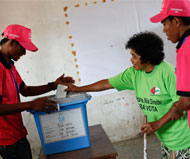
Parliamentarians can help citizens develop political platforms and the skills to campaign democratically for causes and issues.
democracy fact
102
parliaments have celebrated the International Day of Democracy since 2008
TWITTER AND FACEBOOK
Join the conversation on Twitter using #democracyday or on IPU’s International Day of Democracy Facebook page.
IMPROVING PUBLIC PARTICIPATION FROM DEMOCRACY: IDEAS FOR PARLIAMENTARIANS
International Day of Democracy provides a special opportunity for parliaments around the world to engage citizens in discussions about parliament and democracy.
Consider organizing a special event in commemoration of International Day of Democracy. More than 100 parliaments have organized such events in previous years – ranging from open days to essay-writing competitions, radio programmes and parliamentary debates.
You can find someinteresting examples of parliamentary activities from previous International Days in our Events page.
You may also wish to approach the local offices of the United Nations – and in particular the UN Development Programme – to explore possibilities for partnership to mark this important day.
Some ideas for activities follow – but remember that Democracy Day is often best when it reflects your own country, culture and society. What are your ideas? How can you make a difference?
Activities by parliamentarians
- Meet with citizens. On or around 15 September, invite people to a meeting at your office or in a symbolic place related to democracy. The theme could be, for example, a debate on how to enhance dialogue between yourself and the citizens you represent; citizens' proposals for the medium-long term priorities of their constituency; or a discussion on the state of democracy in your country, and how to strengthen it.
- Put forward a motion in parliament. Table a parliamentary motion, question or other parliamentary procedure about International Day of Democracy. Ask the executive to explain how it intends to celebrate this special day, or to deepen the culture of public participation for democracy in your country.
- Talk with young people. Visit local schools to discuss the meaning and practice of democracy, and how young people can get involved. Take part in an online discussion about the work of a parliamentarian and why it is important for young people to participate in politics. Invite schools to organize activities such as exhibitions, contests or special lessons on democracy.
- Be an example of dialogue and inclusiveness. Use Democracy Day as an opportunity to do something that you might not normally do. Organize a joint activity with your political opponents to educate people about the role of a parliamentarian; meet with civil society groups that are critical of your action as a parliamentarian; or hold a meeting with members of the most politically-marginalized groups in society.
- Be accountable to your constituents. Publish a special brochure or newsletter with a summary of your work as a parliamentarian this year, and make it available in print and online. Distribute a record of how you voted on key bills, and an explanation of the reasons for your decisions.
- Contact the media. Issue a press release expressing support for International Day of Democracy. Talk with journalists from television, radio, print and online media. Invite journalists to follow you for a day as you meet with the citizens you represent.
- Tell people about International Day of Democracy. Use your website, social media, face-to-face meetings and other channels of communication to let people know about Democracy Day, and how you plan to celebrate it. Include a link to IPU’s Democracy Day website.
- Mobilize your political party. Contact your party leadership and/or communications team, and propose that your political party issues a statement, organizes an activity, or celebrates Democracy Day in some other way.
Activities for parliaments
- Celebrate International Day of Democracy in parliament. Organize a special plenary debate and invite all political groups to exchange their views on the state of public participation for democracy within parliament or within society; adopt a parliamentary motion/resolution in support of the day; set up a cross-party working group to examine progress and challenges in terms of public participation in political culture.
- Engage in a broad discussion about developing a culture of dialogue and inclusiveness. Bring together politicians, representatives of civil society, academia and journalists to make proposals for actions to develop public participation for democracy. Engage with civil society organizations that work especially on the issue of parliament (also known as "parliamentary monitoring organizations").
- Organize an Open Day. Several activities – such as guided tours, exhibitions, meetings with parliamentarians and mock sittings – could be carried out during an Open Day in parliament.
- Launch a Democracy Day competition. A competition could involve creating artwork, writing essays, making videos or taking photos related to the theme of democracy and/or public participation. The competition could target schools or universities, and culminate in an exhibition at parliament, where the best entries are displayed and prizes awarded.
- Communicate about International Day of Democracy. Use the parliamentary website, communications service and social media such as Facebook and Twitter to inform citizens and invite them to get involved in the day and the work of parliament more generally. Link to information available at IPU’s website.
- Work with the media. Many parliaments have used radio programmes, televised debates, press releases and newspaper interviews to promote previous International Days of Democracy. National broadcasters, private media and parliament’s own communication channels all help to raise awareness of the role of parliament in democracy.


Suggested issues for discussion at International Day of Democracy events
- How can your country increase public participation for democracy?
- What opportunities are there for citizens to take part in parliamentary work – both individually and through civil society groups? How widely used are they?
- To what extent is the right to participate respected by your government?
- To what extent is this right and responsibility exercised by citizens?
- Who is participating? Who isn’t – and why?
- Are there sections of society who are not taking part or who are excluded? For example, women, young people, minorities, indigenous peoples or those living with disabilities?
- What could be done to remedy any shortcomings?
- What new channels – whether formal or informal – could be established for increasing public participation for democracy?
- How does parliament interact with civil society groups? How could this interaction be improved?
- Would it be helpful to establish parliamentary quota systems – to attract a more diverse range of people from across society and to show that parliament is responsive and accessible?