Impact
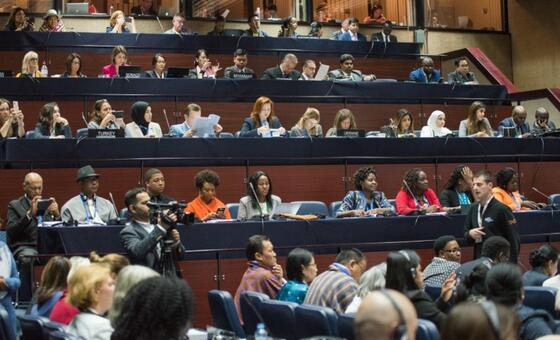
L'UIP facilite la diplomatie parlementaire et donne aux parlements et aux parlementaires les moyens de promouvoir la paix, la démocratie et le développement durable dans le monde.
Background
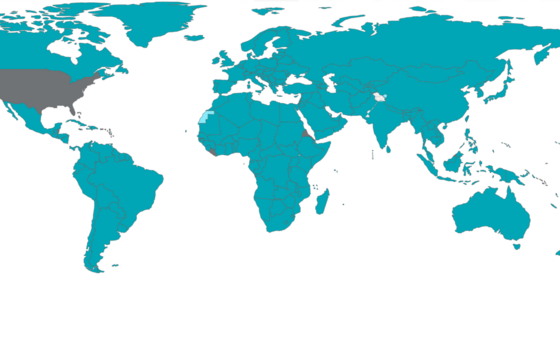
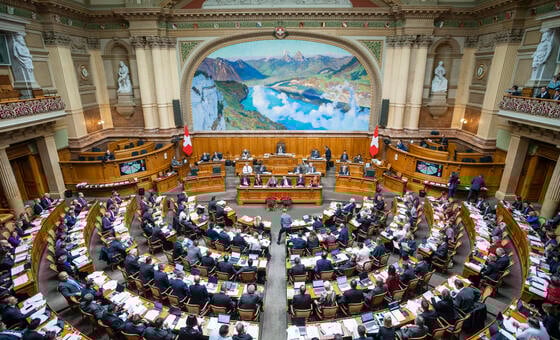
The Inter-Parliamentary Union (IPU) is the global organization of national parliaments with a membership of 181 Member Parliaments and 15 Associate Members. The IPU promotes democratic governance, institutions and values, working with parliaments and parliamentarians to articulate and respond to the needs and aspirations of the people. It works to promote peace, democracy, human rights, gender equality, youth empowerment, climate action and sustainable development through political dialogue, cooperation and parliamentary action. The IPU has supported over half of its members to strengthen parliament capacity to perform their functions. The IPU collaborates with the United Nations Development Programme (UNDP) both nationally and globally for over 40 years. UNDP and IPU are collaborating on a UNDP programme in the region to support Pacific Parliaments.
UNDP has been supporting more than 60 parliaments globally to strengthen parliament as an institution of good governance, inclusive development and public accountability.
In the Pacific, the UNDP Pacific Office (PO) has been supporting Pacific Parliaments to fulfil the core functions of parliaments of law-making, oversight and representation. The PO has supported Pacific Parliaments to reform the parliamentary professional service, provided trainings and activities to strengthen parliamentary library and research services, provided policy support with a focus on SDG advocacy, supported the production of Budget Briefs for members to assist with informed debates on the national budgets, increased opportunities for citizens and CSO engagement in the work of parliament, built capacities for members and staff on substantive and procedural issues as well as skills such as public speaking, dealing with the media, debating, and codes of conduct, supported the development for institutional frameworks to ensure that parliaments have sufficient power and independence to contribute to democratic development.
MPs face significant online harassment and violence that undermine their participation and safety in political life. IPU’s report on When the public turns hostile: Political violence against parliamentarians, shows that 71% of MPs surveyed reported having experienced violence from the public. In five focus countries, 65% to 77% of MPs reported online abuse.
Women MPs are particularly affected. Since 2016, the Inter-Parliamentary Union (IPU) carried out a series of studies on sexism, harassment and violence against women in parliament which exposed the nature and magnitude of online violence against women in parliament. In 2025, the IPU, in partnership with the Commonwealth Parliamentary Association (CPA) and the ASEAN Inter-Parliamentary Assembly (AIPA) published the report Sexism, harassment and violence against women in parliaments in the Asia-Pacific region, which highlights an alarming increase in online gender-based violence compared to the levels reported in previous IPU regional studies. The IPU study finds that no country in the Asia-Pacific region has adopted legislation specifically addressing violence against women in politics, and that 12 countries have adopted laws against cyber harassment targeting women, however few of these cover sexual harassment or the most harmful and widespread manifestations of gender based technology-facilitated violence (TFGBV).
To support parliaments in addressing TFV, there is a need for a regional practical toolkit that provides guidance, strategies, and resources tailored to the Pacific context.
Existing good practices have been identified. In the Pacific region, UNDP Fiji has conducted research relating to online cyberbullying and targeted attacks such as to threaten their work as MPs and willingness to compete for public office. The IPU and the UNDP has recently developed a body of guidance and institutional tools on violence against women in politics and its technology-facilitated forms, which provides a foundation for the regional toolkit from the gender-perspective. In June 2026, the IPU and the United Nations Development Programme (UNDP) jointly published Addressing violence against women in politics: Institutional responses and good practices by parliaments, other products have also been published, including IPU’s report on Combating non-consensual intimate imagery, and the IPU Plan of action for gender parity in parliaments.
Objective
To develop a comprehensive Pacific regional toolkit for parliaments to effectively prevent, respond to, and mitigate TFV against MPs, grounded in the findings of UNDP and IPU research, as well as good practices in sensitive parliamentary support.
Duties and Responsibilities
Under the overall supervision of the Manager, Technical Cooperation Programme of the IPU, the experts will perform the following tasks:
Institutional Arrangements
Duration of the Work
Two consultants will be recruited for this to work up to 17 workdays between 01/10/2026 – 10/12/2026
Duty Station & Travel
Educational Qualifications (Minimum):
Experience:
Excellent written and oral communication skills in English.
Competencies:
Deliverables
Deliverable | Due date |
| Within 14 days of contract signature |
| 15 days following reviewed inception report |
| 15 days following incorporation of feedback |
| 10 days following incorporation of feedback. |
Recruitment principles
Our guiding principle in selecting candidates is to secure the highest standards of efficiency, competence and integrity. We do not discriminate on any grounds and are committed to promoting diversity in our workforce.
Particular attention is paid to candidates from developing countries and to achieving gender balance. We strive to provide an environment where the contribution of each individual is valued.
We ask all our personnel to apply the Common Principles for Support to Parliaments in their work.
We ask all our personnel to agree to our Code of conduct for personnel and our Fraud and corruption prevention policy available at https://www.ipu.org/about-us/working-with-ipu, and our policy to prevent and address harassment including sexual harassment at IPU Assemblies and other events, available at: https://www.ipu.org/about-ipu/structure-and-governance/statutes-and-policies-ipu.
Interested applicants should submit a resume and a covering letter describing previous experience in assignments of this kind. The covering letter should also include a quote for the consultant’s daily rate and confirmation of availability within the timeframe indicated for this consultancy. The deadline for applications is 17 September 2026 at 12.00 CEST. Applications should be sent by e-mail to [email protected] with “Consultant: PPEI-TFV” in the subject line.
Applicants will be contacted only if they are under serious consideration. Applications received after the deadline will not be accepted.