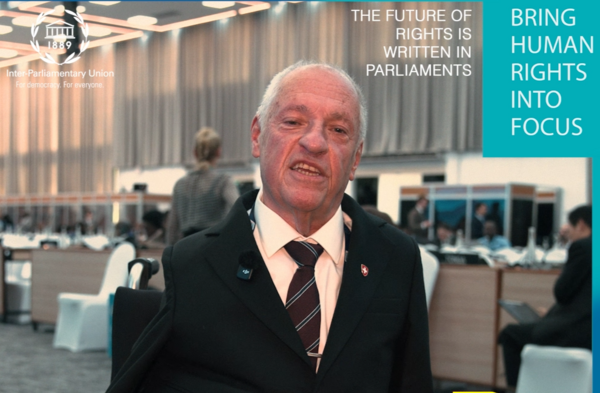
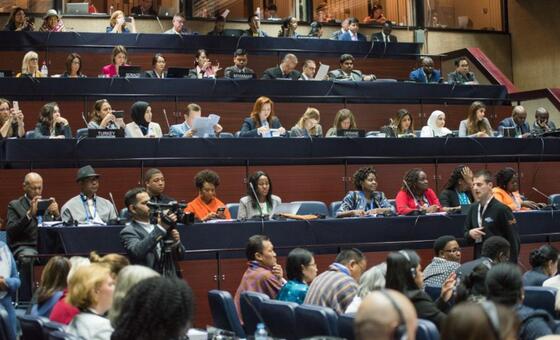
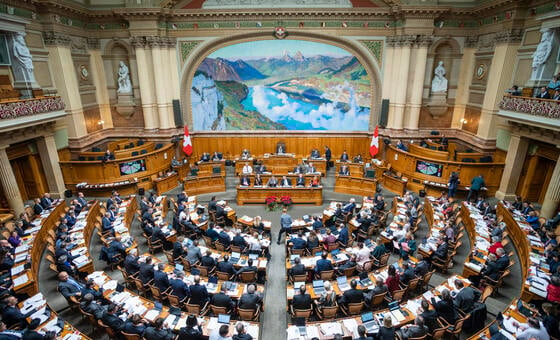
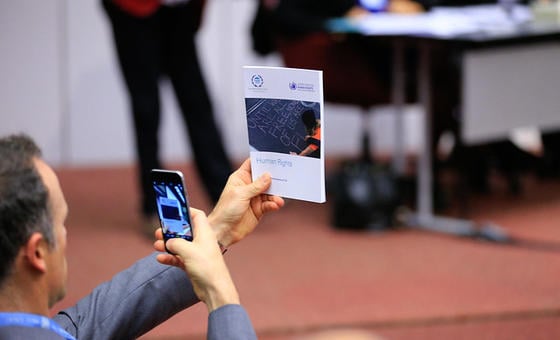
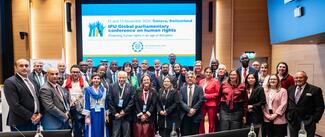
Some 120 parliamentarians, United Nations experts and representatives from civil society groups met in Geneva, Switzerland, on 12 and 13 November for the Inter-Parliamentary Union's (IPU) first Global Parliamentary Conference on Human Rights, under the theme “Protecting human rights in an age of disruption.”
The conference was designed to help parliaments translate international human rights commitments into concrete national action, with a focus on freedom of expression, migration, children, disability, inclusion and the protection of the parliamentarians’ rights.
The central conclusion was that human rights cannot be treated as the responsibility of a single parliamentary committee. Instead they must be embedded across legislation, public spending, government scrutiny and the way parliaments themselves operate.
Conference Rapporteur Ernest Yaw Anim, a lawmaker from Ghana, said parliaments already possess many of the tools needed for action, including hearings, budget debates and oversight procedures. What matters, he argued, is assigning clear responsibility, demanding evidence of progress and returning to issues after initial debates end.
The recommendations from the conference called on legislators to follow up systematically on United Nations human rights reviews; to assess laws and budgets for their impact on rights; and to involve affected communities in policy scrutiny. They also urged stronger protection for journalists, whistle-blowers and elected representatives facing intimidation, while ensuring that measures against online harms do not become tools for censorship.
On artificial intelligence, delegates called for legislation addressing privacy, discriminatory algorithms, harmful synthetic content and election manipulation, alongside transparency, human-rights impact assessments and accessible remedies for high-risk automated decisions. They further recommended child-rights impact assessments, better protection for migrants, and more accessible parliaments for persons with disabilities.
IPU Secretary General Anda Filip said: “Human rights must be made real for the people whose lives are affected. Our discussions on children, migrants and persons with disabilities reminded us that good intentions and legal guarantees are not enough. We need to ask whose voices are being heard, whose needs are reflected in budgets, and whether public policies work in practice. And we must be prepared to look at our own institutions. A parliament that seeks to promote inclusion should also be accessible and inclusive itself.”
United Nations High Commissioner for Human Rights, Volker Türk, said: “Keep human rights at the heart of law-making and public spending. Every new law should be tested against a simple question: will it strengthen people's rights, or weaken them? That matters particularly as governments respond to new and rapidly evolving challenges, including artificial intelligence […] And legislation is only one of the tools at your disposal. Budgets are also human rights instruments: your scrutiny of public spending helps determine whether rights and essential services reach everyone.”