Objectif 8
Combler le déficit démocratique dans les relations internationales
La paix et le développement durable sont les deux sujets qui ont dominé les relations entre l’UIP et l’ONU en 2019, les parlementaires contribuant à relever la barre en matière de mise en œuvre et de sensibilisation. L’UIP a signé un accord avec deux organismes des Nations Unies dans le but de combler les déficits législatifs et de mobiliser l’action parlementaire pour lutter contre le terrorisme et l’extrémisme violent. L’Organisation a obtenu que la réunion parlementaire annuelle sur les ODD acquière le statut de Forum parlementaire s’inscrivant dans le programme officiel du Forum politique de haut niveau pour le développement durable et a joué un rôle de premier plan au Sommet des Nations Unies sur les ODD. Du point de vue politique, l’UIP et les parlements ont fait d’importants progrès en étant officiellement invités par l’ONU à apporter leur contribution à des négociations importantes et de grands événements sur l’égalité des sexes, la participation des jeunes et la couverture sanitaire universelle. Sur le terrain, l’UIP a également contribué à resserrer les liens entre les équipes de pays de l’ONU et les parlements nationaux dans le cadre des principaux processus de développement et de maintien de la paix.
Bringing parliamentarians’ voices to the United Nations
Status matters when it comes to getting things done at the United Nations. A big win for the IPU this year was getting our regular event at the annual HLPF recognized as a full-fledged Parliamentary Forum.This higher status applies to only a handful of the hundreds of side events. It will help give more visibility to the role of parliaments and parliamentarians at the HLPF, the main global accountability mechanism to push the SDGs forward.
The 2019 Parliamentary Forum brought together over one hundred parliamentarians to discuss growing inequality and parliamentary engagement with the SDGs. We explored the results of the annual survey of parliamentary engagement in the voluntary national reviews (VNRs). While the results suggest there is a long way to go for parliaments to contribute to VNRs at the HLPF, the growing number of participating parliaments is a good sign that the VNRs are becoming a household word within the global parliamentary community. While in New York for the HLPF, many parliamentarians also participated in an IPU-UNDP workshop on their joint self-assessment toolkit to institutionalize the SDGs in parliament.
In March, the IPU and UN Women organized the regular parliamentary meeting at the Commission on the Status of Women (CSW) in New York, intersecting with our strategic objective of advancing gender equality and respect for women’s rights. The meeting focused on social protection, public services and infrastructure delivery for women and girls. In addition, we worked with various partners to organize three side events on violence against women, women in decision-making, and women in politics.
In June in Geneva, the IPU and the Office of the UN High Commissioner for Human Rights organized a seminar for members of parliamentary human rights committees. The event discussed parliamentary engagement on human rights and parliamentary involvement in the work of UN human rights mechanisms.
On International Day of Democracy (15 September), we co-hosted an event with the UN Democracy Fund and International IDEA. Entitled Inclusion and participation as foundations of democracy, the event considered how decision-making processes that do not take into account all people and communities, including the economically insecure, contribute to growing income and wealth inequality, disempower people and fuel resentment against the institutions of democracy.
In line with our policy of facilitating the participation of parliamentarians in high-level UN meetings, the information we provided to parliaments also helped bring large numbers of MPs to major UN conferences as part of their national delegations
Representing the IPU in UN forums
The IPU made statements at the CSW, the HLPF, the High-level Meeting on Universal Health Coverage, the ministerial meeting of the Climate Change Conference (COP 25), the ministerial meeting of the Group of Friends of the United Nations Alliance of Civilizations, and a number of other meetings.
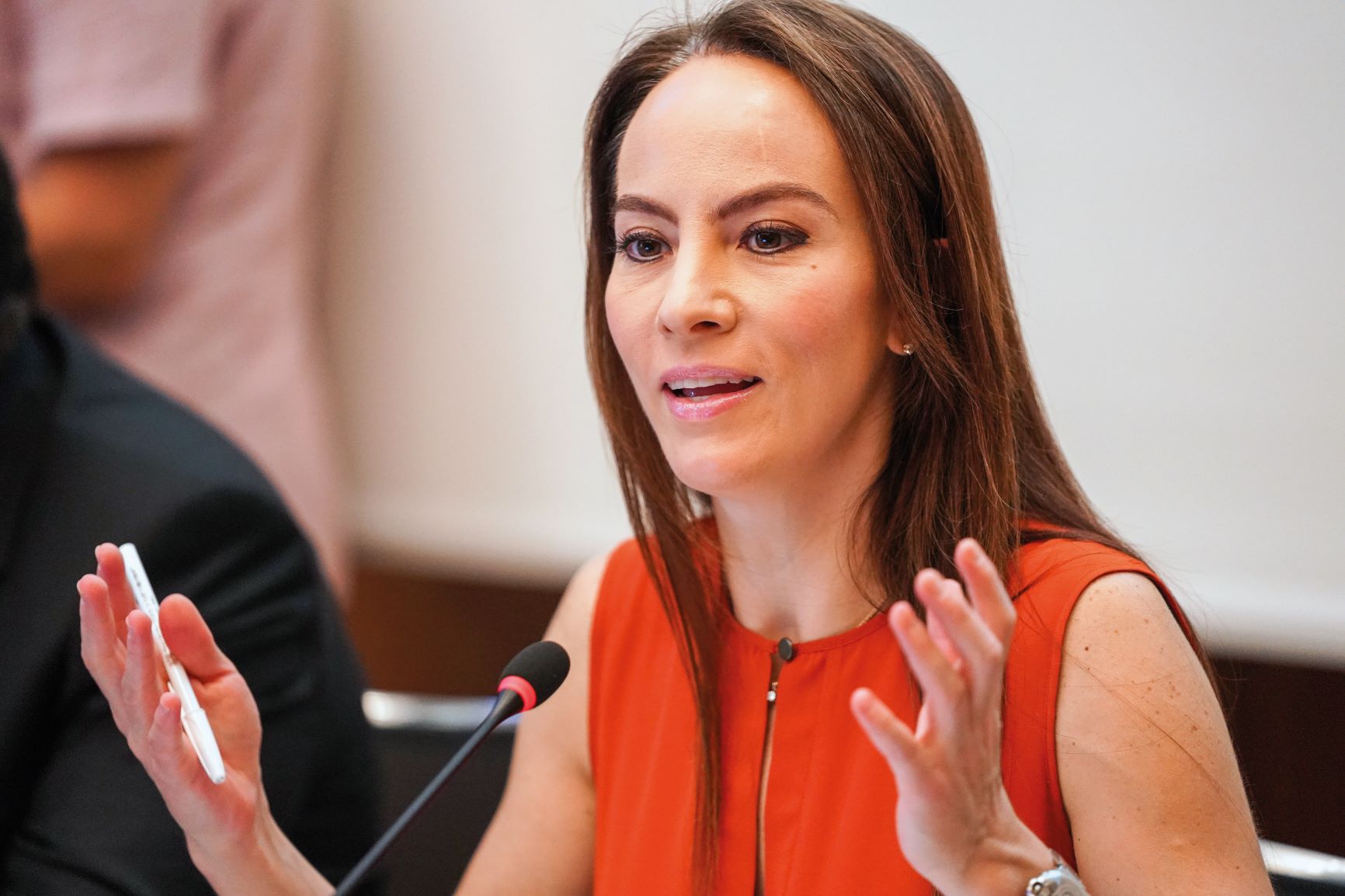
“It is parliaments who are responsible for legislation that domesticates global agendas, sets national priorities and allocates budgets. National parliaments bring global agendas to the national level, and, unless they are fully engaged in the implementation of the SDGs, the SDGs will fail.”
Gabriela Cuevas Barron
IPU President, speaking at the round table on localizing the SDGs
An IPU delegation of young parliamentarians took part in the ECOSOC Youth Forum in April. Entitled Youth: Empowered, Included and Equal, the Forum focused on inclusion as a vehicle of youth empowerment and progress in achieving the SDGs.
But by far the most significant UN event this year for the IPU was the SDG Summit, where Heads of State gathered to review progress and commit to “accelerating” action in the remaining decade before the 2030 deadline. The IPU President was the only parliamentary representative invited to participate in one of the Summit’s seven round tables, on “localizing the SDGs”. The round table was restricted to a small group of Heads of State and one senior UN representative.
Contributing to multilateralism
The 2019 Parliamentary Hearing at the United Nations, a joint IPU-UN event, was held in February in New York. Over 200 parliamentarians attended, and heard from the 73rd President of the General Assembly and the UN Secretary-General. Entitled Emerging challenges to multilateralism: A parliamentary response, the hearing contributed ideas to ongoing UN reforms, many of which focus on its conflict prevention and peacekeeping mandate. More broadly, the hearing delved into the reasons for growing scepticism about multilateralism and how parliamentarians could address it.
The Parliamentary Hearing report was circulated in the General Assembly, providing useful insights for the conversation on the future of multilateralism and of the United Nations which will take place in 2020 to mark the75th anniversary of the United Nations.
Pursuing the work of the Standing Committee on United Nations Affairs
The first Committee session of the year, at the 140th IPU Assembly, provided an opportunity for parliamentarians to share good practices in implementing the SDGs and ensuring they are factored into national budgets and legislation. The focus was on the main themes of the 2019 HLPF: SDG 10 (inequality within and among countries) and SDG 16 (peaceful and inclusive societies for sustainable development, access to justice, and effective, accountable and inclusive institutions at all levels).
At the 141st Assembly, the Committee focused on respect for international law in keeping with the UN Charter and other relevant texts. The Committee also reviewed the results of a new IPU survey on the relationship between parliaments and the United Nations which sought to strengthen the role of parliaments in the implementation of international agreements as well as to help parliaments hold governments to account for their decisions at the United Nations.
Engaging with the World Trade Organization
The Parliamentary Conference on the WTO, a joint initiative of the IPU and the European Parliament, contributed to the 2019 WTO Public Forum through a parliamentary panel on digital trade and the new generation of trade agreements. Speakers included Mr. J. Mudenda, Speaker of the National Assembly of Zimbabwe, Ms. Marie-Pierre Vedrenne, Member of the European Parliament, and Ms. Isabelle Durant, Deputy Secretary-General of UNCTAD.
The 80 participants, including 35 parliamentarians, discussed actions parliaments can take to create an environment that facilitates digital trade while advancing the ambitious objectives of the new generation of trade agreements. They also addressed the relationship between value addition and data use in the digital markets. They stressed the importance of a multilateral trading system and skill development of smaller countries to defend their interests in trade negotiations.
Étude de cas
Strengthening the link between parliaments and UN country teams
Working closely with the UN Development Coordination Office in New York during a total overhaul of the UN’s development system, the IPU succeeded in inserting “engagement with parliaments” in the revised job description of UN Resident Coordinators. Ways in which UN field engagement with parliaments might be mutually beneficial as part of key development and peacebuilding processes were discussed at the annual global meeting of UN Resident Coordinators in November 2019.
L’impact de l’UIP
Impact of the IPU
In 2019, three UN resolutions stressed the role of parliaments thanks to IPU lobbying.
The UN Economic and Social Council (ECOSOC) adopted Technical assistance provided by the United Nations Office on Drugs and Crime related to counter-terrorism, explicitly acknowledging “the important role that parliaments can play in preventing and countering terrorism and addressing conditions conducive to terrorism, and recognizing also the relevance of the partnership established between the Inter Parliamentary Union, the United Nations Office on Drugs and Crime and the Office of Counter Terrorism in that regard”.
Two UN General Assembly resolutions invited the IPU to contribute to a high-level meeting on universal health coverage in September 2019, and to the high-level meeting on the 25th anniversary of the Fourth World Conference on Women in September 2020. Both texts also invited parliamentarians to participate in multi-stakeholder consultations.