
Impact
The IPU facilitates parliamentary diplomacy and empowers parliaments and parliamentarians to promote peace, democracy and sustainable development around the world.



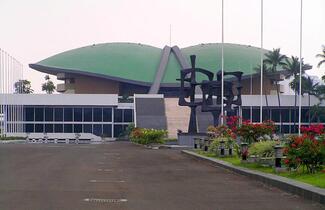
Parliament, Indonesia © Davidelit
Over the past five years, the House of Representatives of the Republic of Indonesia has undertaken a deliberate and structured digital transformation. Rather than pursuing AI as a trend or technological showcase, the institution has advanced methodically, moving step by step from infrastructure consolidation through to the thoughtful integration of AI in parliamentary work. This journey reflects a core principle: AI adoption is fundamentally an institutional readiness challenge, not merely a technological one.
The transformation began with a clear recognition that advanced technologies require solid ground beneath them. Under its ICT master plan for 2020–2024, the House of Representatives prioritized system integration, cybersecurity reinforcement and big data infrastructure. The parliamentary leadership consolidated fragmented ICT systems, expanded bandwidth capacity, and strengthened governance structures by appointing a Chief Information Officer and a Chief Information Security Officer to clarify accountability and coordinate between technical governance and operational units.
This foundational work yielded measurable results. The institution achieved a score of 4.23 out of 5.00 on the SPBE Index, which measures the maturity of electronic-based government systems in Indonesia. It also earned a position in decile 7 of the IPU Digital Maturity Index globally, with particular strength in digital governance. Rather than rushing towards AI experimentation, the House of Representatives deliberately chose to reduce system fragmentation and establish stable infrastructure first. This restraint proved essential: institutions cannot effectively deploy advanced technologies without mature governance systems, reliable data foundations and clear accountability structures.
With infrastructure stabilized, the House of Representatives shifted its institutional focus towards data governance. Data was no longer viewed merely as documentation or administrative by-product; it became recognized as a strategic asset essential to parliamentary work. This reframing catalysed significant developments: the institution established a command centre and big data infrastructure, launched the One Data portal as a central repository, standardized metadata across units and implemented data quality initiatives to ensure cross-unit interoperability.
This phase marked a cultural inflection point. Data governance became central to digital reform, embedding analytical thinking into institutional processes. As structured data management took hold, staff confidence in analytics grew and the institution quietly built the groundwork necessary for AI-assisted tools without yet deploying them. Leadership understood that premature AI integration into poor data environments would undermine both technology and trust.
With governance structures and data foundations in place, the House of Representatives began introducing AI carefully through needs-based pilot initiatives designed to address specific institutional challenges:
Beyond these AI applications, the House of Representatives has strengthened institutional analytical capabilities through a series of integrated dashboards introduced in 2024 and 2025:
Across all these use cases, a consistent principle holds: AI functions as a support mechanism and analytical aid, never as a decision maker. Human validation and institutional oversight remain mandatory. The House of Representatives has deliberately refrained from deploying AI in core legislative drafting systems at this stage, aligning with international guidance and maintaining human expertise at the heart of parliamentary work.
The institution’s forward vision, as articulated in its ICT master plan for 2025–2027, moves towards deeper and more integrated knowledge systems. Under the umbrella concept of “legislative knowledge management”, the House of Representatives is working to connect legislative data, oversight findings and public input into unified systems capable of enhancing pattern recognition and institutional memory. In this phase, AI will support knowledge organization, trend identification and evidence-informed policymaking, always operating within clearly defined governance boundaries and with institutional oversight.
The journey has not been without obstacles. The House of Representatives has navigated challenges in harmonizing data standards across dispersed parliamentary units, integrating legacy systems with modern infrastructure, developing comprehensive AI governance frameworks and ensuring robust cybersecurity and data protection. Building AI literacy across staff has required sustained commitment and cultural change.
Yet the most important lesson has emerged with clarity: AI adoption is not primarily a technological challenge; it is an institutional readiness challenge. Governance clarity, leadership commitment, staff capacity and cultural adaptation determine whether AI creates genuine institutional value or merely adds complexity. By deliberately prioritizing governance and data management before introducing advanced technologies, the House of Representatives has built a more resilient and trustworthy digital environment. This foundation positions the institution to support democratic accountability and transparency even as legislative responsibilities evolve in an increasingly data-driven era.
The transformation continues, guided by a conviction that technology should strengthen rather than disrupt democratic processes.