
Impact
The IPU facilitates parliamentary diplomacy and empowers parliaments and parliamentarians to promote peace, democracy and sustainable development around the world.


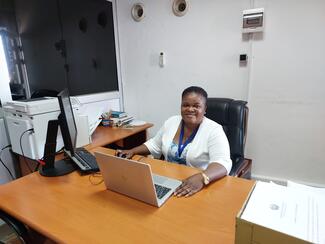
Isabel Aires do Nascimento, IT Manager of Parliament of Mozambique
The CIP team spoke to Isabel Aires do Nascimento, IT Manager of the Parliament of Mozambique, on the potential of the cloud in her Parliament.
The Parliament of Mozambique is yet to move to the cloud. They are focused on getting the right environment and budgets in place to support a future move. They have learned from the experiences of other parliaments that there is a need to plan well and implement incrementally for the cloud to be a success.
CIP: What opportunities (and challenges) do you envision for your Parliament’s use of the cloud?
IAN: The cloud could allow us to provide services in ways that are more reliable, with better uptime, security and scalability. Currently, we are running out of storage space on our servers and it takes time to expand that capacity. Ideally, we would take our email service, website, library management system, e-office and e-cabinet systems and run them all in the cloud. This would make them available to our members and staff with the above-mentioned benefits.
CIP: What are your Parliament’s cloud strategy and ambitions?
IAN: We currently have an IT strategy for the Mozambique Parliament, however it does not include a strategy nor a roadmap for adopting the cloud. Our priorities right now are preparing our basic network infrastructure, establishing our Parliament’s data centre to have our own in-house server capabilities, and providing initial basic IT services to members and the administration, before we can even think about the cloud. On top of that, we have no national regulation that permits us to use the cloud; there is legislation in the works for public institutions on switching to the cloud. So, for now we are focused on our priorities and awaiting the development of the regulatory framework.
Another reason why we aren’t going for the cloud at the moment is that there is an associated cost for which we don’t yet have a sustainable budget. And we can only use the cloud if we have our own local infrastructure to fall back on.
CIP: What did you take away from the Transforming Parliaments webinar?
IAN: Before the webinar, I thought the cloud was doable. Now I believe we need better preparation in terms of developing a strategy, and doing our homework, including getting our data classification in order to better know and decide what records we’ll store in the cloud. Also, we need to think about developing a first small – but impactful – cloud project that will convince key decision makers about the benefits. For example, a cloud project to support the Speaker and the Permanent Committee (Mesa) of the Parliament in their work and demonstrating the benefits of the cloud to them would go a long way.