
Impact
The IPU facilitates parliamentary diplomacy and empowers parliaments and parliamentarians to promote peace, democracy and sustainable development around the world.

Background
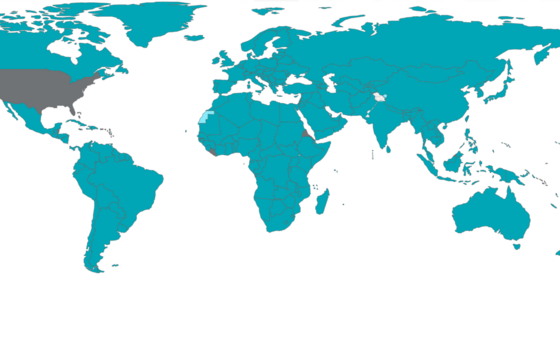
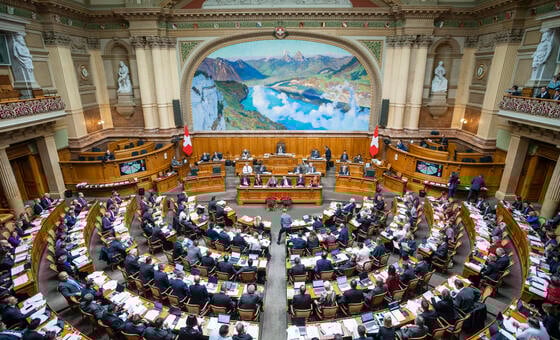
The Inter-Parliamentary Union (IPU) is the global organization of national parliaments. Since 1889, it has worked to promote worldwide parliamentary dialogue, peace and cooperation among peoples, and the development of strong representative institutions. The IPU works with parliaments and parliamentarians to promote democratic governance, peace, human rights, gender equality, youth empowerment, climate action and sustainable development through political dialogue, cooperation and parliamentary action.
The IPU Strategy for 2027-2031 sets the overall goal of democratic parliaments working together for the people. It is based on three interconnected strategic objectives: building strong and inclusive parliaments; facilitating parliamentary diplomacy, dialogue and joint action; and strengthening the IPU as a responsive and accountable organization. The Strategy also confirms four policy priorities for parliamentary action: climate change; democracy, human rights, gender equality and youth participation; peace and security; and sustainable development for all.
The Strategy places particular emphasis on evidence-based work, Member Parliaments’ engagement, accountability, digital transformation, and stronger monitoring and evaluation (M&E) through expanded efforts to track performance and increase organizational impact and transparency.
Data collection and its management are at the heart of the IPU’s work and key to effective monitoring, evaluation and learning. Over the years, the IPU has placed emphasis on increasing its capacity to collect data and information related to its Member Parliaments, their engagement and participation within the IPU; information on Parliaments themselves and their parliamentary practices and follow up to IPU resolutions and decisions, as well as information on the impact of IPU’s work in support to parliaments and on the impact of IPU’s work more generally, among others. This effort has allowed for enhanced M&E but not in a systemic and coordinated way.
About the project
This consultancy is intended to help the IPU translate its commitment to enhanced M&E, and better understanding of its impact, into practical internal processes and systems.
The consultancy will map and assess existing data collection practices as they relate to Parliaments and engagement with the IPU, identify gaps and opportunities, and support the Organization in developing more comprehensive, coherent and inclusive processes, and more effective and user friendly systems, that respond to current and future needs, especially with regard to monitoring, evaluation, learning and reporting, taking into account objectives set in the new IPU Strategy.
The consultancy will examine what and how data is currently collected, for what purpose and how it is stored, analysed, shared and used across the IPU workstreams. It will look at both quantitative and qualitative data, including data generated through activities, surveys, evaluations, reports, beneficiary feedback, research, institutional partnerships, Member Parliaments’ reporting and donor reporting.
The work should be practical and implementation-oriented. It should help the IPU move towards a more coherent and a user-friendly organization-wide process and system, with common tools, clearer roles and responsibilities, improved data quality, stronger feedback loops, and better use of data for learning, decision-making, reporting and accountability.
The work should also support more inclusive approaches to data collection and management, responding to the growing need for more disaggregated approaches to fully capture the perspectives and needs of different stakeholders.
Tasks
Prepare an inception note setting out the proposed methodology, workplan, consultation plan, key questions and expected outputs for the consultancy:
Map, review and analyse existing data collection processes across IPU workstreams, including:
- Mapping of who collects what data, for what purpose, with what tools and frequency, where the data is stored, how it is quality-checked and how it is used,
- dentifying main categories of data currently collected by the IPU,
- Assessing the strengths, gaps, overlaps, risks and challenges in current data practices, including data quality, consistency, timeliness, accessibility, ownership, security, confidentiality, ethical safeguards and usefulness for monitoring, evaluation, learning and reporting,
- Assessing the extent to which existing processes allow the IPU to evidence of IPU impact,
- Assessing the extent to which existing processes allow the IPU to capture inclusion-related information and results, while respecting privacy, confidentiality and do-no-harm principles.
- include clear roles and responsibilities, minimum data standards, quality-assurance steps, feedback loops, decision points and realistic implementation options,
- support the development or refinement of practical tools, such as indicator reference sheets, data collection templates, activity reporting templates, survey and feedback tools, guidance on disaggregation, data-flow maps, a reporting calendar and standard operating procedures.
The work will involve close cooperation with a range of stakeholders, including:
Deliverables
High-level deliverables are set out below. Specific deliverables and timelines will be confirmed through the inception and work-planning process. All deliverables should be concise, practical and geared towards strengthening the IPU’s ability to collect, manage, analyse and use data for monitoring, evaluation, learning, accountability and decision-making. The deliverables:
Timing
The consultant shall be expected to complete up to a maximum of 50 days of work, based on a 7.5-hour day. The consultancy is expected to run from early September 2026 to mid/end of November 2026. Subject to satisfactory performance and the availability of funds, the consultancy may be extended to support implementation of the agreed recommendations.
The final timeline will be agreed during the inception phase.
Location
The consultant can work remotely. Presence in Geneva will however be required for selected meetings, workshops or consultations with the IPU Secretariat, subject to the needs of the assignment and available resources. Expected costs related to participation to events in Geneva should be part of the proposal submitted by the consultant.
Requirements
Applications
Candidates should provide the following:
For further details, please contact Kareen Jabre, Director of Programmes Division, at the IPU Secretariat ([email protected]).
The deadline for applications is 17 August 2026, at 23:59 Geneva time. Applications should be sent by e-mail to [email protected] with “Consultant – IPU data collection, management and M&E processes” in the subject line.
Applicants will be contacted only if they are under serious consideration. Applications received after the deadline will not be accepted.
Employment conditions
The consultant is an independent contractor, is not considered to be an official or employee of the IPU and is not subject to the IPU Staff Regulations and Staff Rules. The consultant is not entitled to recover from the IPU any income tax payable in respect of the fee provided under this contract and shall be solely liable for the payment of any national income tax due in respect of the emoluments payable under this contract. The consultant will not be included in the IPU pension scheme.
Recruitment principles
Our guiding principle in selecting candidates is to secure the highest standards of efficiency, competence and integrity. We do not discriminate on any grounds and are committed to promoting diversity in our workforce.
Particular attention is paid to candidates from developing countries and to achieving gender balance. We strive to provide an environment where the contribution of each individual is valued.
All our personnel are expected to possess the following qualities:
We ask all our staff and external collaborators to agree to our Code of Conduct for IPU Personnel and our Fraud and Corruption Prevention and Control Policy.
The work of the IPU is based on the Common Principles for Support to Parliaments, which set out fundamental principles for the planning and implementation of programmes aimed at strengthening the capacity of parliaments. The consultant will be expected to factor these principles into the assignment.