Impact
The IPU facilitates parliamentary diplomacy and empowers parliaments and parliamentarians to promote peace, democracy and sustainable development around the world.


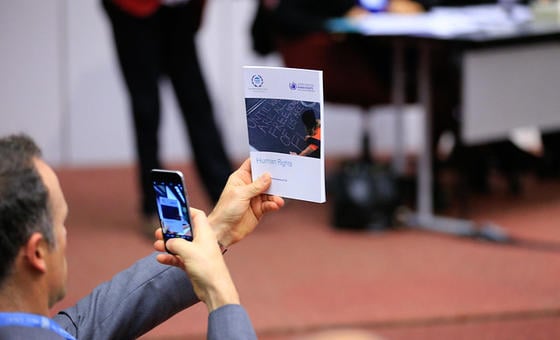

Parliamentary Libary © Rob Lewis, Parliamentary Services Media Library, The Federal Assembly - The Swiss Parliament
Parliaments occupy an unusual position in the AI landscape, carrying a responsibility to reflect democratic values in their own practices. The Federal Assembly of Switzerland, which has handled over 500 parliamentary initiatives on AI, is putting that principle into practice. Its Parliamentary Library faces a substantial operational challenge: indexing several thousand items of parliamentary business annually across three official languages using over 200 predefined topic labels – all of which creates bottlenecks, inconsistencies and staff resource pressures. A keyword-based search system compounds the problem, returning entire documents when users need specific passages.
To address this, the Parliamentary Library has partnered with the Bern University of Applied Sciences on an AI pilot that involves automated topic modelling using machine learning trained on over 30,000 historical items of parliamentary business (1995–2024). This is coupled with a retrieval-augmented generation (RAG) system combining semantic search with generative AI to deliver contextually enriched answers with visible sources.
The results transform library staff into quality controllers, improving speed and consistency. But what makes this initiative instructive is not simply the efficiency gains but how they were achieved.
The Federal Assembly is not adopting AI merely to improve efficiency. That logic alone could apply to any organization. What sets this initiative apart is its explicit recognition that parliaments must safeguard their democratic legitimacy and institutional sovereignty, while placing trust at the very core of any AI deployment in the public sphere. In an era when technologies can reshape decision-making and information flows, trust is not optional: it is the foundation upon which democracy itself stands. Operational gains, however significant, cannot substitute for this fundamental responsibility.
The pilot project has been designed to ensure that AI enhances efficiency and quality through semi-automation in parliamentary processes without compromising trust or democratic values. At every stage – from conception and multidisciplinary development through to testing and deployment – AI must be transparent, explainable and accountable, as well as compliant with the Federal Constitution, the Federal Act on Data Protection and the Council of Europe Framework Convention on Artificial Intelligence. This reflects the fundamental principle that trust must be embedded at the heart of technology in parliament, ensuring that AI serves democracy responsibly, strengthens public confidence and supports parliamentary work effectively.
These considerations shaped the design decision:
This distinction is relevant for parliaments exploring AI adoption. The question is not merely “Will this improve efficiency?”. Other questions come into play: “Will this strengthen or weaken our democratic institutions?”, “Does it safeguard human accountability?”, “Does it enhance transparency or introduce new black boxes?”, and “Will citizens and stakeholders trust it?”. The Swiss approach offers a modest, practical example: efficiency gains are pursued, but only when delivered through systems that uphold democratic values, respect sovereign decision-making and rely on clearly defined data and verified sources. Technology that functions well but undermines institutional trust ultimately risks eroding confidence in parliamentary processes.
A key insight emerged during user testing: completeness takes precedence over technical neatness. In parliamentary work, minority debates and niche issues illustrate how relying solely on the most obviously relevant sources can omit important context – a risk amplified when AI systems are used for retrieval and knowledge augmentation. That is precisely why, when prototypes were evaluated by Parliamentary Library staff, users consistently preferred systems that retrieved all potentially relevant material – even if this included some irrelevant results – rather than risk missing critical documents.
In this context, false negatives were far more problematic than false positives. This user preference directly informed system configuration, prompting a deliberate shift from the technically optimal confidence threshold of 0.1 to a lower threshold of 0.05. That adjustment highlights a central lesson from real-world deployment: technical performance metrics alone are insufficient, and professional judgement and user experience must guide system behaviour.
The pilots also surfaced several practical and transferable lessons:
Most importantly, the projects showed that a human-in-the-loop design is not optional in parliamentary settings – it is essential. In both automated indexing and RAG, AI systems were explicitly designed to support, not replace, expert judgement. Library staff guide the systems through parameter selection, verify outputs and provide structured feedback that feeds directly into iterative improvement. This approach delivers measurable efficiency gains while preserving the contextual understanding, accountability and reliability that parliamentary information work requires. Rather than diminishing human expertise, the systems amplify it, ensuring that speed and scale are achieved without compromising institutional trust or democratic responsibility.
Parliamentary institutions worldwide face similar challenges: growing document volumes, multilingual requirements, limited resources and demands for transparency. The Swiss pilot demonstrates that AI can support parliamentary work without replacing human expertise, enhancing efficiency while ensuring results remain reliable and trustworthy. Staff who are experts in supporting MPs assess AI outputs, check information and ensure that only accurate, verified results reach legislators.
More broadly, the pilot illustrates how parliaments can govern AI by example. By combining careful piloting, transparency, human oversight and continuous user feedback, the Swiss approach provides a practical template for implementing AI responsibly, balancing operational efficiency with democratic values and institutional trust. Rather than pursuing full-scale deployment immediately, the Federal Assembly opted for incremental pilot projects, allowing assumptions to be tested, feedback to be gathered, and systems to be iteratively improved without jeopardizing critical services. This “start small, learn fast” approach reduces risk while building organizational knowledge and trust.
The IPU’s recently published Guidelines for AI in Parliaments emphasize exactly this: transitioning from theoretical road maps to tangible implementations, guided by rigorous evaluation and interdisciplinary collaboration. Switzerland is putting these principles into practice, demonstrating that efficiency and democratic integrity are not competing goals – they are complementary when AI is designed thoughtfully.
If your parliament is considering similar initiatives, ask yourself the following questions:
Tasks and users
Data and verification
Governance and principles
Trust and transparency
Implementation and iteration
Data quality and risk management
The experience of the Parliamentary Library of the Federal Assembly of Switzerland offers an encouraging message: the key to using AI effectively is knowing what users need and developing systems in such a way that the results are transparent, accountable and trustworthy.
The technology is ready. The tools are increasingly accessible. Parliaments must now ask themselves whether they are ready experiment, learn and adapt while staying true to democratic principles.
This is not just about adopting technology that works. It is about adopting technology that strengthens parliament as an institution, preserves accountability and maintains the trust essential to democratic governance.
For more information: See the full technical paper “Transforming Digital Access in Parliament: Topic Modeling Meets Retrieval Augmented Generation” (citation in “Sources” below).
Contact person: Ms. Jacqueline Kucera, Head of the Parliament Library, Federal Assembly of Switzerland