Impact
The IPU facilitates parliamentary diplomacy and empowers parliaments and parliamentarians to promote peace, democracy and sustainable development around the world.

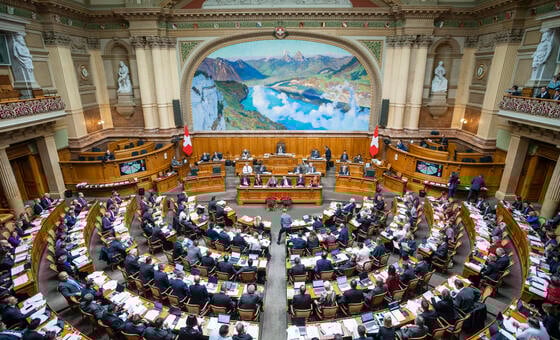


The unconference session on AI in smaller parliaments (credit: IPU CIP)
Insights from the unconference session on AI in smaller parliaments at the conference The Role of Parliament in Shaping the Future of Responsible AI, held from 28 to 30 November 2025 in Kuala Lumpur, Malaysia.
When representatives from the parliaments of Cook Islands, Palau, Tonga, Trinidad and Tobago, and Vanuatu gathered for an unconference session on AI in smaller parliaments, they shared a common experience. They were learning about the transformative potential of artificial intelligence (AI), but all faced a daunting question: How do we make this happen back home?
The challenge lies not in technical knowledge but in organizational reality – a fact underscored by the limited representation of senior leadership and MPs from smaller parliaments at the conference. Less-senior staff now possess additional expertise gained from the conference sessions and peer-learning opportunities, but lack the authority to drive institutional change. Meanwhile, their leadership remains largely disengaged from AI conversations.
This disconnect reveals how smaller parliaments often lack what early AI adopters possess: working groups that bring together MPs, clerks, senior staff and IT personnel for substantive, cross-functional discussions. Without such coordination bodies, technical knowledge and political vision remain siloed.
The IPU’s Maturity Framework for AI in Parliaments identifies three foundations for successful adoption: organizational capacity, governance frameworks and technical capability. The catch, however, is that these three foundations are interdependent and cannot develop in isolation. Technical staff cannot build capability without governance frameworks, governance lacks legitimacy without leadership commitment, and leadership commitment requires organizational awareness.
For smaller parliaments, this creates a paradox. Senior leadership often prefers guidance from established peers or recognized institutions like the IPU, which can delay bottom-up initiatives. Yet this same preference opens pathways for peer-supported, leadership-endorsed adoption strategies.
The solution begins not with technology but with creating conditions for informed decision-making. Participants emphasized three immediate actions:
Establish cross-functional working groups that span parliamentary hierarchies, bringing together MPs who can articulate democratic values, clerks who provide institutional authority and staff who contribute specialized expertise.
Develop champions at multiple levels. AI adoption requires advocates across technical, administrative, and political domains, each speaking to their constituencies in appropriate terms.
Use diagnostic tools like the Maturity Framework for AI in Parliaments to assess current capabilities, identify gaps, chart realistic development paths that suit institutional contexts and constraints, and support capacity-building and collective learning.
Smaller parliaments particularly value practical resources. Policy templates and rule sets from peer institutions address hesitancy around AI tool adoption. IPU-organized webinars where similar-sized parliaments share experiences provide invaluable peer learning. Short-form materials, such as videos featuring peer MPs demonstrating their AI usage, prove more effective than lengthy technical documents for raising awareness among political leadership.
The successful introduction of AI begins with strategic communication at every organizational level: explaining AI’s value in parliamentary terms, addressing fears about job displacement, and demonstrating quick wins that build confidence and momentum. For smaller parliaments, the path to AI adoption differs from that of well-resourced early adopters. Success depends less on technical sophistication than on building internal consensus, establishing cross-functional coordination and leveraging peer-support networks. The unconference clarified that smaller parliaments are not alone in this journey: through IPU networks, peer exchanges and shared resources, they can benefit from collective learning while adapting approaches to their unique circumstances and capabilities.