
Impact
The IPU facilitates parliamentary diplomacy and empowers parliaments and parliamentarians to promote peace, democracy and sustainable development around the world.

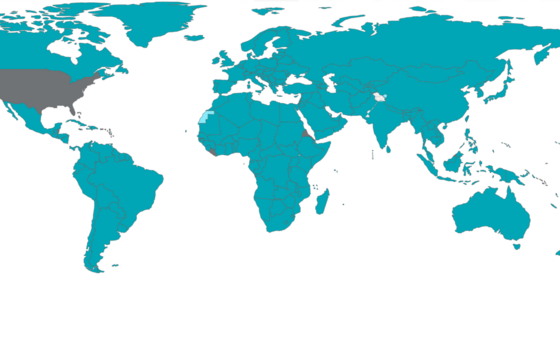



Introduction of the AI Maturity Framework by Dr. Andy Williamson, Senior Researcher at the IPU Centre for Innovation in Parliament
Artificial intelligence (AI) is no longer a future consideration for parliaments – it is already reshaping what democratic institutions do. Yet parliaments face a unique challenge: they must harness AI’s potential to enhance efficiency, strengthen legislative processes and deepen citizen engagement, while maintaining democratic accountability, transparency and public trust. This balance cannot be achieved through technology alone.
The IPU Centre for Innovation in Parliament (CIP) has developed the Maturity Framework for AI in Parliaments as a practical diagnostic and strategic planning tool designed specifically for parliamentary leaders navigating this complex landscape.
Every parliament’s AI journey is different. Constitutional frameworks, digital maturity, resources and political priorities vary significantly, as do culture and attitudes to innovation. Yet the stakes are high when it comes to getting adoption wrong, whether through inadequate governance, misaligned implementation or failure to preserve democratic values.
Most parliaments recognize that informal, ad hoc AI use no longer suffices. Generative AI tools are increasingly common in parliamentary offices, often introduced informally by individuals. Without a structured framework connecting governance, technical capability, organizational readiness and democratic impact, these initiatives remain isolated experiments rather than forming part of a coordinated strategy.
The question, therefore, is straightforward: How do parliaments move from “this is happening” to “we have a coherent plan”?
What distinguishes the Framework from other frameworks is its specificity to parliamentary context and its tight integration with existing practical guidance. It is not prescriptive: excellence in AI adoption comes in many forms. A parliament operating at Level 3 (Implementation) in governance but Level 2 (Emerging) in technical capability is not “behind”. Rather, these levels reflect strategic choices aligned with institutional priorities.
Critically, the Framework progresses across four interconnected dimensions that must advance together:
Technological implementation without governance is reckless. Governance without organizational capability remains theoretical. And all three mean nothing if they do not demonstrably enhance parliament’s democratic functions.
The IPU Guidelines for AI in Parliaments provide comprehensive practical guidance. But guidelines can feel abstract to those managing competing priorities. The Framework translates the Guidelines into concrete progression pathways, with each area covered by the latter mapped across the maturity levels of the former, creating a road map showing not just what should be done, but how depth and sophistication should evolve.
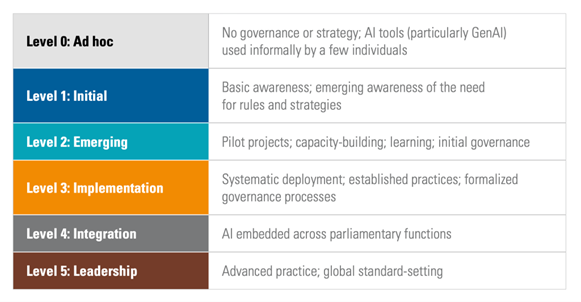
Figure 1: The six levels of the AI Maturity Framework
At Level 1 (Initial), the focus is foundational: establishing governance bodies, conducting risk assessments, identifying use cases and providing baseline training.
By Level 2 (Emerging), governance becomes comprehensive, with detailed ethical frameworks and systematic risk management. Pilot projects begin with controlled testing and clear learning objectives.
At Level 3 (Implementation), successful pilots scale to operational status, with compliance monitoring and public reporting. AI begins supporting core parliamentary functions: legislative research, constituent services and policy analysis.
This progression means leaders can answer essential questions: Where are we now? Where should we focus next? How will we know we are making genuine progress?
The Framework offers several concrete benefits. First, it provides a common language across technical teams, policymakers and parliamentary leadership, enabling clearer conversations when people describe different dimensions of the same challenge.
Second, it prevents premature scaling. Many organizations deploy AI before governance foundations are adequate, creating expensive remediation needs later. The Framework’s staged approach allows parliaments to build foundation before expanding scope.
Third, it supports honest assessment across dimensions. A parliament might operate at Level 3 in governance with comprehensive policies and compliance monitoring, yet remain at Level 2 in technical infrastructure. This realistic positioning enables strategic scaling based on actual readiness rather than aspirational uniformity.
Finally, it acknowledges that excellence comes in many forms. Not every parliament needs to reach Level 5, where it will be pioneering emerging technologies. What matters is thoughtful, context-appropriate implementation that genuinely enhances parliamentary democracy while managing risks responsibly.
For parliaments, the immediate step is straightforward: understand where the institution currently sits across the four maturity dimensions. Honest assessment typically surfaces clear answers. Parliaments should expect to operate at different levels in different areas – this is normal and informative.
From there, the strategic priority for the next 12–24 months should be identified. If governance lags behind technical capability, that creates risk. If technical readiness outpaces organizational change capacity, investments will underdeliver. If democratic impact is not assessed, the metrics that ultimately justify AI investment are lacking.
The AI Maturity Framework, used alongside the Guidelines, provides a practical road map – not prescriptive, but thoughtfully positioned in service of the democratic mission parliaments exist to advance.
For further information or questions about the Framework, contact us at innovation ipu [dot] org (innovation[at]ipu[dot]org).