
Impact
The IPU facilitates parliamentary diplomacy and empowers parliaments and parliamentarians to promote peace, democracy and sustainable development around the world.


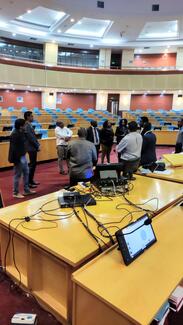
Morning stand-up meeting with the Deputy Clerk of the Malawi Parliament and the staff responsible for preparing the new digital chamber hall.
©Avinash Bikha/CIP
The National Assembly of Malawi has successfully introduced a new digital chamber management system, giving it the capability to hold paperless plenary sessions. This report looks at the institution’s experience of going live with the new system – an intensive period of work with valuable lessons for other parliaments. It follows on from an item in Innovation Tracker Issue 14 detailing how the parliament is progressing with its digital transformation efforts.
With the introduction of its new digital chamber management system, the National Assembly of Malawi has followed in the footsteps of many parliaments around the world, including in Southern Africa. The system is designed to make the management of plenary sessions more efficient by providing MPs with timely information and documentation including order papers, bills, resolutions, session papers and agendas. It also significantly speeds up the voting process, allowing all 193 members to cast their vote in 10 minutes or less – down from over an hour as was previously the case.
To allow for this new paperless way of working, the standing orders of the National Assembly have been adapted so that MPs now receive all session papers digitally by default. Printed copies are still available, although this is strictly “on demand”. This change has had an immediate and positive impact on printing costs, as well as being good for the environment.
Getting the new chamber up and running – and introducing MPs to it for the first sitting after the August recess – required a committed effort across the entire parliamentary administration. This work was led by Mr. Chikondi Kachinjika, the deputy clerk of parliament responsible for corporate services.
There were slight delays waiting for components to arrive in Malawi and, in the week before the planned go-live date, the service provider was still busy installing the devices on MPs’ desks. Despite these difficulties, Mr. Kachinjika – together with a multidisciplinary working group comprising procedural clerks, ICT staff, chamber management housekeeping staff, and the chamber audio and visual unit – pressed ahead with the preparations, focused on the following priorities:
In the end, thanks to the daily stand-up meetings and other effective risk-management measures, the roll-out was a success and the new system went live on Monday, 16 September 2024.
Members of the ICT team at the National Assembly of Malawi look forward to sharing their story with other parliaments in an upcoming webinar hosted by the CIP’s Southern Africa Regional Hub (date to be announced).