Impact
The IPU facilitates parliamentary diplomacy and empowers parliaments and parliamentarians to promote peace, democracy and sustainable development around the world.

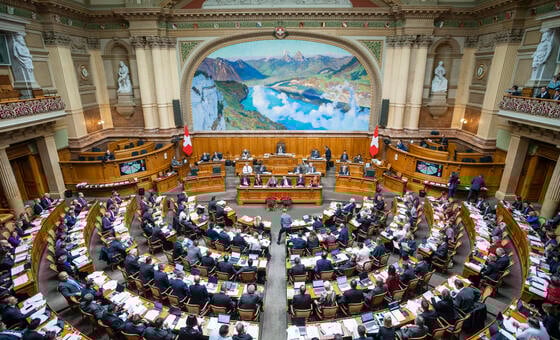

Senate of Spain © Javier Carro
When the Senate of Spain began its AI journey, it did many things right. It developed internal AI guidelines inspired by the IPU’s Guidelines for AI in Parliaments, ran a public tender to select an AI partner, and invested in on-premise graphics processing units and other hardware. It also delivered successful projects, from automatic transcription of parliamentary sessions to AI-assisted legal research. By most measures, the Senate was well on its way to successful AI implementation. Yet when it applied the IPU’s Maturity Framework for AI in Parliaments, it discovered something important: progress in one area can mask significant gaps in others – gaps that remain invisible without a structured way to look for them.
The Senate’s ICT team found that the most obvious benefit of the Framework – helping an institution understand where it stands and chart a path forward – was only part of the story. The deeper value lay in what Mr. Manuel Pereira, the Senate’s ICT Director, described as “the not-so-obvious”.
First, the Framework prompted the Senate to ask itself questions it had not previously considered. The structured assessment across four dimensions – governance, technical capability, organizational capability and democratic impact – forced a more comprehensive examination than any single-dimension technology review could achieve.
Second, it made something visible that parliamentary ICT leaders will recognize: the Framework helped reinforce the point to senior management that AI adoption is not just an IT project. Organizational culture, people and processes are fundamental. Having a recognized parliamentary framework that explicitly assesses organizational readiness and democratic impact gave the ICT team a credible tool to broaden the conversation beyond technology procurement.
The Senate’s initial assessment revealed a telling pattern: the institution scored highest on technical capability. This was unsurprising, given that the AI initiative had been driven primarily by the ICT department. It lagged behind, however, on governance, with risk management identified as a notable weakness. The Senate showed early promise on organizational capability, with training programmes under way and AI champions emerging, but dedicated oversight roles had not yet been established. The least-developed area was democratic impact, with no systematic assessment of how AI applications might improve citizens’ access to parliamentary information, nor mechanisms to monitor democratic risks.
This unevenness is precisely the insight that a maturity framework identifies. Without a structured assessment, an institution could reasonably assume that successful technical deployment equates to overall readiness, even though the governance and democratic safeguards needed to sustain and scale that deployment remain underdeveloped.
The Senate’s experience with the Framework offers several takeaways for other parliaments:
As Mr. Pereira put it, “technology is nothing but a tool to transform the organization”. The IPU’s Maturity Framework for AI in Parliaments helps ensure that transformation is deliberate, balanced and democratically grounded.