From Bolivia to Kyrgyzstan, some countries are proving that, with the right rules and political will, real progress towards gender parity in parliaments is within reach.
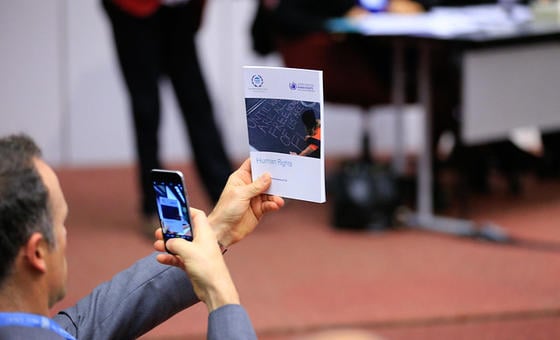
Slow progress, but with snapshots of inspiration: that’s the picture to emerge from the IPU’s recently published annual Women in parliament in 2025 report. Based on data from the 49 countries that held parliamentary renewals for 62 chambers last year, it is the definitive barometer of women’s representation in parliament.
Overall, the report paints a worrying picture of the world’s progress towards the goal of gender parity in politics. Women hold 27.5% of national parliamentary seats worldwide after a mere 0.3 percentage point rise from 2024’s rate. The proportion of women Speakers of Parliament, meanwhile, has dipped by almost 4 percentage points on the previous year.
Yet, despite sluggish progress at the global level, countries across all seven continents continue to make strides. They set valuable examples that we hope to see emulated by others in the coming years.
Bolivia achieves gender parity in its Parliament
After elections in 2025, Bolivia joined just six other countries with 50% or more female MPs. Women won more seats in both chambers of its Parliament, where they now make up 51% of deputies (lower house) and 58% of senators (upper house).
The South American nation has made remarkable progress on women’s parliamentary representation in recent decades thanks to a gender parity quota adopted in 2010. By 2014, it had elected a female-majority parliament and has remained near parity ever since.
Nearly half of the women elected in 2025 are 40 years old or younger, pointing to an electorate that is open to youth and offering positive signs for the future.
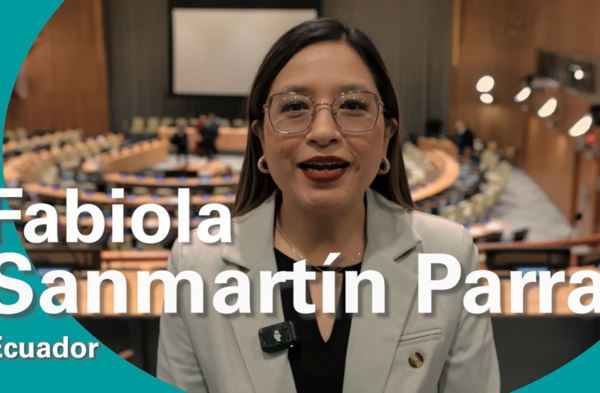
Women’s representation in Ecuador’s lower chamber reaches an all-time high
Women’s representation in Ecuador’s National Assembly rose to 45% after the 2025 election, a two-percentage-point increase and an all-time high for the country. Like Bolivia, it has introduced several mechanisms into its electoral system to make these gains possible, starting with a gender parity and alternation requirement, in place since 2008.
In 2020, it adopted a closed-list voting system with a law requiring parties to progressively increase the share of women at the top of their lists. In 2021, the requirement was 15%. This was increased to 30% for the elections held in 2023 and 50% in 2025.
Ecuador provides another example that well-designed, ambitious gender quotas make a significant impact on driving forward women’s representation in politics.
Kyrgyzstan records the biggest leap in women’s representation
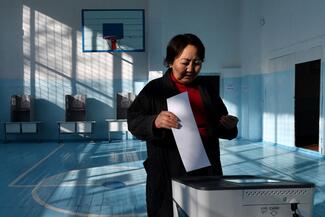
Of all the countries that went to the polls in 2025, Kyrgyzstan made one of the most impressive strides. It saw women’s share of parliamentary seats jump by 12.9 percentage points, the largest single-election gain of any country last year.
This was made possible by a redesigned electoral system. Under the previous rules, gender quotas only applied to seats filled through proportional representation. Single-mandate constituencies – where female candidacy rates were as low as 6.5% – were unaffected.
The majoritarian system introduced in 2025 scraps that two-tier approach. Now, across all 30 districts, candidates from one gender cannot take more than two of the three available seats. In effect, this guarantees women at least a third of all parliamentary seats, which played out in last year’s elections.
It is a powerful illustration of a principle that runs through the IPU’s findings year after year: quota design matters as much as the quota target itself.
Australia sets a new record…
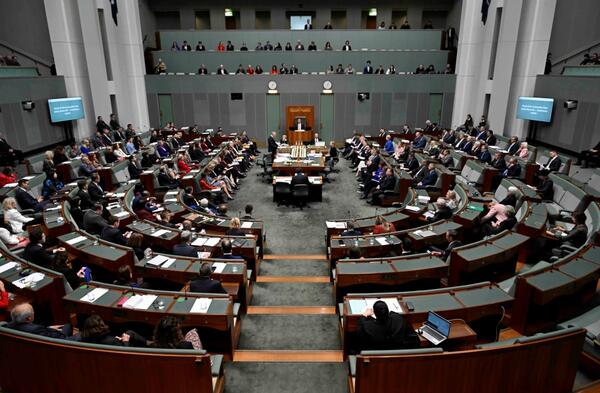
In 2025, Australia swore 69 women into its lower house, 46% of MPs and the highest share in the country’s history. The result propelled Australia from 33rd to 9th in the IPU’s global ranking of women's parliamentary representation. This was mainly driven by the strong performance of the Labor Party, which has internal quotas aiming for parity and put forward a 56% female candidate list.
Among those elected was Ali France, the first woman with a disability to win a seat in the House of Representatives, and Charlotte Walker, who at 21 became the country's youngest-ever female senator. The Prime Minister later appointed a cabinet with 12 women and 11 men, another milestone for the country.
Australia’s surge shows the role that party-level commitments can play in driving greater representation at the national level. These voluntary quotas are an effective complement to legislative measures.
… as does Czechia
Czechia is another country that broke its own records, with one third of its latest cohort of MPs in the lower chamber being women.
A grassroots campaign called zakroužkuj ženu (“circle a woman”) played a significant role. Czechia’s voting system allows voters to indicate preferences for individual candidates, who can then move up their party’s list if they receive enough support. The campaign encouraged voters to circle the names of women candidates — and it played an important role. In 2025, preferential voting by the public directly helped elect 23 women MPs into parliament, for a total of 67 women MPs elected overall.
The election also produced a generational landmark: at 21 years old– the minimum legal age to stand – Julie Smejkalová became the youngest-ever MP in the country’s history. She is one of 15 MPs aged 30 or under to be elected in 2025.
Burundi records the largest gains in Africa
In Burundi’s lower chamber, 44 women were elected or nominated, making up 39.6% of its 111 MPs. This 8.1 percentage point rise was the fourth highest of all countries that held elections in 2025.
The country’s Parliament now exceeds the 30% quota that its electoral system sets for women in each chamber — a reminder that quotas, at their best, set a floor rather than a ceiling.
The Philippines takes action against sexism in elections
Despite signs of progress, women in parliaments around the world face discrimination in many forms, which has both a chilling and dissuasive effect to aspirant and incumbent women.
Several male candidates in the Philippines’ 2025 election made disparaging remarks about their female opponents during the campaign. This came amid a rising tide of violence against parliamentarians, which has been proven to disproportionately affect women, as documented in a recent IPU report.
The Commission on Elections (COMELEC) intervened directly. It classified gender-based harassment as an election offence, the scope of which it expanded to include online platforms as well as campaign rallies and polling places. And it created the dedicated Task Force SAFE to enforce these safety measures, with one candidate ultimately disqualified from standing.
From individual success to systematic change
The report is unambiguous about the big picture: at the current rate of progress, the world is still 75 years away from gender parity in parliament. But these stories of progress provide a cause for optimism.
Countries across every region have proved that bold, well-designed reforms and quotas translate directly into more representative parliaments. Their efforts offer a blueprint that other parliaments should follow.