Lawmakers from around the world recently adopted a resolution urging parliaments to use their legislative, budgetary and oversight functions to eliminate structural discrimination, ensure greater political representation and protect the rights of persons with disabilities.
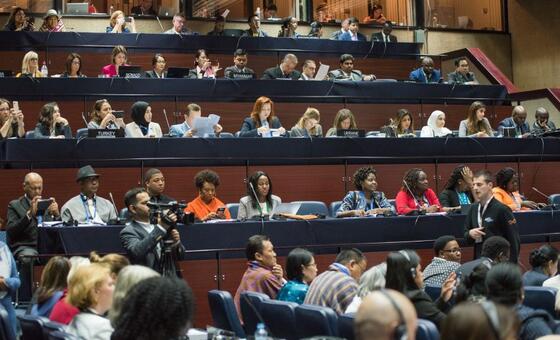
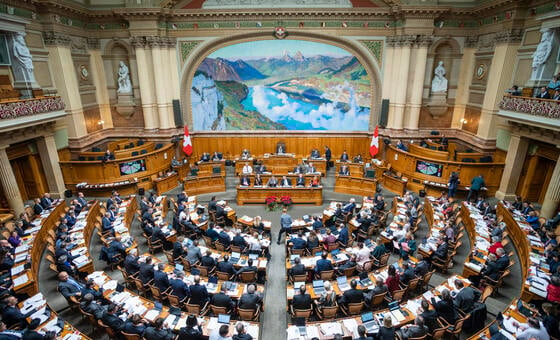
Inclusive social development for all: Parliamentary strategies to promote the rights and empowerment of persons with disabilities was adopted at the 153rd Inter-Parliamentary Union (IPU) Assembly, held from 5 to 9 October 2026 in Arusha, United Republic of Tanzania.
A population too often excluded
According to the World Health Organization (WHO), 1.3 billion people, or one in six people worldwide, are estimated to have some form of disability. Their experiences vary widely according to their sex, age, sexual orientation, religion, ethnicity, migration status and economic circumstances, which shape both the discrimination they face and their access to services.
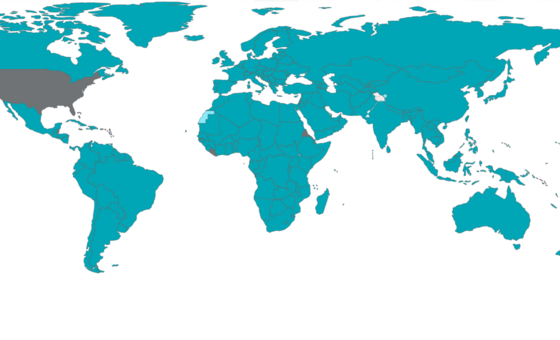
The WHO warns that persons with disabilities generally die younger, have poorer health and experience more limitations in everyday functioning than persons without disabilities. Despite near-universal ratification of the UN Convention on the Rights of Persons with Disabilities (CRPD), many persons with disabilities continue to face structural barriers in education, healthcare, employment, justice and political participation.
Global consensus
In a rare moment of relative consensus, the IPU Assembly, through its Standing Committee on Democracy and Human Rights – a thematic IPU parliamentary body with representatives from all regions of the world – adopted the resolution (with reservations from the Islamic Republic of Iran and the Russian Federation on some paragraphs).
The resolution frames disability inclusion not only as welfare policy, but as a matter of human rights, equal citizenship, democratic representation, the rule of law and sustainable development.
What parliaments are asked to do
It calls on parliaments to use their legislative, budgetary, oversight and representative powers to incorporate CRPD obligations into domestic law, and to ensure their effective implementation, including by:
- Reforming discriminatory laws and guardianship regimes, and improving access to justice.
- Upholding the principle of “nothing about us, without us” through meaningful consultation with persons with disabilities and their representative organizations.
- Increasing political representation of persons with disabilities through accessible procedures and, where appropriate, quotas.
- Addressing gender-based violence against women and girls with disabilities.
- Making parliaments, public infrastructure, schools, health systems and workplaces accessible.
The resolution also calls for the IPU to deepen its work in this area and for IPU Member Parliaments to include more MPs with disabilities on their delegations to IPU events.
The lawmakers behind the resolution
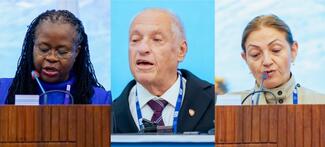
The resolution was presented by its three co-rapporteurs: Catherine Mumma of Kenya, Christian Lohr of Switzerland and Fatma Öncü of Türkiye.
Catherine Mumma, a Kenyan lawyer and Senator, has pushed for the implementation of Kenya’s Persons with Disabilities Act and stronger disability representation in county assemblies. She has also linked her advocacy to her experience as the mother of a son with disabilities.
Christian Lohr is a member of the Swiss National Council representing the canton of Thurgau. A former journalist and educator, he has been a parliamentarian since 2011. Born with severe physical disabilities due to maternal thalidomide exposure, he is widely recognized for his advocacy for disability rights and health policy in Switzerland and abroad.
Fatma Öncü, a Turkish parliamentarian and Vice-President of the IPU Bureau of Women Parliamentarians, survived an accident in infancy that resulted in the amputation of all her fingers. She later became Türkiye’s Deputy Minister of Family and Social Services from 2021 to 2023, one of the first people with a physical disability to hold government office in the country.
Like other IPU resolutions, the text is advisory rather than legally binding. Its real impact will depend on the efforts of Member Parliaments to translate its recommendations into national legislation, budget allocations, oversight practices and accessible political institutions.