



Brussels, Belgium, 17 November 2026
The speed of technological change, as artificial intelligence (AI) permeates society, is making it hard for parliamentary governance and rules to keep up, according to a new report from the Inter-Parliamentary Union (IPU).
The World e-Parliament Report 2026 finds that legislatures which establish governance frameworks before deploying new technological systems advance more successfully than those that procure tools first and develop policies later.
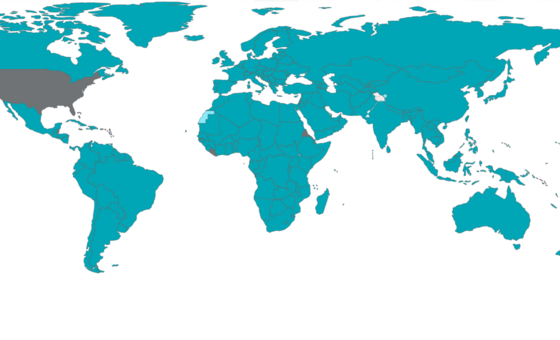
Published by the IPU’s Centre for Innovation in Parliament, the ninth edition of the biennial report examines digital transformation across 118 parliaments and chambers in 89 countries, as well as in two supranational parliaments (the European Parliament and the Pan-African Parliament).
The report notes that the two years since the 2024 report have been among the most consequential in recent history for technology. Generative AI has moved from being a specialist tool to a mainstream workplace technology, with large language models increasingly embedded in software used by parliamentary staff, sometimes without a formal institutional decision or policy on their use.
The report indicates that 88% of parliaments now report using AI, while governance, capacity and culture are struggling to keep pace with adoption.
It also warns that introducing AI into existing workflows without redesigning those workflows can allow old weaknesses to persist or even be amplified.
A widening digital gap
The report finds broad progress in the digital transformation of parliaments since 2024, but also a widening divide between the most and least digitally mature institutions.
The report links this divergence to differences in political leadership, innovation culture and institutional vision, rather than simply to levels of funding or technical skill.
The most advanced parliaments are those that connect technology investment directly to their strategic objectives and treat data as strategic infrastructure.
The report says that technical progress without strong data governance creates fragile systems, while treating data as institutional capital helps parliaments deploy advanced technology more safely.
More accountable parliaments
The IPU report argues that digital transformation is no longer an optional upgrade. It is now the central mechanism through which legislatures can build operational resilience, deepen citizen engagement and strengthen legislative accountability.
In an era of declining public trust and rising misinformation, parliamentary data must be accessible, usable and strategically targeted to support genuine two-way democratic dialogue with citizens.
Where does your parliament rank?
The report introduces the second version of the IPU Digital Maturity Index, a tool introduced two years ago, to help parliaments assess their progress across seven functional areas: governance and strategy, infrastructure, parliamentary systems, supporting users in parliament, digital content and publishing, public engagement, and AI.
In 2026, 33 countries have been categorized in the highest digital maturity tier. Europe accounts for the largest share, with 18 countries in the top tier, followed by the Americas with seven.
However, the 2026 results point to increasing geographic diversification compared to 2024, with greater representation from developing regions among the highest-ranking institutions.
Good practices identified
The report contains numerous examples of good parliamentary e-practice from around the world, where workflows were redesigned before new software was introduced.
- Tonga’s cloud-based document management system, introduced after Cyclone Gita, strengthened disaster resilience and enabled MPs in remote outer islands to access vital information.
- Malawi’s paperless chamber operations improved efficiency by reducing voting time in the chamber.
- Brazil’s Chamber of Deputies made legislative data accessible through active engagement with developers and user-centred formats such as “hackathons”.
- To engage younger audiences, Austria’s multimedia newsroom and TikTok channel reached more than 15,000 users through a single plenary livestream.
***
The report was launched at the World e-Parliament Conference in Brussels, Belgium, co-organized by the IPU and the European Parliament, on 17 and 18 November 2026.
The IPU is the global organization of national parliaments. It was founded in 1889 as the first multilateral political organization in the world, encouraging cooperation and dialogue between all nations. Today, the IPU comprises 184 national Member Parliaments and 15 regional parliamentary bodies. It promotes peace, democracy and sustainable development. It helps parliaments become stronger, younger, greener and more gender-balanced. It also defends the human rights of parliamentarians through a dedicated committee made up of MPs from around the world.
For more information about the IPU, contact press ipu [dot] org (press[at]ipu[dot]org)