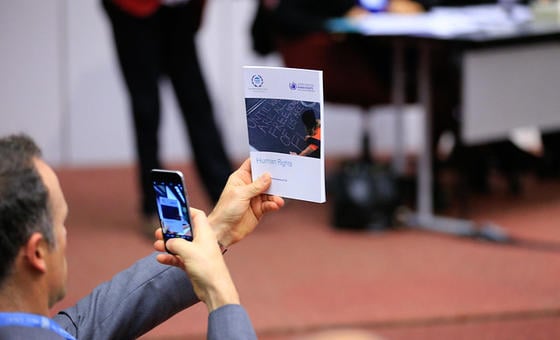
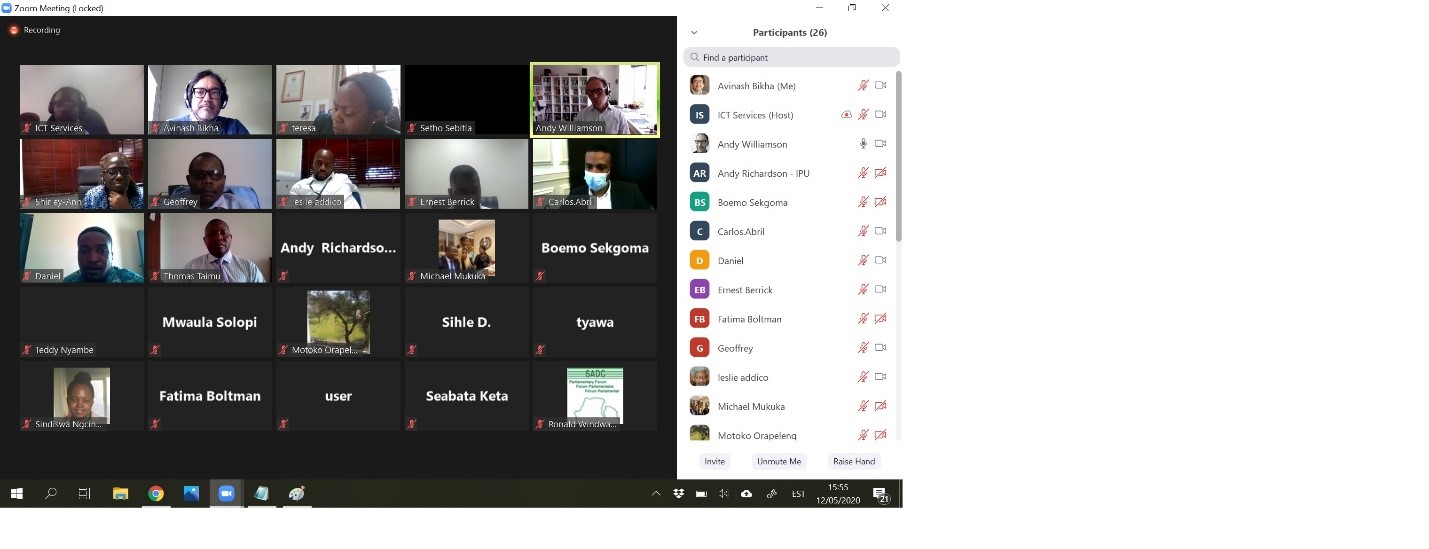
The CIP Southern Africa and Hispanophone hubs each held virtual Zoom meetings with Member Parliaments[1] on 12 May and 19 June respectively. The meetings were attended by IT directors and senior IT staff and aimed at facilitating knowledge exchange between the parliaments of the respective regions and, in particular, concerning ongoing or planned ICT projects for remote working / meeting / voting solutions in response to the COVID-19 pandemic and its disruption of parliamentary activity. The Southern Africa meeting was organized by the hub host – the National Assembly of Zambia; it also saw the participation of the Secretary General of the SADC Parliamentary Forum Ms. Boemo Sekgoma. The Hispanophone hub meeting was organized by the Chamber of Deputies of Chile as hub host, with support from the IPU and the National Democratic Institute (NDI).
The meetings each featured a global overview presentation by the IPU Centre for Innovation in Parliament based on the ongoing survey which forms part of the IPU campaign Parliaments in a time of pandemic; followed by brief updates from the hub parliaments which provided more details on: the current status of parliamentary activity, including plenary and committee meetings; whether remote working and meeting solutions were deployed; how remote voting was handled; and how the legal framework for parliaments facilitated the above. The meetings were concluded with rich Q&A segments.
Some of the highlights of these meetings include:
- The disruption brings a tremendous opportunity to innovate. Parliamentary leaders are more than ever engaged in discussing innovation and are increasing their familiarity with digital issues.
- Most parliaments are faced with the same challenge of maintaining parliamentary business and implementing solutions for remote working and meeting. Many parliament IT teams are in one or more of the following stages of platform evaluation, procurement, testing and developing operating procedures; integrating of additional parliamentary meeting functionality (e.g. attendance, voting, speaking order, time management); and reviewing /amending standing orders.
- There are many common solutions being trialed and implemented. Remote working platforms like MS Teams and Zoom are top choice, but others such as Cisco WebEx, Jitsi are also being trialed.
- Inclusiveness is high on the agenda: in both regions there are MPs that need to connect from remote areas where internet connectivity is suboptimal. Parliaments are trying to work around this by offering better voice and data packages. Others are resorting to the hybrid model where the lesser connected MPs do come to parliament and sit in smaller distributed rooms to respect social distancing, and others participate in meetings from their homes (e.g. in capital and bigger cities). The meetings are however conducted via videoconferencing.
- There are lessons learned emerging from rolling out the new innovations to MPs. While the remote meeting solutions are relatively user friendly for MPs, they still require lots of technical support in other areas such as how to connect to parliamentary systems or how to use devices. Other “new issues” that are emerging include how to manage MPs virtual image and reputation (that is, look good during virtual meetings); and, how to conduct virtual meetings in an orderly manner.
- Committee meetings are smaller in size as social distancing and other health-safety measures are observed.
- Parliaments present in the meetings agreed that knowledge-sharing on remote working and meeting solutions and practices is needed. The regional hubs will seek to facilitate this via the already existing WhatsApp groups –in a more structured manner.
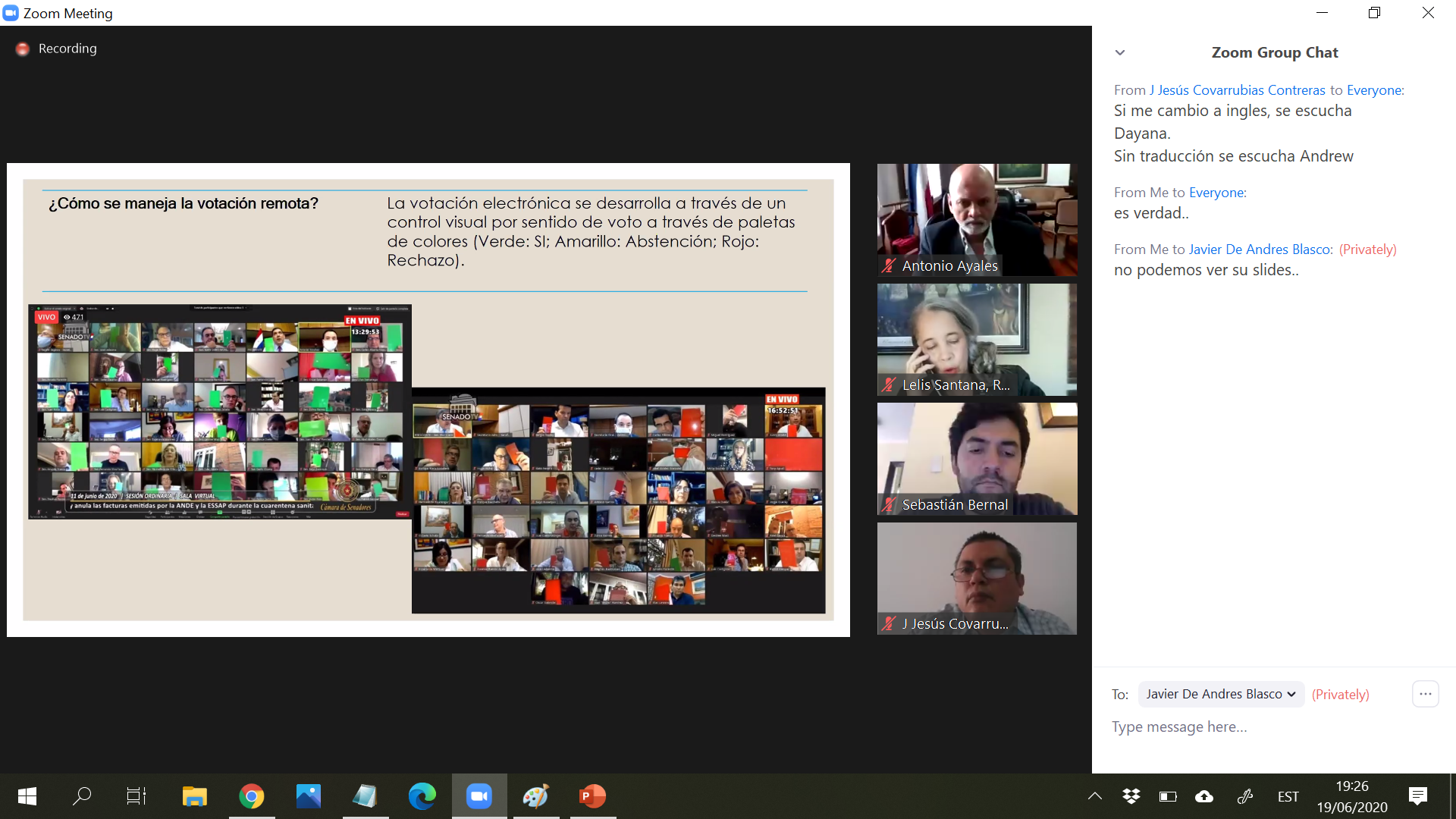
- Remote voting is by far the biggest challenge, where technical solutions must ensure security and integrity (that is, auditability) of the voting process. However, voting can be very simple initially (if well regulated): show of colored voting cards (Paraguay example). In the long term more integrity of the voting process is needed.
- Lastly there is a growing consensus among the senior IT officials that “we are not going backˮ. Several administrations are studying long-term solutions in rooted in comprehensive digital transformation with the electronic signature and e-document solutions and processes that are key pillars of the digital parliament
[1] Southern Africa regional hub attendees: Parliaments of Zambia (host), Angola, Botswana, Eswatini, Ghana, Lesotho, Malawi, South Africa, Zimbabwe, SADC PF Secretariat.
Latin America regional hub attendees: Parliaments of Chile (host), Argentina, Bolivia, Chile, Costa Rica, Dominican Republic, Ecuador, Honduras, Mexico, Spain, Paraguay.