Impact
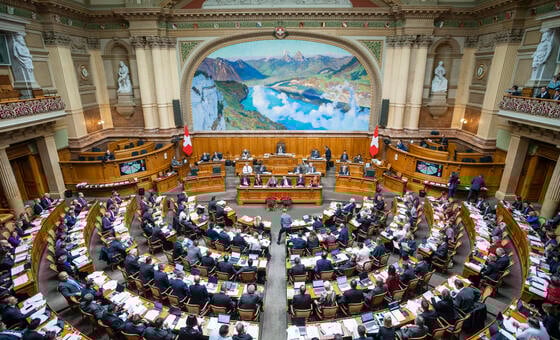
The IPU facilitates parliamentary diplomacy and empowers parliaments and parliamentarians to promote peace, democracy and sustainable development around the world.

Interfaith dialogue – that is, engagement with religious leaders and religious actors to build trust, strengthen communities, advocate for social justice and mitigate conflict – has been growing over the past 70 years as a tool of peacebuilding and diplomacy. It recognizes the important place of religion in the lives of many people worldwide, as well as the influential role of religious actors as community leaders and religious institutions as important providers of spiritual and material support.
The world of interfaith dialogue has undergone a profound shift since the tragic events on and following 7 October 2023. These began in Israel and Gaza but were quickly felt in the region and across the globe (See IPU Statements). Since then, interfaith dialogue has been difficult, as the conflict has taken on, or been given – depending on how you view it, a religious dimension. Islamophobia, anti-Semitism and other forms of identity-based hatred have experienced a sharp increase, decades old interfaith relationships have been compromised, communities and societies are becoming increasingly divided. These tensions are also being felt in national parliaments.
As the interfaith movement crumbles, practitioners have found themselves asking where this leaves policymakers with interfaith engagement. How can policymakers engage with what some label the “conflict of all conflicts”, where religion and politics are deeply intertwined, but also, unfortunately, instrumentalized by some influential religious and political actors who see division as a tool to secure power or personal gain?
Since 7 October, when business as usual ground to a halt, a loose coalition has been emerging of institutions committed to engaging faith actors to counter polarization and promote peaceful coexistence. What unites them is a belief in the importance of dialogue, shared values and equal human dignity, common to all religions or beliefs, and which underlies the social contract which makes societies cohesive.
The IPU has been firmly engaged in this work from the beginning, having a long history of declarations, documents, activities and publications, which reinforce the vital role of parliaments and MPs in upholding rights, countering intolerance, and promoting human and common security, as tools for advancing peaceful coexistence. The IPU 2022-2026 strategy aims to advance parliamentary ecosystems, encouraging parliaments to engage with the actors and dynamics that impact them, including religious actors. Religious engagement by the IPU is not, however, new: as early as 1998, an audience with Pope John Paul II took place as part of an IPU and Food and Agriculture Organization (FAO) Conference, which was hosted by the Italian Parliament.
Since 2022, the IPU has increased its focus on multi-stakeholder engagement. In June 2023, it organized the first Parliamentary Conference on Interfaith Dialogue which convened parliamentarians with representatives of religions, beliefs, the United Nations (UN), international, faith‑based and civil society organizations and academia, under the banner of Working together for our common future. The Conference partners were reflective of its inclusive nature: it was organized by the IPU and the Parliament of the Kingdom of Morocco in cooperation with Religions for Peace, and with the support of the United Nations Alliance of Civilizations, and the Mohammadia League of Religious Scholars, a Moroccan faith-based organization.
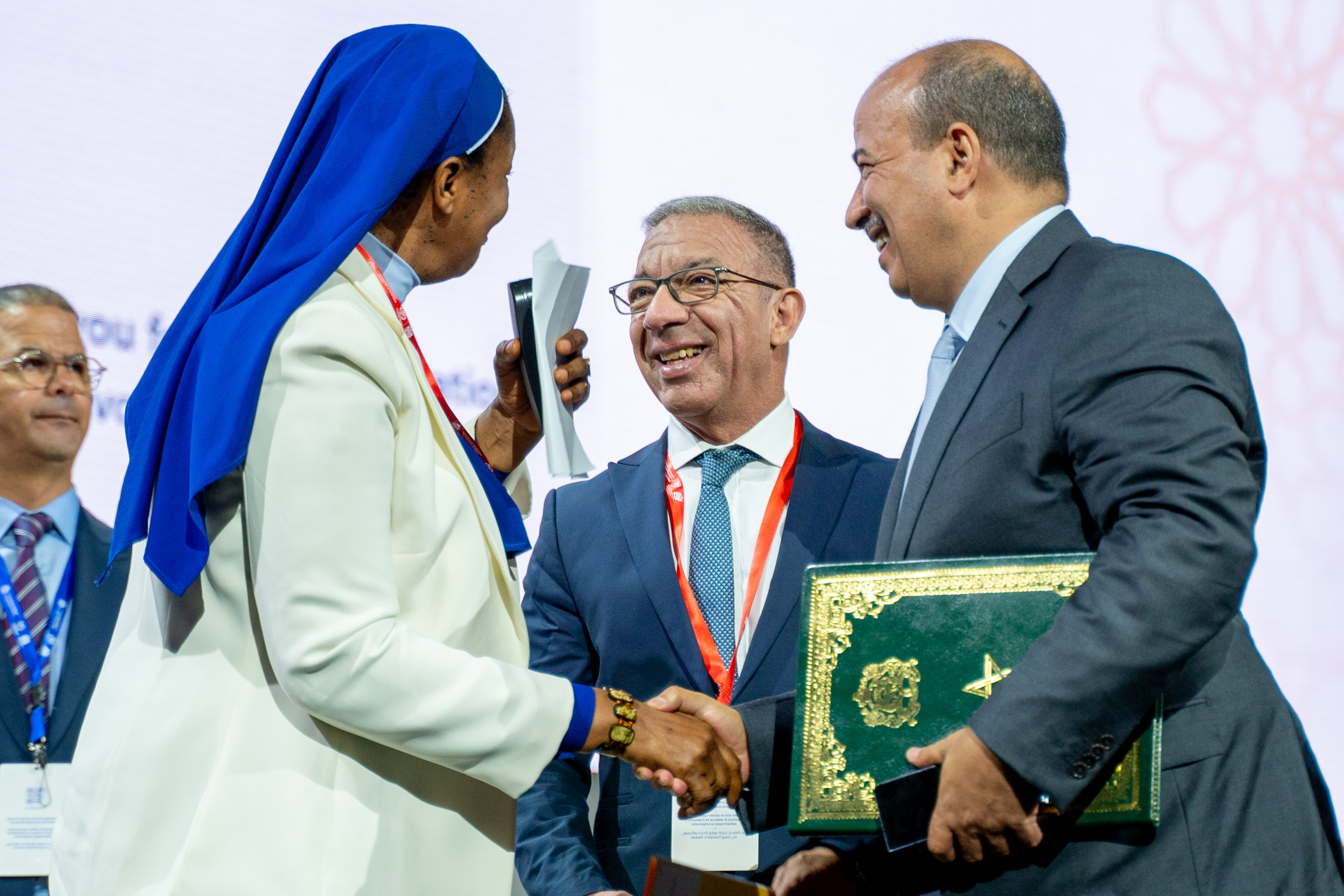
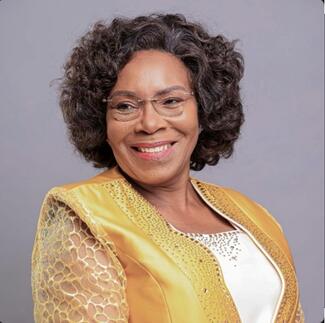
Mr. Duarte Pacheco, Honorary President of the IPU, Mr. Naam Miyara, former Speaker of the House of Councillors of the Kingdom of Morocco, Sister Agatha O. Chikelue, Chair of the Religions for Peace International Women’s Coordinating Committee (Marrakesh 2023)
The Conference concluded with the Marrakesh Communiqué, where parliamentarians added their voices to the call for action and solidarity to promote peaceful coexistence, and to counter challenges to democracy and the social contract already being observed in many societies:
“Addressing these issues requires concerted and decisive action from all of us: from parliamentarians with their legislative power, as well as from all parts of society, including official institutions, religious and belief communities, faith-based and civil society organizations, and academia. Times of crisis and uncertainty especially call for solid leadership to bring people together around a common vision of the future.”
A Second Parliamentary Conference on Interfaith Dialogue under the theme Strengthening trust and embracing hope for our common future will be held in Rome in June 2025 during the Jubilee Year announced by Pope Francis.
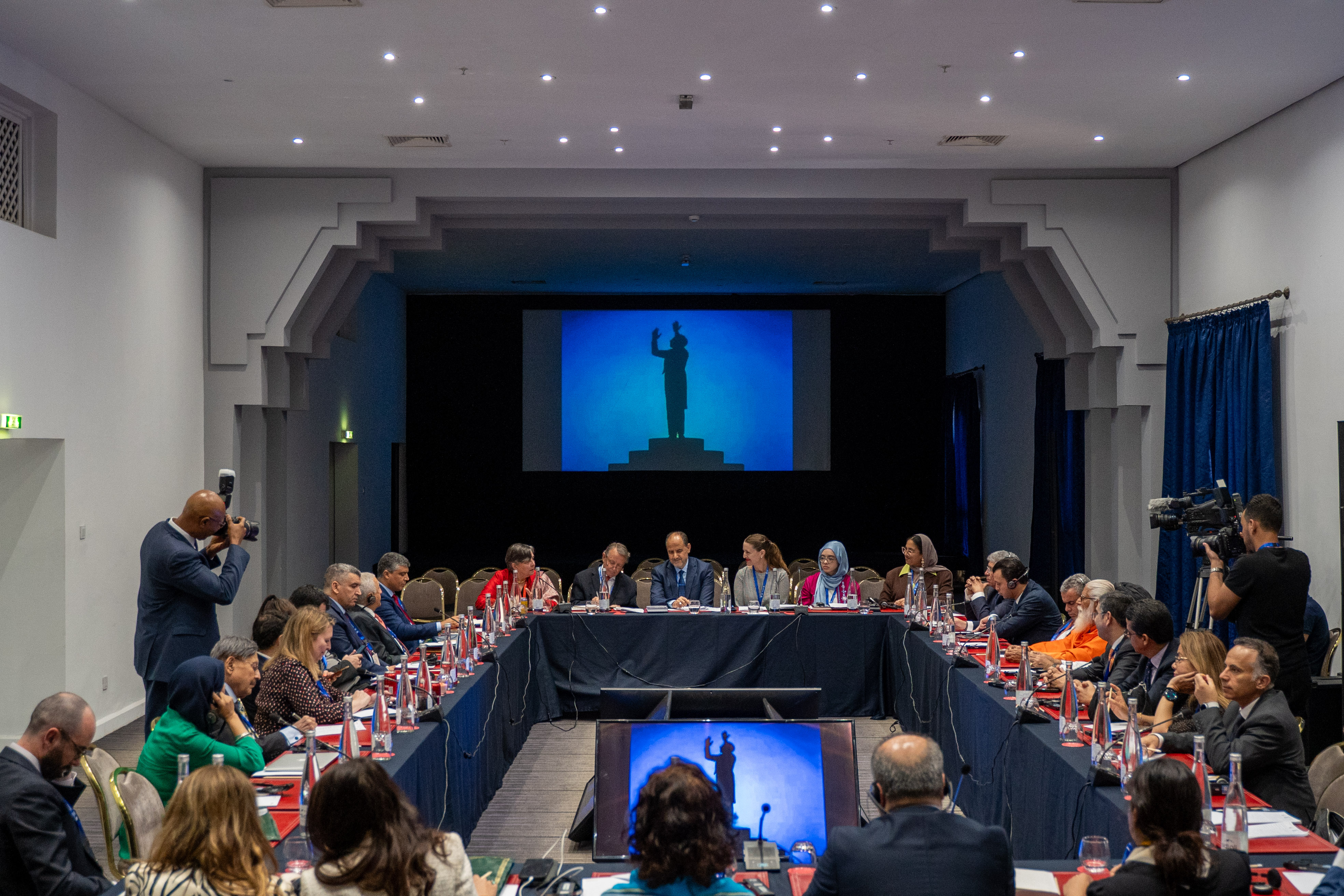
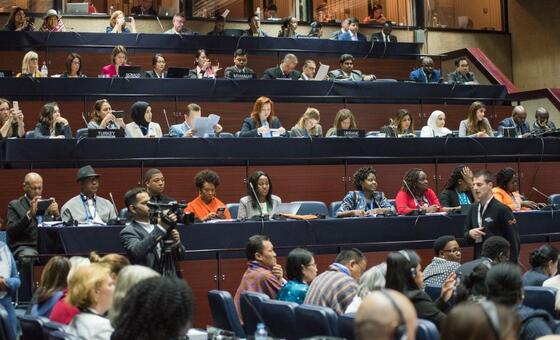
Side Event held during the Parliamentary Conference on Interfaith Dialogue: Working together for our common future (Marrakesh 2023)
In view of the success of the multi-stakeholder event in Marrakesh, and Rome to look forward to, the IPU invested further in its ecosystem approach around interfaith dialogue, especially to bring parliamentary perspectives into non-parliamentary spaces. In the aftermath of 7 October 2023, it consulted with partners and experts about how to adapt to the new realities and remain an inclusive platform for dialogue where different stakeholders felt welcome.
Rather than shying away in the face of growing tensions, the IPU saw a growing role for parliamentarians in engaging in dialogue for peace and inclusion, especially inspired by the March 2023 Manama Declaration Promoting peaceful coexistence and inclusive societies: Fighting intolerance, which affirms:
“We [Members of Parliament] can respond to these challenges by encouraging collaborative networks promoting dialogue and joint projects in service to the community, by creating channels for conflict prevention and mediation, by promoting moderation, by advancing education and awareness building, and by encouraging community and religious leaders to contribute to these objectives. We commit to speaking out against intolerance and especially any advocacy of hatred that constitutes discrimination, hostility or violence. We will also assist in the resolution of conflict through the exercise of parliamentary diplomacy.”
This and other commitments led the IPU to name peace and international security as its overarching theme for 2024. At its 148th Assembly in March 2024, the Geneva Declaration was dedicated to Parliamentary diplomacy: Building bridges for peace and understanding. It affirms the commitments of Member Parliaments to “holistic dialogue processes that involve representatives of religions, beliefs and faith-based organizations to effectively complement existing efforts to mitigate violence and promote peace, inclusion and understanding”.
The 2024 IPU toolkit for parliamentarians Human security and common security to build peace includes parliamentary diplomacy as a fifth pillar of parliamentary work, in addition to the traditional roles of legislation, oversight, budgeting and representation, and mentions interfaith dialogue as a tool for conflict prevention and mediation.
While the IPU was asserting the importance of multi-stakeholder dialogue, also with faith actors, to weather the current crises, other like-minded organizations were doing the same. Globethics framed its 2024 Global Ethics Forum in September around Ethical Leadership for a Re-envisioned Future and invited the IPU Secretary General, Mr. Martin Chungong, to deliver the keynote address, where he reiterated the call for political leaders and faith actors to come together for the common good: “People may say politicians and religious leaders coming together constitutes an unholy alliance. However, that is not true. They have mandates that overlap and resonate very well with society…. [I]nclusiveness is the name of the game, so we cannot have any leadership that is exclusive or divisive.”
Addressing these issues requires concerted and decisive action from all of us: from parliamentarians with their legislative power, as well as from all parts of society, including official institutions, religious and belief communities, faith-based and civil society organizations, and academia. Times of crisis and uncertainty especially call for solid leadership to bring people together around a common vision of the future.
The UN Pact for the Future of September 2024 echoed the importance of a joint effort in its Action 55, which encourages UN engagement with different actors, including national parliaments and faith‑based organizations, stating: “The challenges we face require cooperation not only across borders but also across the whole of society”. The Pact for the Future reiterates, in Action 18, the commitment of the UN to promote interreligious and intercultural dialogue and to combat all forms of intolerance and discrimination, in an effort to build and sustain peace.
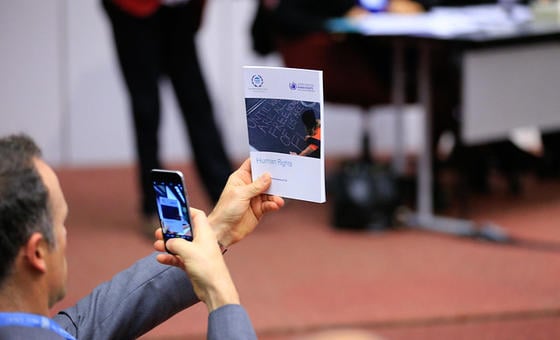
The Office of the UN High Commissioner for Human Rights (OHCHR) has been holding annual multi‑stakeholder meetings of users of its “Faith for Rights” framework since 2020, to explore ways of engaging faith actors for the promotion of human rights. Its efforts have always included parliamentarians, especially since parliaments are responsible for ratifying international treaties. In November 2023, for instance, OHCHR organized a workshop in Rabat tailored for MPs, following up to the application of the “Faith for Rights” framework by the Committee on the Elimination of Discrimination against Women (CEDAW).
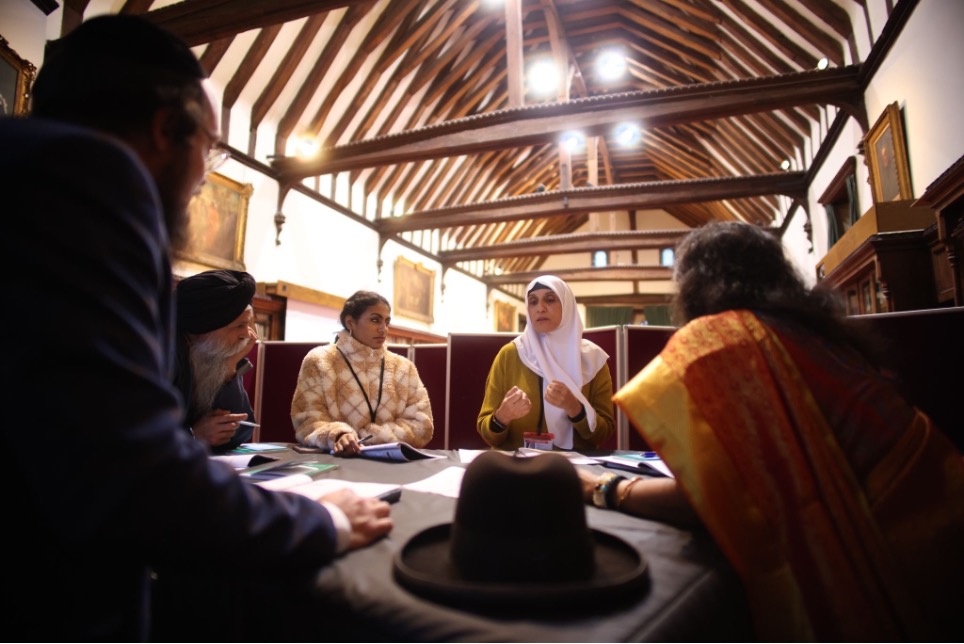
Peer-to-peer learning on the “Faith for Rights” framework. © Sam Howson
In 2024, the IPU and OHCHR, in cooperation with the International Panel of Parliamentarians for Freedom of Religion or Belief (IPPFoRB), launched a four-part webinar series on the theme From theory to action: Parliamentarians against hatred based on religion or belief – Crafting pathways to more peaceful, inclusive and just societies. This joint activity pools the expertise of all three organizations to provide a peer-learning space which is educational as well as discursive, to explore the human rights framework around hate speech and the parliamentary response.
The different webinars in the series have been incorporated into activities of other stakeholders: the first webinar on understanding and upholding freedom of religion or belief took place in November 2024 within the OHCHR Faith for Rights community of practices annual meeting. The second webinar in January 2025 focused on freedom of expression and was integrated into the inaugural conference of the Human Rights 30 (HR30) Forum “Empower Talk: Standing Against Hate and Embracing Rights”, hosted by the University of Essex and the government of Albania and sponsored, amongst others, by the UN Special Rapporteur on freedom of religion or belief and the OHCHR. The figurehead behind this Conference was Mr. Ahmed Shaheed, former UN Special Rapporteur on freedom of religion or belief.
The conference convened many longstanding interfaith champions and civil society experts from multilateral and non-governmental organizations, all of whom engaged faith actors in peacebuilding efforts. The IPU shared a podium with representatives from the UN, the Organization for Security and Cooperation in Europe (OSCE) Office for Democratic Institutions and Human Rights, the Organization of Islamic Cooperation (OIC) and the Universal Rights Group to discuss how multilateral and intergovernmental frameworks could address hate speech. The outcome document The Tirana Framework for Confronting Intolerance outlined five key goals for countering intolerance and fostering inclusion, which also reinforced joint efforts, including by parliamentarians. One action point addressed building multisectoral alliances:
“Collaboration is key. Efforts to combat intolerance including Antisemitism, Islamophobia/anti-Muslim hate, prejudice against Christian minorities and other religious and belief minorities, xenophobia, racism, sexism, and other pervasive forms of discriminatory intolerance must be collaborative. Joined up action by public officials, multilateral bodies, community leaders, faith-based actors, corporations, media organizations, and civic groups can be crucial to promote actions that reduce hate and promote inclusion.”
The HR30 Forum’s focus on hate speech carried on important work begun in a Wilton Park dialogue in May 2024, when a meeting had been held on the theme Addressing the rise in global hatred on the basis of religion or belief – which the IPU had also attended. Out of this dialogue, the initiative to counter hate speech was developed, spearheaded by Mr. Ahmed Shaheed, professor at the University of Essex, as well as a focus on religious engagement to counter polarization, spearheaded by Mr. Fadi Daou of Globethics.
In February 2025, Wilton Park convened religious leaders, multilateral organizations and experts from Europe and the Middle East to discuss The role and responsibility of religious leaders in times of war, atrocities and polarisation. The closed-door dialogue took place in partnership with the British Embassy to the Holy See and Globethics, and in association with OHCHR. The High Commissioner for Human Rights stated that:
"[M]any States still lack comprehensive legislation against discrimination, which is a fundamental tool to protect people from violence and harassment based on their faith. In addition to punishing and deterring such acts, legislation enables people from all faiths to participate more fully in cultural, religious, social, economic and public life – which, in itself, can reduce tensions and foster understanding.
I therefore urge faith leaders and political authorities to work together for comprehensive anti-discrimination laws and institutions, and to use them where they exist.”
One of the stated aims of the dialogue was to feed into the IPU’s Parliamentary Conference on Interfaith Dialogue in June 2025.
Collaboration is key. Efforts to combat intolerance—including Antisemitism, Islamophobia/anti-Muslim hate, prejudice against Christian minorities and other religious and belief minorities, xenophobia, racism, sexism, and other pervasive forms of discriminatory intolerance—must be collaborative. Joined up action by public officials, multilateral bodies, community leaders, faith-based actors, corporations, media organizations, and civic groups can be crucial to promote actions that reduce hate and promote inclusion.
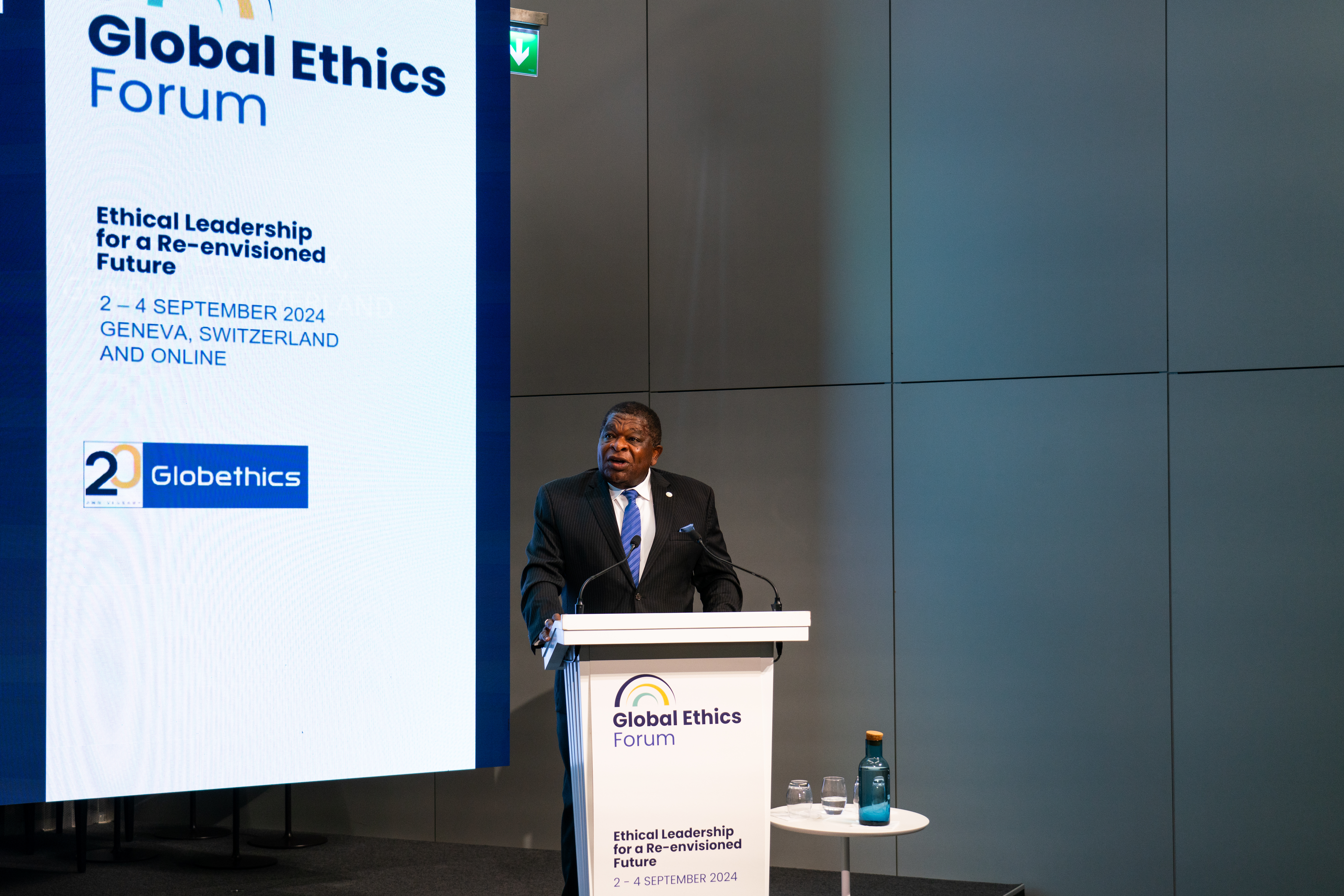
IPU Secretary General, Martin Chungong, delivers a keynote address during the 2024 Global Ethics Forum in Geneva Ethical Leadership for a Re-envisioned Future
This dialogue at Wilton Park marked the first time since the events on and after 7 October that interfaith actors had come together for dialogue and taken stock of the situation, including their failings and how they might work better for peace. The IPU contributed to a discussion on whether a reset was needed in the relationship between faith actors and policymakers. Participants agreed: business as usual cannot continue, it was the time for people of goodwill to stand up and do things differently, for the common good.
The coalition is continuing the dialogue where Wilton Park left off. On 16 May 2025 – the International Day of Living Together in Peace, Globethics and the UN “Faith for Rights” programme, with other partners, will be convening key actors to develop a white paper addressing polarization and build on previous inputs for fostering peaceful coexistence.
This white paper, as well as insights from the Wilton Park dialogues, the HR30 Forum, the Global Ethics Forum, the OHCHR “Faith for Rights” framework, the Pact for the Future, and the IPU’s own commitments, will feed into the IPU Interfaith Conference in June 2025, where the global parliamentary community will come together with different stakeholders in the Italian Parliament and the Vatican, to consider how parliamentarians can meaningfully harness interfaith dialogue to promote peace, inclusion and human rights, and counter polarization. It is hoped that participants recognize that what unites us is greater than what divides us, so that political leaders may be able to speak in one voice with religious leaders and civil society, to reinforce the sanctity of human life and the equal dignity and rights of each person.
Registration for the IPU’s Second Parliamentary Conference on Interfaith Dialogue in June 2025 has opened, and the concept note, draft programme and other details can be found on the event page.
Please direct any inquiries to [email protected].