Impact
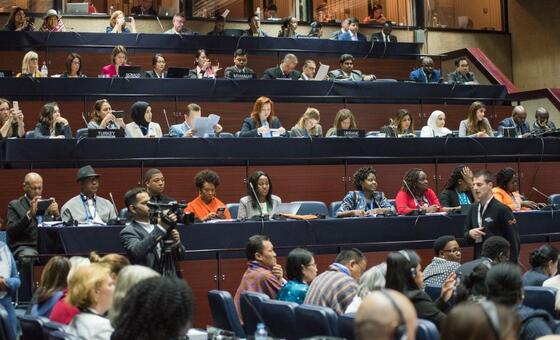
The IPU facilitates parliamentary diplomacy and empowers parliaments and parliamentarians to promote peace, democracy and sustainable development around the world.
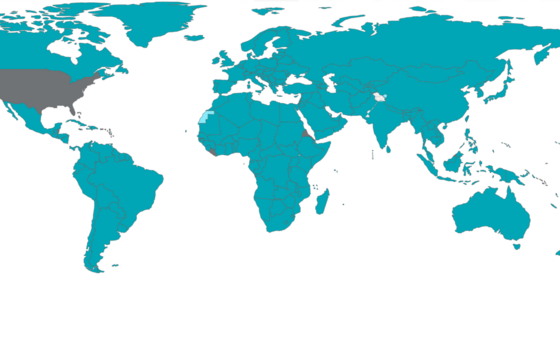
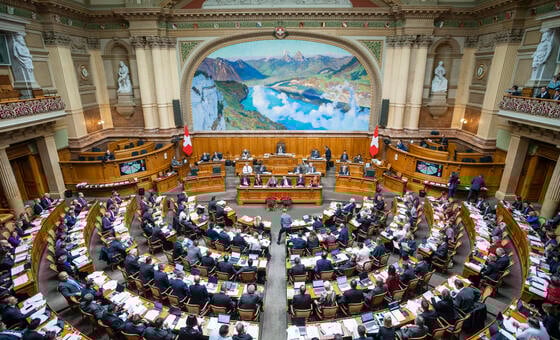
The Inter-Parliamentary Union (IPU) is the global organization of national parliaments with a membership of 181 Member Parliaments and 15 Associate Members. The IPU promotes democratic governance, institutions and values, working with parliaments and parliamentarians to articulate and respond to the needs and aspirations of the people. It works to promote peace, democracy, human rights, gender equality, youth empowerment, climate action and sustainable development through political dialogue, cooperation and parliamentary action. A key strength of the IPU since its founding has been its ability to connect Member Parliaments with each other and leverage their collective political strength to accelerate progress on key global issues, including gender equality and women’s rights and empowerment.
The IPU recognizes gender equality as a key component of democracy and works to achieve the equal participation of men and women in politics. It mobilizes parliaments and supports them to be more representative and inclusive institutions by increasing women’s political participation and leadership, transforming themselves into gender-sensitive institutions that deliver on women’s rights, and advancing gender equality. Combatting and eliminating sexism, harassment and violence against women in politics and in parliament are at the heart of such mobilization and support.
Since 2024, thanks to a UN Women grant, the IPU has been implementing one of the components of the European Union-funded Women and Youth in Democracy Initiative (WYDE). In this framework, UN Women, the IPU, the International Institute for Democracy and Electoral Assistance (International IDEA), and United Cities and Local Governments (UCLG), are implementing the WYDE/Women’s Leadership component through a programme entitled: Advancing Women’s Political Participation and Decision-Making through Social Norms Change, Networking and Global Advocacy.
The WYDE/Women’s Leadership programme (WYDE/WPP) prioritizes changing social norms and shifting cultural attitudes that portray women’s roles in communities and society as incompatible with political power; and puts specific focus on building critical skills among young women, and engaging men and boys, office holders and the media as allies for gender equality and women’s empowerment.
Through WYDE/WPP, the IPU will contribute to the project’s objective of promoting transformative social norms through evidence-based advocacy and capacity-building. The IPU will add value by deepening the understanding of social norms and narratives related to parliaments which hinder women’s political participation and will provide capacity-building support to members of parliament, aimed at enhancing their role in transforming these norms.
Consultancy tasks
The IPU is seeking applications from qualified and experienced candidates to undertake a participatory research and mapping exercise of social norms that hinder women’s political participation, and to develop global guidance and training materials for members of parliament (MPs) to address and transform these norms in support of gender equality, including the perspective of the participation of persons from diverse groups. The Consultant will work under the supervision of the Manager of the IPU Gender Partnership Program. The tasks include:
In carrying out his/her responsibilities, the Consultant will benefit from current efforts to integrate a behavioral science approach in the IPU’s programmatic work. Also, the Consultant will collaborate with the IPU’s Consultant/External Collaborator on the participation of persons from diverse groups in parliament.
Key deliverables
Inception report: a report including a workplan and tentative budget outlining the methodology, timeline, and engagement strategy for developing the training modules.
Scoping report: a report on findings and conclusions of the desk review and consultations with MPs, experts, practitioners and specialists, including conclusions and recommendations from findings related to the capacity and needs assessment of MPs.
Guidance paper for parliamentarians on addressing social norms that hinder women’s participation in parliament for use across diverse political and regional contexts based on feedback from the IPU on the scoping report.
Training methodology including, learning objectives, delivery mode recommendations (online, in‑person, hybrid), target audience division, follow-up engagement and continuous learning.
Training modules with full content including, for example participants’ handbook, presentation slides, exercises, case studies, audio and video tools, and assessment tools.
Conducting two model workshops and integration of feedback into the final training materials.
Conceiving a training package and guidance including all editable source files/visuals, infographics and multimedia, and a summary detailing the development process and recommendations for rollout of trainings for other trainers (training of trainers).
Training a small group of trainers.
Timelines
Inception report: by 1 September 2025
Scoping report: by 26 September 2025
Guidance paper: by 10 October 2025
Training methodology: by 10 October 2025
Training modules: by 15 November 2025
Model workshops: by 15 January 2026
Training for trainers: by 15 February 2026
Qualifications and competencies
University degree in social science, political science or law; specialization in gender studies an asset. An advanced degree is highly desirable.
At least ten years of relevant professional experience related to gender equality, women’s rights and/or women in politics.
Experience conducting research and analysis on gender and social norms, particularly in institutional and political contexts.
Recent research and/or publications on harmful social norms for gender equality and/or women’s political participation.
Proven experience in developing and delivering training content or capacity-building programmes for politicians or legislators.
Demonstrated experience working with parliamentarians, parliamentary staff and political leadership at international level.
Experience with e-learning platforms and digital content development is highly desirable.
Excellent drafting skills in English and working knowledge of French.
Time frame and conditions
Employment conditions
The Consultant is an independent contractor, is not considered to be an official or employee of the IPU and is not subject to the IPU Staff Regulations and Staff Rules.
The Consultant is not entitled to recover from the IPU any income tax payable in respect of the fee provided under this contract and shall be solely liable for the payment of any national income tax due in respect of the emoluments payable under this contract.
Candidates will provide the following documents and information:
Curriculum vitae.
A cover letter with a brief description of why they are the right candidate for this consultancy, including details of their personal contribution to at least two relevant projects.
One sample of research or publication on a related topic.
Indication of a proposed daily rate or budget for the consultancy assignment.
Information about their availability to begin work on 4 August 2025 and carry out the consultancy till 27 February 2026.
Applications missing one or more of the required documents and information listed above will not be considered.
The deadline for applications is 22 July 2025 at 23:59 CEST (Geneva time). Applications should be sent by email to [email protected] with “Consultancy to develop global training materials on social norms” in the subject line. For further details about the consultancy, please contact [email protected].
Applicants will be contacted only if they are under serious consideration. Applications received after the deadline will not be accepted.
Recruitment principles
Our guiding principle in selecting candidates is to secure the highest standards of efficiency, competence and integrity. We do not discriminate on any grounds and are committed to promoting diversity in our workforce.
Particular attention is paid to candidates from developing countries and to achieving gender balance. We strive to provide an environment where the contribution of each individual is valued.