Impact
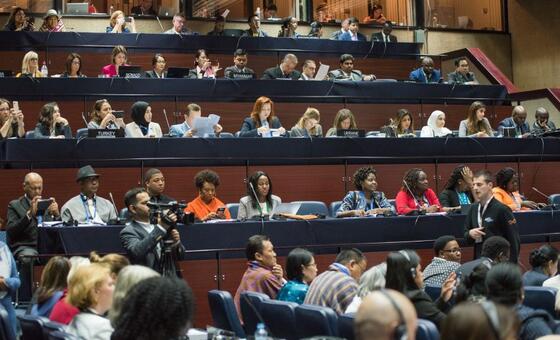
The IPU facilitates parliamentary diplomacy and empowers parliaments and parliamentarians to promote peace, democracy and sustainable development around the world.

Background
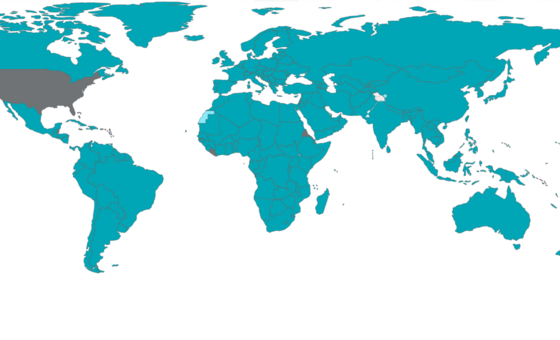
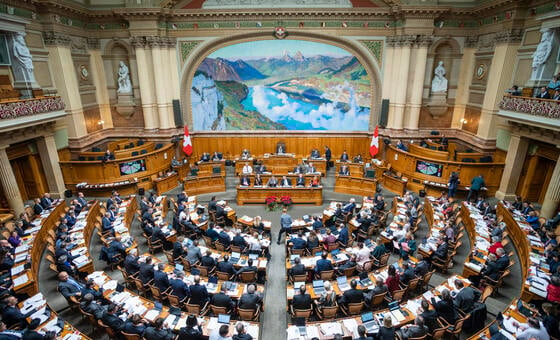
The Inter-Parliamentary Union (IPU) is the global organization of national parliaments. It was founded in 1889 as the first multilateral political organization in the world, encouraging cooperation and dialogue between all nations. Today, the IPU comprises 183 national Member Parliaments and 15 regional parliamentary bodies. The IPU promotes democratic governance, institutions and values, working with parliaments and parliamentarians to articulate and respond to the needs and aspirations of the people. It works for peace, democracy, human rights, gender equality, youth empowerment, climate action and sustainable development through political dialogue, cooperation and parliamentary action.
The IPU recognizes gender equality as a key component of democracy and works to achieve the equal participation of men and women in politics. It provides support to parliaments in advancing gender equality, increasing women’s political participation and leadership, and in transforming themselves into gender-sensitive institutions that deliver on women’s rights. Combatting and eliminating sexism, harassment and violence against women in politics and in parliament are at the heart of such support.
In recent years, the IPU has placed a strong focus on addressing harassment and violence against women in parliament. In 2016, the IPU published its first study on sexism, harassment and violence against women in parliament followed by a series of regional studies. The IPU’s 2025 study on parliaments in the Asia-Pacific region found that 60% of the women parliamentarians surveyed had been targeted by hate speech, disinformation, image-based abuse or the unwanted disclosure of personal data (online (doxing), the highest rate recorded across the IPU’s regional studies to date. The IPU has underscored that this growing phenomenon pushes women out of office and dissuades them from standing for office, adding a further obstacle to progress on women’s representation in parliaments, which stands at 27.5% as of 1 January 2026.
In 2026, the Swedish International Development Cooperation Agency (Sida) is funding the IPU to implement the project Support to women’s political participation in and through parliament. These funds allow the IPU to continue and extend its assistance to parliaments to combat gender-based violence, in particular digital violence.
Objectives
Legal and policy responses to digital violence against women in politics remain uneven across the world. Some frameworks address violence against women in politics directly; others cover technology-facilitated gender-based violence within broader legislation; and many leave significant gaps in the protection of women in political life. Understanding what works, and where the gaps lie, requires a comparative view that draws on experience from different regions.
Against this backdrop, the IPU is recruiting a consultant to conduct a comparative research and draft a report on legal frameworks and good practices developed at the national level in countries in different parts of the world aimed at preventing and responding to digital violence against women in politics. The report will be prepared in collaboration with UN Women.
The comparative research will be carried out in two phases. A first phase of the research to be finalized by 31 December 2026, will be based on a desk review of existing legislation. Subject to the availability of funds, the second phase of the research would start in 2027. It would build on the findings of the comparative research of the first phase to carry out consultations with selected parliaments to collect information and feedback on lessons learned from the drafting and content of legislation, and the implementation of legislation and related policies so far.
Tasks
By 31 December 2026, under the supervision of the Manager of the Gender Partnership Programme, the Consultant will carry out comparative research on legal and policy practices developed at the national level to combat digital violence against women in politics, including existing forms of gender-based violence (such as sexual harassment, stalking, hate speech, misinformation, defamation and impersonation) and new forms of abuse (such as hacking, astroturfing, video and image-based abuse including deepfakes, doxing, cyberbullying, and online grooming among others).
The desk research will map and compare legislation, bills and policy practices across countries and regions.
The findings will aim to inform the development and implementation of legislation and policies, with a particular view to supporting parliaments.
More specifically, the research will focus on the following:
Across these areas, the research will identify gaps where women in politics are not adequately protected and will cover through publicly available information lessons and recommendations from the implementation of legislation so far.
Methodology
Deliverables
Report (approx. 20 to 40 pages)
The report should include an executive summary and clear comparative tables or summaries where appropriate.
Documentation:
Required experience and qualifications
Time frame and conditions
The Consultant will undertake this work over a timeline commencing on 30 November 2026 and concluding on 31 December 2026. Over this period, the Consultant shall be expected to work a maximum of 25 days. The Consultant shall be home- or Geneva-based.
The consultant will submit a final report to the IPU by the 31 December 2026.
Employment conditions
The Consultant is an independent contractor, is not considered to be an official or employee of the IPU and is not subject to the IPU Staff Regulations and Staff Rules. The Consultant is not entitled to recover from the IPU any income tax payable in respect of the fee provided under this contract and shall be solely liable for the payment of any national income tax due in respect of the emoluments payable under this contract.
Candidates should provide:
The deadline for applications is 23 November 2026.
Applications should be sent by e-mail to job ipu [dot] org (job[at]ipu[dot]org) with ‟Research Consultant, Gender Partnership Programmeˮ in the subject line. For further information about the consultancy, please contact postboxipu [dot] org (postbox[at]ipu[dot]org).
Applicants will be contacted only if they are under serious consideration. Applications received after the deadline will not be accepted.
Recruitment principles
Our guiding principle in selecting candidates is to secure the highest standards of efficiency, competence and integrity. We do not discriminate on any grounds and are committed to promoting diversity in our workforce.
Particular attention is paid to candidates from developing countries and to achieving gender balance. We strive to provide an environment where the contribution of each individual is valued.
We ask all our personnel to apply the Common Principles for Support to Parliaments in their work.
We ask all our personnel to agree to our Code of conduct for personnel and our Fraud and corruption prevention policy available at www.ipu.org/about-us/working-with-ipu, and our policy to prevent and address harassment including sexual harassment at IPU Assemblies and other events, available at: www.ipu.org/about-ipu/structure-and-governance/statutes-and-policies-ipu.