Use case ID: 016
Author: Riigikogu (The Estonian Parliament)
Date: 5 June 2024
Objective:
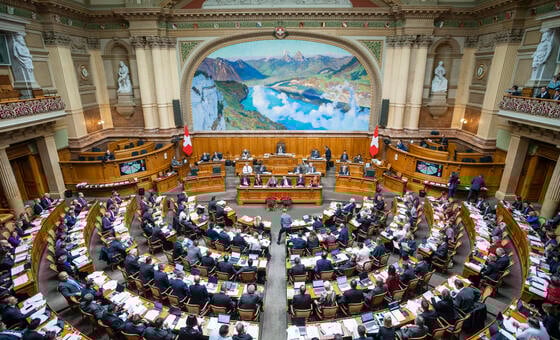
Reduce the need for human labour (stenographers) at sittings of the Riigikogu (The Estonian Parliament) and automate the working process; and assist in the preparation of committee minutes. Both outputs are reviewed by staff members (editors, committee advisers) and processed further if necessary.
Actors:
- Members of parliament
- Editors and committee officials
- HANS verbatim records system
- Document and procedure information system
- Voting information system
Prerequisites:
- High-quality audio recording system (part of the HANS system)
- Well-trained speech-to-text system of sufficient quality (error rate less than 10%, part of the HANS system)
- Willingness to give part of the work to the AI system
Scenario:
- The voice recording system records all the speeches and sends 10-minute clips to the speech-to-text system.
- The AI speech-to-text system produces a draft transcript, identifies the speaker and sends all the prepared data to the main system.
- For plenary sittings, the system automatically:
- prepares a text according to the speakers, based on the texts obtained from the different audio segments
- adds the necessary punctuation marks and the names of the speakers
- adds the agenda items according to the information received from the document management system
- adds the links to the votes, taken from the voting information system
- adds YouTube links to each agenda item and time codes of speeches.
- Editors review the text prepared by the system and make the necessary corrections; the transcript is then automatically published in the same system on the website of the Riigikogu.
- For committee meetings, committee officials upload a pre-recorded, high-quality audio file to the system, and the system then automatically:
- prepares a single text according to the speakers, based on the texts obtained from the different audio segments
- adds the necessary punctuation marks and the names of the speakers.
- Committee officials review the received text, make the necessary changes and prepare the minutes of the committee.
Alternate flows:
- The system allows for the manual production of a transcript without speech recognition.
Expected results:
- The need for human labour is reduced.
Potential challenges:
- The speech-to-text language model needs to be expanded with new words from time to time, and needs additional training.
Data requirements:
- Sufficient training material is essential.
Integrations with other systems:
- There is no direct need for integration, although any kind of integration makes the entire system more automated and further reduces the need for human labour.
Success metrics:
- The speech-to-text error rate is less than 10%.
The Use cases for AI in parliaments collection is published by the IPU’s Centre for Innovation in Parliament as part of the Parliamentary Data Science Hub’s project to create guidelines for AI governance in parliaments. This work is licensed under a Creative Commons Attribution-NonCommercial-ShareAlike 4.0 International licence. It may be freely shared and reused with acknowledgement of the author and the IPU. A use case describes how a system should work. It is used to plan, develop and measure implementation. A use case is not the same as a case study, which is a descriptive text of an actual project’s implementation. Please note that this use case is provided “as is” and neither the IPU nor the author accepts any responsibility for its use. For more information about the IPU’s work on artificial intelligence, please visit www.ipu.org/AI or contact innovation ipu [dot] org (innovation[at]ipu[dot]org). ipu [dot] org (innovation[at]ipu[dot]org). |