Impact
The IPU facilitates parliamentary diplomacy and empowers parliaments and parliamentarians to promote peace, democracy and sustainable development around the world.

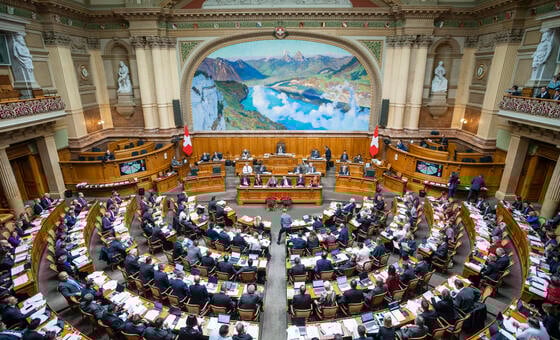
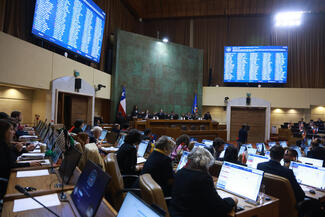
Parliamentary premises. Image credit: Chamber of Deputies of Chile
By Ms. Virginia Carmona Aguirre, Commission on AI and Data-Processing Policies, and Mr. Esteban Sanchez Rivera, Informatics Department, Chamber of Deputies of Chile
Learning from Europe: Digital transformation of parliamentary archives in Chile
Historically, access to parliamentary archives has been a challenge: there are millions of documents scattered across the web in different formats, and these resources are not especially user-friendly for citizens who are not legal experts. Inspired by the success of ArchiBot, a conversational assistant launched by the European Parliament that allows users to consult legislative archives in natural language with verifiable citations, the Chamber of Deputies of Chile decided to create ArchileBot, which is based on a similar model but adapted to the Chilean context.
The goal was clear: to facilitate democratic access to the country’s legislative memory. The tool was built on the Chamber’s own document collections and uses retrieval-augmented generation approaches to ensure that responses are always supported by official documents. The benefits are evident, with a drastic reduction in search times, strengthened transparency, and a new bridge between citizens and institutions.
Knowledge transfer in action: Technical cooperation with the European Parliament
The initial impetus for ArchileBot came directly from the European Parliament, which not only shared the idea and know-how behind its own technology, but also organized a hands-on workshop in Brussels, where invited parliamentary teams – including from the Chamber of Deputies – were able to test the tool and gain a first-hand understanding of its technical and methodological foundations.
From the start, the focus in Chile was on experimenting, innovating and quickly moving towards a functional prototype. Key lessons included the importance of high-quality document corpora, the need for internal validation of responses by legal and legislative experts, and the value of maintaining a closed system limited to official sources under institutional control. This process allowed Chile to move from initial idea to practical development, demonstrating that parliamentary innovation with AI is possible when international experience is combined with local implementation capacity.
Scaling impact: Chile leads the way on parliamentary innovation in Latin America
After consolidating ArchileBot, the Chamber of Deputies assumed a regional leadership role, sharing its experience and providing support other parliaments with their own digital transformations. In June 2025, the Chamber of Deputies organized a meeting, with support from the European Parliament, to showcase the tool and discuss adoption pathways with teams from the parliaments of Argentina, Mexico, Peru and Uruguay.
Since then, Chile has been assisting regional counterparts with technical sessions and practical guidance on preparing documentation, defining architectures and models, evaluating costs, and establishing human validation protocols. The Chilean model has become a benchmark for parliamentary innovation with AI in Latin America.
This cooperation process demonstrates that parliamentary innovation knows no borders: European learning translated into a practical initiative in Chile, which is now sharing its experience across region as a public good.
Reflecting on this experience, Mr. Miguel Landeros, Secretary General of the Chamber of Deputies of Chile, said: “In Chile, we have taken up the responsibility of sharing this experience with other parliaments in the region, as we believe that AI applied to legislative archives is a public good that should serve to bring democracy closer to citizens across Latin America.”
Looking ahead
The experience of Chile demonstrates that parliamentary modernization with AI requires institutional vision, high-quality documentation and strategic alliances. The key is to advance gradually, with targeted pilots, continuous human validation, and clear governance over the use of technology.
The next steps for the Chamber of Deputies include further strengthening ArchileBot, expanding citizen access and consolidating regional cooperation. According to Mr. Landeros, this project “paves the way towards a digital future where parliamentary archives are not only preserved but also transformed into active tools for education, research and citizen participation.”