

Geneva, Switzerland, 6 October 2026
As artificial intelligence (AI) becomes increasingly embedded in children’s lives, parliaments have a critical role to play in ensuring that it is developed, deployed and regulated in ways that protect children’s rights and well-being, according to a new issue brief published by the Inter-Parliamentary Union (IPU).
Protecting children’s rights in the age of AI: A parliamentary action guide examines how AI is affecting children, with a particular focus on mental health and education. It calls on parliaments to ensure that technological progress does not come at the expense of children’s safety, privacy, development, autonomy and right to be heard.
The publication emphasizes that AI can affect virtually every right in the Convention on the Rights of the Child, the United Nations human rights treaty that sets out the civil, political, economic, social, health and cultural rights of children.
Children and AI
Children are increasingly encountering AI through social media recommender systems, sometimes referred to as algorithms, as well as chatbots, AI companions, online games and social robots.
According to UNICEF, children are more than three times as likely as their parents to use AI systems. UNICEF research also shows that generative AI use among children ranges from 18% to 50% across Europe, Asia and the Americas.
Studies show that children under the age of two already spend an average of 49 minutes a day using screens. By the age of eight, this figure has more than tripled, to approximately three hours a day.
These developments underline the importance of ensuring that digital and AI-enabled environments are designed and governed with children’s rights and best interests in mind.
Three priorities for parliaments
The issue brief identifies three priorities for parliamentary action:
- Hear directly from children as well as from parents, educators and industry experts to build an evidence base to understand how children are interacting with AI.
- Oversee whether existing child protections work in practice by examining how laws and policies are implemented and enforced.
- Update legislation by introducing stronger safeguards where necessary, including against harmful AI practices such as AI-generated child sexual abuse material, surveillance and commercial profiling of children.
Protecting mental health and well-being
Features such as infinite scrolling, push notifications and recommender systems can become addictive and make it difficult for children to disengage. They also raise concerns about sleep disruption, exposure to harmful content, negative effects on self-esteem and body image, cyberbullying and other harmful online interactions.
Growing concern about the impact of AI on children’s mental health has prompted legislative action and parliamentary debate worldwide.
The IPU publication calls on parliaments to consider imposing stronger responsibilities on platforms and AI providers, including a possible digital duty of care requiring them to identify and mitigate foreseeable risks to children.
Ensuring AI supports education
AI is increasingly being used in education to personalize learning, assess students and support teachers. Properly designed systems can provide tailored explanations and additional support, including for children with disabilities.
However, the publication also identifies risks relating to the collection and use of students’ data, algorithmic bias, unequal access, unreliable outputs and excessive reliance on AI. Excessive reliance on AI may limit opportunities to develop reasoning, writing, problem-solving and other core skills.
The issue brief calls on parliaments to make AI literacy a core part of education, establish standards covering privacy, bias, transparency and accessibility, and require child-rights or risk assessments before AI systems are deployed in educational settings.
It also urges parliaments to ensure that AI augments rather than replaces teachers, human relationships and social interaction within their education systems.
Sharing international good practice
The publication draws on the experience of parliamentarians from Australia, Germany, Ghana, Jordan, Spain, the United Kingdom and the United Republic of Tanzania. Their contributions illustrate how parliaments are responding to AI-related risks affecting children in different cultural, social and economic contexts.
The issue brief forms part of the IPU’s wider work on artificial intelligence. The IPU supports parliaments through multi-stakeholder dialogues, exchanges between parliamentarians, and the sharing of experience and good practice on both the use of AI within parliaments and the development of AI policy around the world.
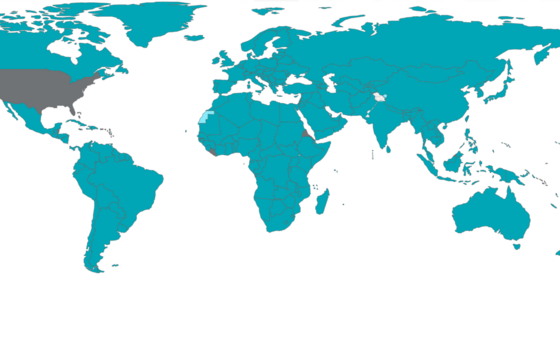
The IPU is the global organization of national parliaments. It was founded in 1889 as the first multilateral political organization in the world, encouraging cooperation and dialogue between all nations. Today, the IPU comprises 184 national Member Parliaments and 15 regional parliamentary bodies. It promotes peace, democracy and sustainable development. It helps parliaments become stronger, younger, greener and more gender-balanced. It also defends the human rights of parliamentarians through a dedicated committee made up of MPs from around the world.
For more information about the IPU, contact press ipu [dot] org (press[at]ipu[dot]org)