Friday, 9 October 2026, Arusha, United Republic of Tanzania
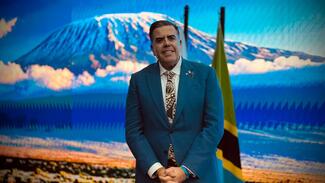
Mr. Milton Dick, the Speaker of the House of Representatives of Australia, has been elected the 32nd President of the Inter-Parliamentary Union (IPU) by hundreds of parliamentarians gathered in Arusha, United Republic of Tanzania, for the 153rd IPU Assembly.
Mr. Milton Dick took the top spot at the IPU with 56% of the vote after one round of voting conducted by secret ballot.
Mr Milton Dick succeeds Dr. Tulia Ackson of the United Republic of Tanzania, who concluded her three-year mandate at the end of the Assembly.
Mr. Milton Dick has represented the federal electorate of Oxley in Queensland since 2016, following service on Brisbane City Council from 2008 to 2016. After studying at the University of Queensland, he worked as an adviser in the Australian federal government and in local government.
He was elected Speaker of the House of Representatives in 2022 and re-elected unopposed in 2025. As Speaker, Mr. Dick has focused on impartiality, inclusion and engagement, and efforts to make the chamber a safer and more respectful workplace.
He has also prioritized parliamentary diplomacy, including Parliamentary Friendship Groups and engagement with the diplomatic community. Within the IPU, he currently serves as Vice-President of the Executive Committee representing the Asia-Pacific Group, and as President of the Sub-Committee on Finance, supporting cooperation, transparency and accountability.
Following the election, Mr. Dick said: “Today, there are no winners or losers. The IPU has spoken with one voice. This is democracy. A reminder that dialogue still matters, a reminder that respect still matters, a reminder that cooperation still matters…We will work together. We will listen to one another. We will seek common ground.”
Two other candidates were on the ballot – Ms. Sahiba Gafarova, Speaker of the Milli Majlis of Azerbaijan and Mr. Rojo Edwards Silva, member of the Senate of Chile.
The IPU President is the Organization’s political head. The post carries responsibility for chairing its statutory meetings and representing the IPU at major global events. The President is elected for a term of three years and must remain a sitting member of parliament throughout the mandate.
The new President will work closely with the IPU Secretary General, Ms. Anda Filip, who was elected at the 152nd IPU Assembly, in April 2026, in Istanbul, Türkiye.
Over the past 25 years, the IPU presidency has been held by prominent parliamentarians from Spain, India, Chile, Italy, Namibia, Morocco, Bangladesh, Mexico, Portugal, the United Republic of Tanzania and now Australia.
Global lawmakers find common ground
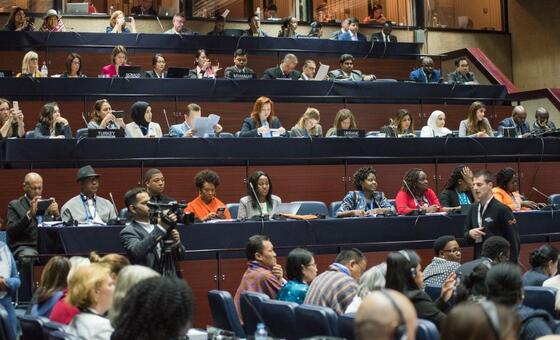
The 153rd IPU Assembly was attended by close to 700 parliamentarians from over 130 countries, including 50 Speakers and 45 Deputy Speakers of Parliaments. The high-level participation underscored the importance of the Assembly as a global forum for parliamentary leadership and dialogue. Among the lawmakers present, 39.4% were women – a record at an IPU Assembly.
Against a backdrop of multiple conflicts in the world, the parliamentarians found consensus and common language through the expected adoption of the Arusha Communiqué and a series of resolutions addressing some of the most pressing challenges facing the people they represent worldwide.
Placing people at the centre
The Arusha Communiqué, entitled Enhancing good governance and empowering communities through inclusivity, trust and opportunities for all, reaffirms that parliamentary work must be grounded in people’s realities.
It emphasizes that the true test of good governance is how it improves people’s lives, including through equal opportunities for all. The Communiqué calls for laws, policies and budgets to be informed by evidence, including scientific and quantitative data, official statistics, local and community knowledge, and people’s real-life experiences.
It also stresses the importance of parliamentarians being present in, and accessible to, the communities they represent, particularly those living in remote areas or affected by crises.
Advancing disability inclusion
The Assembly is also expected to adopt a resolution on Inclusive social development for all: Parliamentary strategies to promote the rights and empowerment of persons with disabilities, which calls on parliaments to treat disability inclusion as a core issue of human rights, democratic representation and sustainable development.
The resolution urges governments to align national legislation with the United Nations Convention on the Rights of Persons with Disabilities, allocate dedicated resources and ensure the meaningful participation of persons with disabilities in decision-making, in line with the principle of “nothing about us, without us”.
Climate emergency on the agenda
The Assembly is expected to agree on a common position with an emergency-item request submitted by the delegation of Nepal on 5 October 2026, entitled Urgent parliamentary action to address climate-related disasters and strengthen resilience in the Himalayan region and other vulnerable regions.
The request highlights the need for parliaments to take urgent action to strengthen resilience in regions facing growing climate-related risks in the wake of catastrophic flash floods and landslides in Nepal in August 2026 that have left thousands dead and homeless. It calls for international solidarity and reinforces the critical importance of climate justice, welcoming recent international legal instruments which underline the shared responsibility and accountability in this area.
Parliamentary diplomacy amid conflict
The Assembly brought together delegations from several countries affected by conflict, offering a rare platform for dialogue and parliamentary engagement at a time when relations between governments remain strained.
All of the IPU’s parliamentary bodies convened during the Assembly, including its four Standing Committees, the Forums of Women and Young Parliamentarians, the Committee on Middle East Questions and the Task Force for the peaceful resolution of the war in Ukraine.
The Assembly featured sessions on a wide range of issues, including military applications of artificial intelligence, oversight of extractive industries, mental health, AI and children’s rights, the future of work, healthy food in a changing climate, the protection of mountain and ocean ecosystems, the review of the Charter of the United Nations, and maritime security in times of conflict.
Human rights
The IPU Committee on the Human Rights of Parliamentarians also adopted important decisions in respect of the caseload of parliamentarians around the world who are in danger – including from Argentina, Colombia, the Democratic Republic of the Congo, Eritrea, Myanmar, Tunisia and Türkiye.
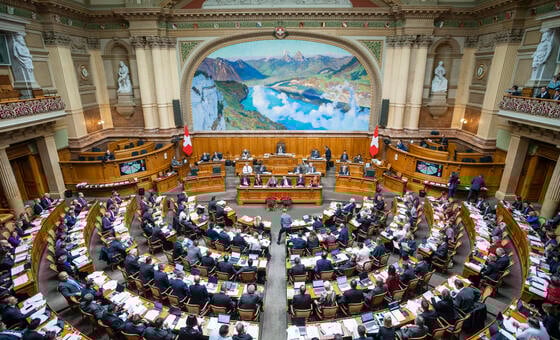
The 154th IPU Assembly will take place in Geneva, Switzerland, on 10–14 May 2026.
*****
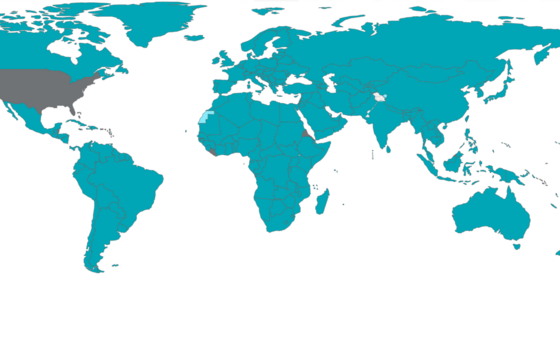
The IPU is the global organization of national parliaments. It was founded in 1889 as the first multilateral political organization in the world, encouraging cooperation and dialogue between all nations. Today, the IPU comprises 184 national Member Parliaments and 15 regional parliamentary bodies. It promotes peace, democracy and sustainable development. It helps parliaments become stronger, younger, greener and more gender-balanced. It also defends the human rights of parliamentarians through a dedicated committee made up of MPs from around the world.
For more information about the IPU, contact press ipu [dot] org (press[at]ipu[dot]org)