
The risks that society accepts – and the boundaries that AI must respect – must be decided democratically.
Signatories:
Dr. Tulia Ackson, President of the Inter-Parliamentary Union (IPU), Member of the National Assembly, United Republic of Tanzania
Ms. Anda Filip, IPU Secretary General
Mr. Hasni Mohammad, President of the IPU Standing Committee on Peace and International Security, Member of the House of Representatives, Malaysia
Ms. Deborah O’Neill, Acting President of the IPU Standing Committee on Democracy and Human Rights, Member of the Senate, Australia
Ms. Valentina Centeno, President of the IPU Standing Committee on United Nations Affairs, Member of the National Assembly, Ecuador
Lord Alderdice, Member of the House of Lords, United Kingdom
Mr. Rodrigo Goñi Reyes, President of the House of Representatives, Uruguay
As elected representatives, we are used to balancing competing interests and making difficult choices. It is increasingly clear that the current trajectory of AI, and the levels of risk associated with it, do not represent a democratic choice.
Our central role is to legislate on behalf of the people that have elected us. Societal risks cannot be determined by industry alone. Indeed, the leading AI developers – fierce competitors in a race for enormous commercial and strategic advantage – are themselves calling for regulation and restraint. Let’s take them at their word.
Public concern about AI has been rising for months. A study published in June 2026 based on a survey of 18,000 people in 15 countries documented concerns spanning malicious use, cybercrime, deepfakes and misinformation, job losses, privacy violations and loss of control. Even before the latest calls for restraint, 56% of those surveyed said that they supported the principle of pausing AI development. July 2026 saw 142 protests in the United States alone against the construction of new data centres to power the AI revolution.
We must be attentive to these signals. They do not necessarily indicate opposition to AI itself, but they most definitely point to public concern about the speed and direction of AI development. With social media, we have seen what happens when a technology becomes embedded across society before its wider consequences are understood. With AI, people see extraordinary change being driven by powerful private interests, with unknown consequences for energy, jobs, information and privacy.
They also see its growing role in cybersecurity, defence and warfare, with profound implications for national and international security, and compliance with international humanitarian law. This is particularly important given AI’s use for both civilian and military applications and its increased weaponization. Rightly, they want to know who is in control, who benefits and who will be held accountable if things go wrong. Ultimately, the question raised by recent events is: who gets to decide on the trajectory of AI development and the rules around its use?
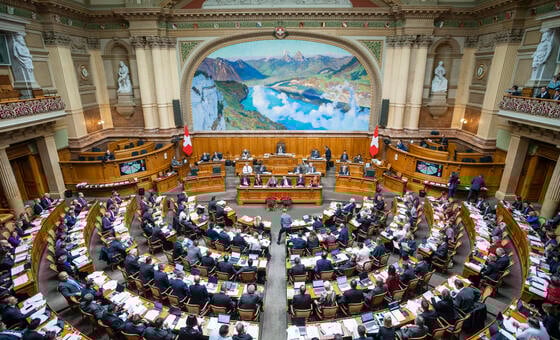
Democratic institutions exist precisely to make this kind of choice. The parliaments that we represent have a long history of setting limits on powerful actors through legislation, ongoing oversight of government and the private sector, and by engaging with the public. Controls on AI do not mean a choice of safety over innovation. Societies have repeatedly decided that technology must operate within boundaries to protect the public. Aircraft must meet safety standards. Pharmaceuticals must be tested before reaching patients. Those requirements did not stop progress; they made the products safer and more trusted. If advanced AI could affect fundamental rights, critical infrastructure, the security of people and States, international peace and, in the most extreme scenarios, the survival of humankind, then decisions about acceptable levels of risk must be made democratically. Clear boundaries, established in law, will enable progress rather than prevent it.
And yet, while a consensus is emerging on the need for urgent action, the uncomfortable truth is that our institutions have not kept pace. Democratic processes are designed for deliberation, while technological change can happen rapidly over weeks or months. However, this deliberation is essential, as the choices being made about AI are not simply technical ones, they are also profoundly ethical and political. They concern what risks society is willing to accept, which rights must be protected and where power should sit. There has to be an institutional space in which experts, industry and civil society can be heard, and in which public debate can take place about what risks are acceptable and where limits should be drawn. The role of parliaments historically has been to weigh these arguments and then take decisions in the wider public interest. Democracy takes time.
That is why the idea of pacing the AI frontier is an idea whose time has come. We agree with the industry leaders: let us slow the frenetic pace of frontier AI developments. In practice, the decision to slow down depends on those countries that have the technological capacities and financial resources to push the AI frontier. However, there are actions that every country can, and must, take.
Across jurisdictions, democratic institutions should engage the public in discussion about the risks and opportunities of AI. Public engagement and awareness will also be essential to build resilience in the face of the changes AI will bring. Existing laws should be tested against emerging AI capabilities, particularly in areas such as cybersecurity, critical infrastructure, privacy, discrimination, public safety, defence and international security. Where specialist AI bodies are established, they need a democratic mandate and the powers, expertise and resources to assess the full spectrum of risks and to share information on serious incidents across borders. National action cannot manage the most serious risks alone, but it can build critical consensus around safety and security standards, incident reporting, and red lines that AI capabilities must not cross.
We understand that the United States and China are strategic competitors, with different approaches to AI development and the associated risks, but that should not prevent them from recognizing where their interests coincide. During the Cold War, rivals that profoundly distrusted one another still built agreements and institutions to manage shared nuclear dangers. AI will require the same political maturity. The rapid integration of AI into military systems could intensify arms races, accelerate decision-making in crises, and increase the risks of miscalculation and unintended escalation, including in the nuclear domain. The priority now is to build the political support needed for common standards and international arrangements that countries are prepared to uphold. Within the Inter-Parliamentary Union, we are committed to providing this platform for parliamentary diplomacy and dialogue on AI.
We write from different regions and political traditions, but on this we are united. We must collectively stop, take stock, and work together within our countries and internationally to put in place the boundaries that AI should never cross. The democratic deficit around AI cannot be allowed to persist. Societies must retain the power to shape its direction, share its benefits and avert its gravest risks.