Impact
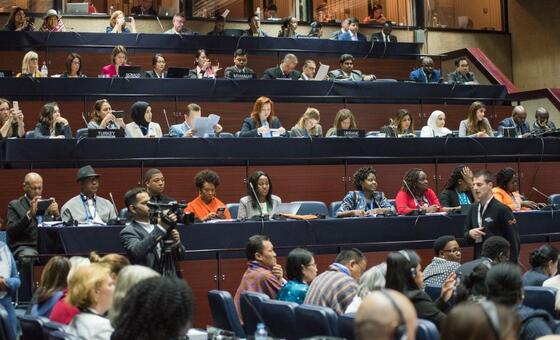
The IPU facilitates parliamentary diplomacy and empowers parliaments and parliamentarians to promote peace, democracy and sustainable development around the world.



This sub-guideline is part of the guideline Training for data literacy and AI literacy. Refer to the main guideline for context and an overview.
AI literacy is the ability to understand, critically evaluate and effectively interact with AI technologies. In a parliamentary context, it encompasses knowledge of the capabilities and limitations of AI, as well as an understanding of its potential impacts on legislative processes and democratic governance. Moreover, AI literacy can help parliaments to foster a culture of responsible innovation.
AI literacy is crucial in parliaments because it enables MPs, senior parliamentary managers and staff to make informed choices about AI adoption, shape appropriate policies and regulations, and effectively oversee AI-driven initiatives.
Having a well-trained workforce that is familiar with at least the basic tenets of AI will help parliament to both leverage the opportunities AI presents for enhancing parliamentary functions and mitigate the potential risks that can occur.
AI literacy training is needed across a range of parliamentary stakeholders. The nature and content of this training will differ depending on their role. A potential outline of training programmes for MPs, decision makers and technical staff is given below.
MPs face a dual challenge: they must understand AI in order to effectively use it and oversee its implementation within parliament, while also grasping its broader implications to inform their legislative work.
A flexible AI literacy programme, tailored to the unique culture of each parliament and the demanding schedules of its MPs, would be a useful way to address this need. A potential structure for such a programme is outlined below:
By the end of this programme, MPs are equipped with the knowledge to confidently engage in AI-related policy discussions, make informed decisions about AI adoption in parliamentary processes, and navigate the increasingly AI-influenced landscape of modern governance. This comprehensive yet accessible approach ensures that MPs can harness the benefits of AI while safeguarding democratic values and protecting the public interest.
Parliamentary decision makers need a solid understanding of AI in order to guide their institutions effectively. They must equip themselves with essential knowledge about AI and its implications for parliamentary work. A possible structure for a training programme for this audience is given below:
Technical staff involved in AI production and procurement require a comprehensive understanding of AI technologies and their parliamentary context and application. A training programme for these staff could cover several key areas:
For parliaments primarily using generative AI, the programme could be adapted to emphasize avoiding inaccuracies, hallucinations and biases in AI outputs. It could also stress the importance of clear guidelines to protect against adversarial prompts and to maintain information security.
By the end of this comprehensive programme, technical staff are well-equipped to lead AI initiatives within their parliaments. They possesses the technical expertise needed to implement AI solutions, the ethical foundation necessary for ensuring responsible use, and the contextual understanding required to align these technologies with parliamentary needs and values.

The Guidelines for AI in parliaments are published by the IPU in collaboration with the Parliamentary Data Science Hub in the IPU’s Centre for Innovation in Parliament. This work is licensed under a Creative Commons Attribution-NonCommercial-ShareAlike 4.0 International licence. It may be freely shared and reused with acknowledgement of the IPU. For more information about the IPU’s work on artificial intelligence, please visit www.ipu.org/AI or contact innovation ipu [dot] org.