Use case ID: 031
Author: Senate of Italy
Date: 12 June 2024
Objective:
Provide users with reliable transcriptions of words spoken during sessions of the Senate bodies, enhancing transparency and accessibility.
Actors:
- Citizens
- Senate users (e.g. senators and parliamentary staff)
Prerequisites:
- Basic knowledge of computer tools
- Access to session videos and audio recordings
Scenario:
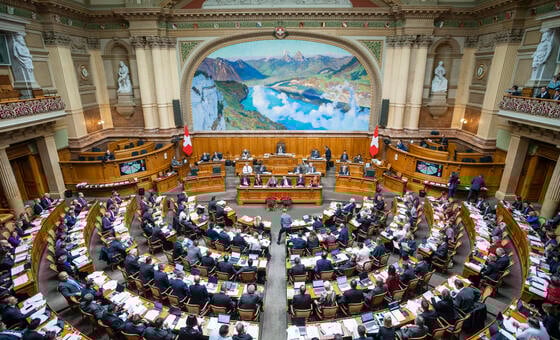
- The user accesses the video of a Senate session.
- The user requests a transcript of the session.
- The AI system processes the audio and generates a transcript.
- The transcript includes identification of speakers and timestamps for each intervention.
- The transcript is reviewed for accuracy and stored in a digital format.
Alternate flows:
- If the AI system cannot identify a speaker, the transcript is flagged for manual review.
- If the audio quality is poor, the system prompts the user to upload a clearer version or provides suggestions for improving audio capture in future sessions.
Expected results:
- Session audio is accurately transcribed in a widely used digital format.
- Transcripts are linked to specific moments in the video for easy reference.
- Speakers are identified, with associated timestamps to enhance clarity.
Potential challenges:
- Transcription errors or ambiguous interpretations owing to audio quality or overlapping speech
- Difficulty in accurately identifying all speakers, especially in large or noisy sessions
- Ensuring the accuracy of timestamps linked to each speaker’s intervention
Data requirements:
- High-quality video and audio recordings of Senate sessions
- Metadata related to session schedules and speaker lists for better speaker identification
Integrations with other systems:
- Parliamentary document management system for storing and retrieving transcripts
- User authentication system to ensure secure access to transcripts
Success metrics:
- Accuracy rate of transcripts compared to manual transcripts
- User satisfaction scores regarding transcript quality and usability
- Reduction in time required to produce transcripts
- Number of successfully identified speakers and accurately timestamped interventions
The Use cases for AI in parliaments collection is published by the IPU’s Centre for Innovation in Parliament as part of the Parliamentary Data Science Hub’s project to create guidelines for AI governance in parliaments. This work is licensed under a Creative Commons Attribution-NonCommercial-ShareAlike 4.0 International licence. It may be freely shared and reused with acknowledgement of the author and the IPU. A use case describes how a system should work. It is used to plan, develop and measure implementation. A use case is not the same as a case study, which is a descriptive text of an actual project’s implementation. Please note that this use case is provided “as is” and neither the IPU nor the author accepts any responsibility for its use. For more information about the IPU’s work on artificial intelligence, please visit www.ipu.org/AI or contact [email protected]. |