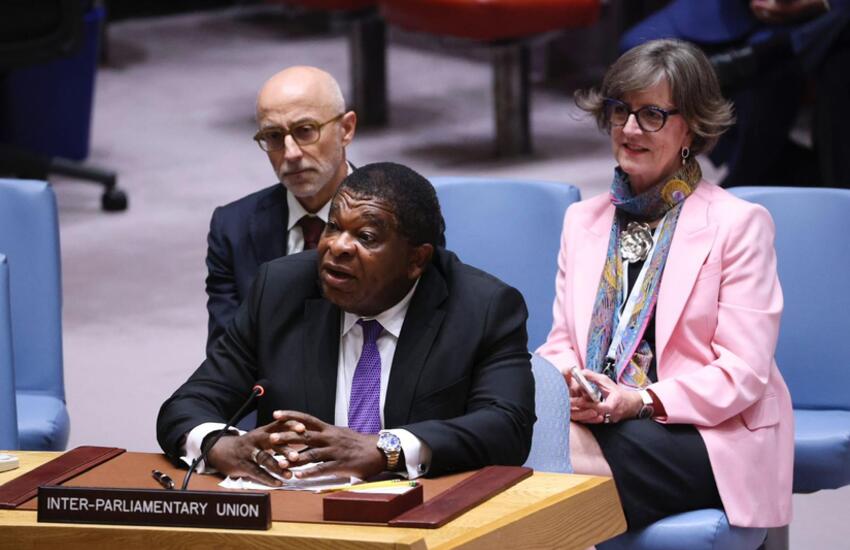
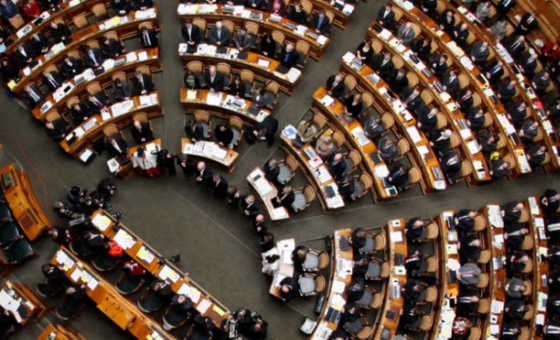
The IPU facilitates parliamentary diplomacy and empowers parliaments and parliamentarians to promote peace, democracy and sustainable development around the world.
We help parliaments build peaceful and inclusive societies, fight terrorism and violent extremism and curb the proliferation of weapons of mass destruction.
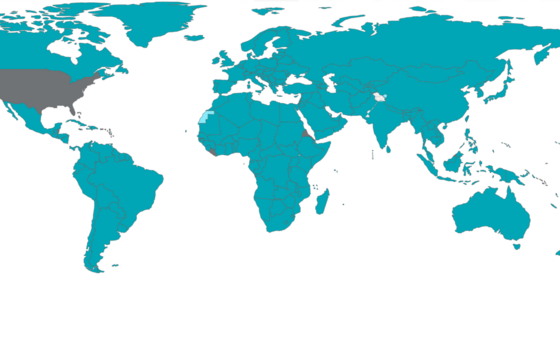
Nearly every country in the world has some form of parliament. Parliamentary systems fall into two categories: bicameral and unicameral. Out of 188 national parliaments in the world, 81 are bicameral (162 chambers) and 107 are unicameral, making a total of 269 chambers of parliament with some 44,000 members of parliament. IPU membership is made up of 183 national parliaments
Throughout the year, the IPU and its Members organize many events for parliamentarians to exchange good practices, acquire the latest information and identify avenues for action.
The IPU has been collecting data on parliaments since its inception in 1889, including information on women’s participation in politics since 1945. In this section, discover the IPU's knowledge bank for and about parliaments.
In a month that marks the one-year anniversary of the 7 October Hamas attacks on Israel and the start of the subsequent war in Gaza, and now the wider region, the IPU is redoubling its diplomatic efforts. Last week, IPU
Background The Inter-Parliamentary Union (IPU) is the global organization of parliaments. It was founded in 1889 as the first multilateral political organization in the world, encouraging cooperation and dialogue between all nations. Today, the IPU comprises 180 national Member Parliaments
Freedom of expression is a cornerstone of any democratic dispensation. Democracy cannot be realized without a free flow of ideas and information, and the possibility for people to gather, to voice and discuss issues, criticize and make demands, and defend
As usual at this time of the year, the United Nations held a series of summits and high-level meetings to mark the opening of the new session of the General Assembly. IPU President Tulia Ackson and Secretary General Martin Chungong
In this issue, we report on how parliaments operating in challenging environments are bringing innovation into the heart of their functioning. The three examples – from the National Assembly of Mauritius, a group of Pacific small island developing States, and the National Assembly of Malawi – all show how a combination of political will and technical capacity can modernize parliament and further open up the institution to the people.
The National Assembly of Malawi has successfully introduced a new digital chamber management system, giving it the capability to hold paperless plenary sessions. This report looks at the institution’s experience of going live with the new system – an intensive period of work with valuable lessons for other parliaments.
Parliaments in Pacific small island developing States face a unique set of circumstances, operating against a backdrop of geographical isolation and enormous distances. For these parliaments, it is often challenging to deploy and utilize IT solutions in order to provide the necessary parliamentary information services to MPs and the public.
The National Assembly of Mauritius, a small island developing State, has just 70 members and about 80 staff. Yet despite its size, it has consistently been a regional leader in innovation. We spoke with Ms. Saseeta Ramsahye-Rakha, who has led the ICT department since 2003, about technology developments in her parliament and how the National Assembly has managed to punch above its weight globally.