Impact
The IPU facilitates parliamentary diplomacy and empowers parliaments and parliamentarians to promote peace, democracy and sustainable development around the world.

“Comparatively, small island developing States have emitted very, very little carbon,” says IPU Secretary General, Martin Chungong. “And yet they often find themselves at the very sharpest end of this terrifying long-term trend.”
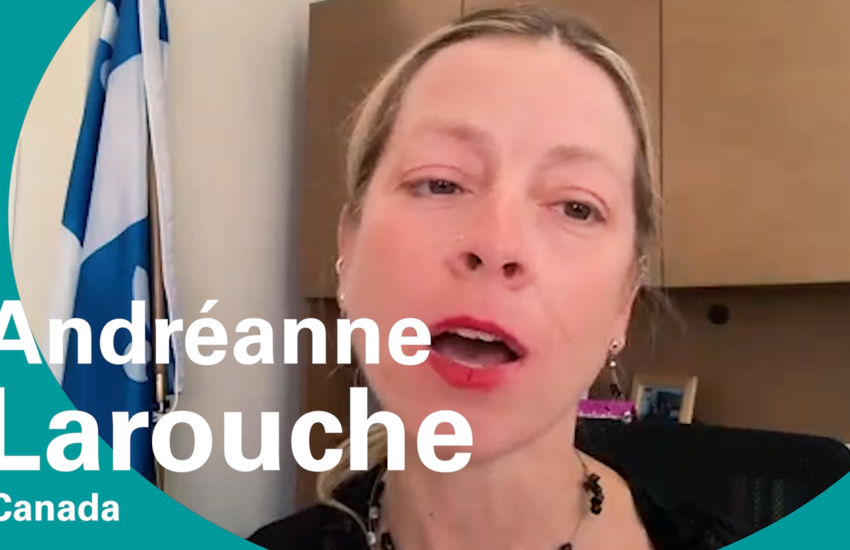
“You can well imagine that when you speak about having been in fossil fuels for well over 100 years, it’s not an easy matter to address,” she said. “We have also looked at policy for a just transition of the workforce, which is aimed at dealing with upskilling and retooling the workforce in keeping with the United Nations principle of leaving no one behind," Penelope Buckles, Minister of Planning and Development
The IPU is keen to enable the exchange of knowledge, information and best practice. In March 2024, working with the Arizona State University (ASU), it sent parliamentarians from four countries to a meeting in the Swiss Alps with nearly 300 leading sustainability experts, entrepreneurs, investors and philanthropists.
Participants at the Villars Institute Summit discussed ways to accelerate the transition to a net-zero economy and address the biodiversity crisis. Arizona State University also co-hosts, a fellowship programme with the Blue Planet Alliance, an organization dedicated to climate change solutions. The fellowship programme brought representatives from island nations, including the Seychelles and Tonga, to Hawaii to learn about its transition to 100% renewable energy.
Some solutions to limit climate death and destruction will require significant investment, however. According to the World Bank, SIDS will need to spend as much as 20% of their GDP each year to protect their infrastructure and invest in coastal defences.
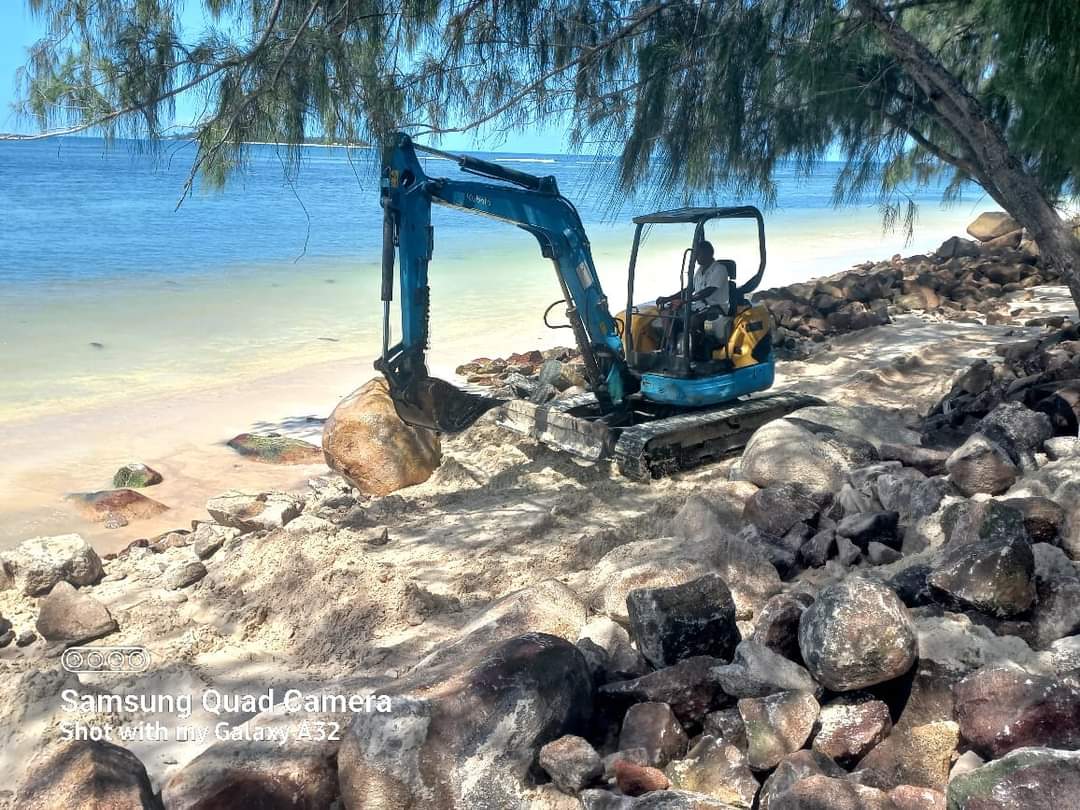
Coastal erosion control in the Seychelles (Copyright Waven William).
In 2009, high-income countries agreed to channel USD 100 billion per year for climate finance into low- and middle-income countries, a target that was eventually met in 2022. As the needs have increased, many countries are now pushing for USD 1 trillion per year.
In July 2022, Barbados Prime Minister Mia Amor Mottley launched the Bridgetown Initiative, calling for urgent and decisive action to reform the international financial architecture.
“If low- and middle-income countries cannot access the finance they need at rates they can afford, then the world will lose its climate battle,” the IPU’s Martin Chungong said.
“That is a loss for all of us and explains why finance will be such a major issue for COP29,” he said, referring to the talks due to take place in Baku, Azerbaijan, between 11 and 22 November 2024.
“If low- and middle-income countries cannot access the finance they need at rates they can afford, then the world will lose its climate battle,” the IPU’s Martin Chungong said. “That is a loss for all of us and explains why finance will be such a major issue for COP29,” he said, referring to the talks due to take place in Baku, Azerbaijan, between 11 and 22 November 2024.
©IFRC: Tonga, April 2020, in the aftermath of Tropical Cyclone Harold.
Find out more about the IPU’s campaign to mobilize parliaments to act on the climate emergency.
Supported by ASU Julie Ann Wrigley Global Futures Laboratory