Impact
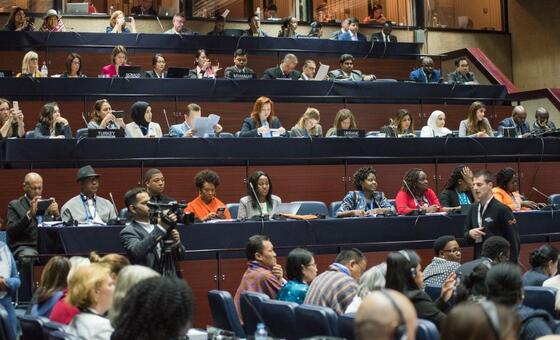
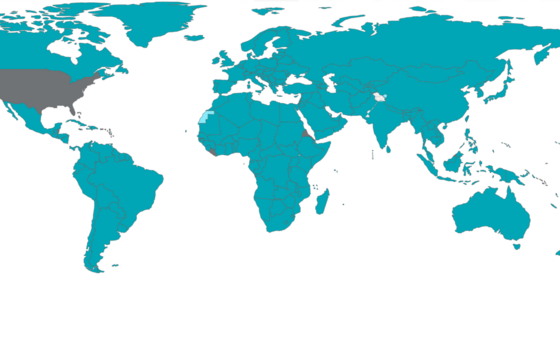
The IPU facilitates parliamentary diplomacy and empowers parliaments and parliamentarians to promote peace, democracy and sustainable development around the world.

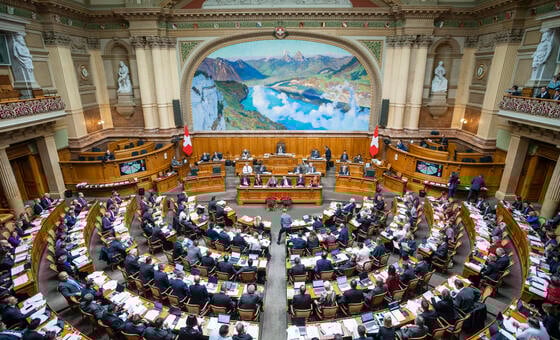


This high-level guideline is intended for parliamentary leadership and senior parliamentary managers, as well as for parliamentary staff and MPs who are interested in gaining a broad understanding of where AI can impact upon the work of parliaments.
This guideline offers an overview of parliamentary functions and suggests potential applications for AI within these functions. It explores how AI can transform various aspects of parliamentary work, from streamlining administrative tasks to enhancing legislative research and improving public engagement. It looks at how parliaments can leverage AI effectively, while emphasizing the importance of upholding democratic principles and values throughout the implementation process.
There are opportunities to implement AI-based systems in many areas of parliament. AI can support administrative, legislative and public engagement processes, as well as parliamentary transparency efforts. While a small number of parliaments are already developing AI-based applications in some of the areas below, their usage in many other areas remains unexplored at this stage, or is only being tested on a pilot or prototype basis.
For examples of potential applications of AI in parliaments, refer to the accompanying use cases, which are intended to help parliaments develop their own proposals.
The first step in the journey is to understand where opportunities lie for a given parliament. It is important to recognize that every parliament is different and will want to seize the opportunities on offer differently, based on its own unique culture, working practices, resource availability and timing constraints. A framework to help identify opportunities and support the adoption of AI can be found in the following guidelines: Project portfolio management and Strategic actions towards AI governance.
AI systems can assist parliamentary staff in conducting comprehensive legislative research and analysis. Machine-learning algorithms can analyse vast volumes of legislative documents, identifying patterns, trends and relevant ideas. Additionally, AI-driven data analysis platforms can facilitate evidence-based policy formulation by synthesizing disparate sources of information and highlighting key findings for decision makers.
Analysing legislative trends
AI systems can analyse large volumes of legislative data (live or archived) in order to identify trends and patterns in proposed and enacted legislation. These insights enable MPs to better understand legislative priorities, areas of interest and areas requiring attention. They can also assist in identifying legislative key performance indicators (KPIs), helping parliamentary committees to determine the impact of legislation once enacted.
Identifying similarities and differences in legislation
Machine-learning algorithms can compare and contrast proposed draft legislation with legislation that already exists. Identifying similarities, disparities and areas of overlap (or contradiction) in this way can help to avoid conflicts between laws and ensure legislative coherence. This comparison also makes it possible to determine if two similar laws could have different impacts, and to identify the reasons for this.
AI systems can be used to assist the legislative work of parliament, supporting tasks such as assessing the impact of bills, and mapping amendments in order to understand their impact on a bill.
Analysing the impact of proposed legislation
AI systems can be used to analyse the potential impact of proposed legislation, helping MPs to make informed decisions about the viability and implications of a bill and to identify any unexpected consequences of the proposal.
Mapping bills and amendments
AI systems can be used to analyse amendments and voting to ensure that they are correctly matched up to bills, and that the changes (and the impact of those changes) are transparent and can be easily understood.
Assisting with post-legislative scrutiny
AI systems can be used to gather comprehensive data and provide a detailed analysis of the impact of legislation. This analysis enables MPs to understand whether a piece of legislation has met its aims and objectives, and to assess whether (and how) it might need revising.
Identifying stakeholders, experts and resources
AI systems can be used to analyse databases and online sources to identify experts, key stakeholders, research reports and other relevant resources related to specific legislative topics, ensuring that MPs’ legislative work is supported by up-to-date and reliable information.
Analysing public submissions
The digital parliament is opening up opportunities for more people to submit their views to parliamentary committees and inquiries. While this is a positive development for democracy, it increases pressure on parliamentary staff, who have to manage and make sense of ever-larger volumes of qualitative data. AI systems can be used to assist with this task, and can be highly effective at identifying themes and grouping submissions.
AI technologies such as natural language processing (NLP) and robotic process automation (RPA) can automate routine administrative tasks such as scheduling meetings, drafting agendas and managing documentation. Offloading these repetitive tasks to AI systems allows more time and resources to be allocated to high-value activities, thus increasing productivity and efficiency.
Scheduling parliamentary meetings and sessions
AI systems can be used to analyse MPs’ schedules, identify available slots, and automatically schedule meetings and parliamentary sessions, taking into account the availability of participants and meeting rooms and, therefore, avoiding coordination issues and inefficiencies.
Managing documents
Parliaments generate and handle large amounts of documents, such as bills, committee reports, communications and session minutes. AI systems can be used to automatically organize, label and archive these documents, facilitating quick search and retrieval when needed.
Automating translation
In multilingual parliaments, automatic document translation can be an invaluable tool. AI systems can be used to automatically translate legislative documents, allowing MPs to access information in their preferred language.
Managing digital communication
MPs receive large volumes of emails and other electronic communications from their constituents and colleagues. AI systems can be used to automatically classify these messages, identifying the most urgent or relevant ones and assigning them to the relevant person for processing.
Generating reports and analysing data
Report generation and data analysis are key supporting tasks in parliaments. AI systems can be used to collect and analyse relevant data, using data visualization and predictive models to generate detailed and easily understandable reports for MPs.
AI systems can play a pivotal role in promoting transparency and accountability within parliaments. Automated transcription and translation tools can generate accurate and timely transcripts of parliamentary debates and discussions, making legislative proceedings more accessible to the public, while AI-powered sentiment analysis tools can gauge public sentiment towards legislative proposals, enabling MPs to better understand and address their constituents’ concerns.
Automating transcription of parliamentary debates
AI systems can be used to automatically transcribe parliamentary debates in real time. These accurate, rapidly produced transcripts can then be made available to the public and to specific users or departments within parliament, allowing citizens and key officials to access parliamentary proceedings without having to consult complete audiovisual recordings. Real-time speech-to-text transcription and translation – a possibility offered by some language models – could also facilitate effective communication in the context of large multinational events.
Visualizing legislative data
AI systems can be used to create interactive visualizations of legislative data, such as an MP’s legislative activity or the progress of a bill through parliament. These visualizations make it easier for the public to understand and evaluate the work of parliament.
Accessing legislative information
AI-powered search tools can allow constituents to easily find information about bills, votes, committees and other aspects of parliamentary work. This promotes transparency by making legislative information more accessible and understandable to all.
Analysing economic data
AI systems can be used to analyse economic data related to parliamentary spending and the financial interests of MPs, helping to identify potential conflicts of interest, and promoting transparency and accountability by ensuring that MPs are subject to public scrutiny.
Producing plain-language summaries
AI systems can be used to summarize bills, reports and transcripts in plain language, making them easier to understand for ordinary citizens. Making such summaries available can enhance public participation in the legislative process and foster communication between MPs and their constituents.
AI-powered chatbots, sentiment analysis tools and multimedia content production systems can enhance public engagement with parliament by facilitating communication between citizens and MPs, offering insights into public opinion and helping to create accessible content.
Helping citizens connect with parliament
AI-powered chatbots and virtual assistants can enhance public engagement by providing fast, personalized responses to enquiries, facilitating communication between MPs and constituents, and disseminating information about parliamentary procedures and initiatives. These AI systems empower constituents to participate actively in the democratic process while relieving parliamentary staff of the burden of managing large volumes of enquiries manually.
Analysing sentiment in public spaces
AI-powered sentiment analysis tools can be used to monitor social media and other online platforms in order to assess public sentiment towards legislative topics, as well as towards MPs and their legislative decisions. These insights can help MPs understand their constituents’ concerns and opinions, allowing them to better reflect these positions in parliament.
Producing multimedia content
AI systems can be used to automatically produce short video summaries that can then be posted on social media. These clips would typically focus on the most important part(s) of a speech or other intervention, with multilingual subtitles provided.

The Guidelines for AI in parliaments are published by the IPU in collaboration with the Parliamentary Data Science Hub in the IPU’s Centre for Innovation in Parliament. This work is licensed under a Creative Commons Attribution-NonCommercial-ShareAlike 4.0 International licence. It may be freely shared and reused with acknowledgement of the IPU. For more information about the IPU’s work on artificial intelligence, please visit www.ipu.org/AI or contact innovation ipu [dot] org.
About the guidelines | Introducing AI applications | Inter-parliamentary cooperation for AI | Strategic actions towards AI governance | Risks and challenges for parliaments | Generic risks and biases | Ethical principles | Risk management | Alignment with national and international AI frameworks and standards | Project portfolio management | Data governance | Systems development | Security management | Training for Data Literacy and AI Literacy | Glossary of terms