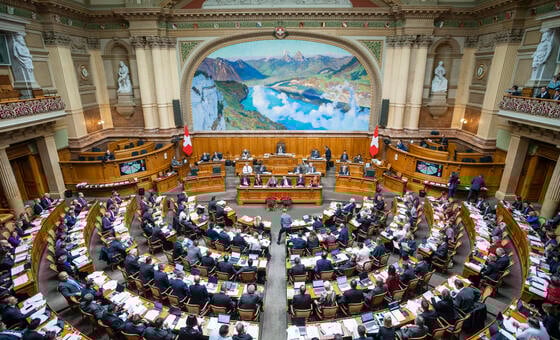
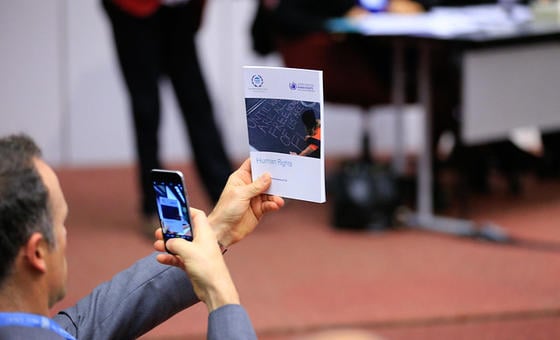
Last week, Geneva hosted the largest concentration of international AI governance activity to date. Three major UN-anchored processes converged in the same week for the first time: the inaugural Global Dialogue on AI Governance, the WSIS Forum 2026 and the AI for Good Global Summit, and the IPU was there to bring a parliamentary perspective into each. What came out of it were consistent messages, built session by session.
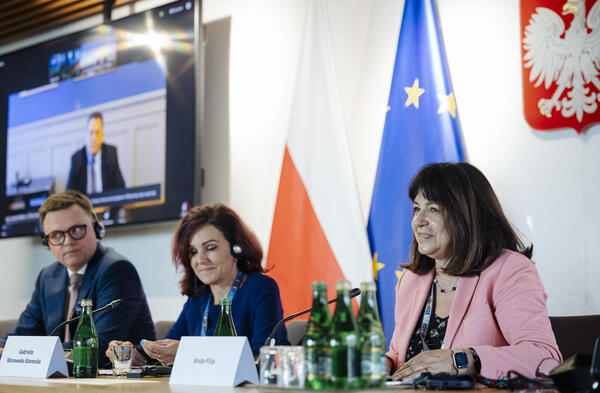
It started at the Global Dialogue on AI Governance, where the IPU co-hosted a side event on parliamentary oversight, aligned with the Dialogue’s Cluster 4 on transparency, accountability and human oversight. One point came through clearly – AI governance is a matter for democratic institutions and cannot be left to those with technical expertise. As panellists framed it: who decides, who benefits, who is harmed, and who is held accountable are questions parliaments ask all the time. And they are not waiting to take action. Jordan has built its AI governance framework through a suite of legal instruments, and tracks progress against its national strategy. Romania has proposed its own parliamentary AI committee. The UK is using its established practices including committees, all-party groups and expert advisory bodies, to keep pace. Across every region, parliaments are taking action and attending MPs stressed that the IPU was there to help connect and learn from each other.
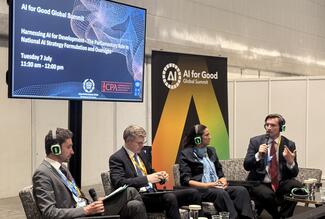
The next day, at the AI for Good Global Summit, the IPU’s panel on the parliamentary role in national AI strategy pushed the conversation towards how MPs can help enable AI to benefit humanity – how they shape, fund and oversee national AI strategies, using AI responsibly to improve health, education and public services. Speakers pointed to real examples already underway, from Jordan’s use of AI to tackle water scarcity to strategies built around measurable public benefit. The one caveat raised was capacity: many parliaments, especially in the Global South, need stronger technical advice and research support to keep pace with AI development, an area where they called on the international system to assist.
The week closed at WSIS Forum 2026, which brought together MPs from across regions to speak about drafting comprehensive AI legislation, keeping children’s rights central to digital policy, and about building capacity of parliaments in every region, not just the well-resourced ones. The thread running through the session was one of institutional responsibility: parliaments translate international commitments into national laws, approve the budgets that fund them, and hold governments and industry accountable for delivery. This is good governance and is not a brake on innovation; it is what allows digital technologies to be deployed responsibly and at scale, and depends on sustained parliamentary participation where the rules of the digital era are discussed.
The meetings set a standard for parliamentary engagement in AI and digital governance – one the IPU will build on to ensure parliaments are a fixture of these conversations and integral to the frameworks being formed.
Find out more about the IPU’s work on AI.