
The proliferation of non-consensual intimate imagery (NCII) has emerged as one of the most pressing policy challenges in the context of artificial intelligence (AI). Advances in generative AI (GenAI) have enabled new forms of image-based sexual abuse, including the creation of fabricated intimate images without consent, as well as manipulated images that depict individuals in degrading, sexualized, or humiliating ways.
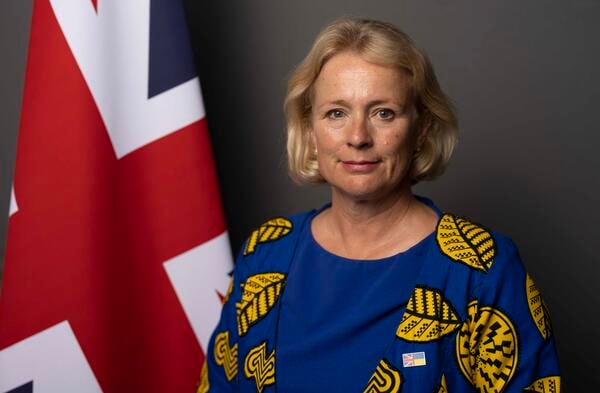
The Inter-Parliamentary Union (IPU) recently published an issue brief on parliamentary action on NCII. One of the most prominent figures on this issue is Baroness Charlotte Owen from the United Kingdom, who has played a leading role in advancing legislation in the House of Lords.
Recognizing the urgency of parliamentary action
Baroness Owen emphasized to the IPU both the rapid growth of NCII and the transformative role of GenAI in facilitating image-based sexual abuse:
“What drew my attention was the scale and speed of the problem. In 2023 and 2024 we saw a rapid proliferation of this abusive content disproportionately targeting women.
With the rise of generative AI anyone can create an intimate image of another person using only a photograph of them. This could be any normal image that could be found on someone’s social media platforms or even taken in the street. That led me to introduce a Private Member's Bill to criminalize both the creation and requesting of intimate images without a person’s consent.”
Defining harm beyond traditional categories
One of the key legislative challenges is defining NCII in a manner that captures evolving forms of abuse. Baroness Owen highlighted the importance of being able to legislate at pace in order to protect victims from rapidly evolving forms of abuse:
“We have seen images degraded in ways that do not fall within the scope of our law but cause huge distress to the victims. We recently legislated to tackle semen-defaced images to ensure that victims have legal recourse against this appalling form of abuse.”
A comprehensive approach to criminalization
Conventional legal frameworks addressing image-based sexual violence have often focused primarily on the distribution or dissemination of intimate material. However, AI-generated NCII introduces new forms of abuse that may fall outside existing legal provisions. Baroness Owen stressed the importance of addressing not only the creation and sharing of NCII, but also requesting material from others:
“If the law only targets creation or sharing, there is a risk that people can try to circumvent it by requesting others to produce the material, potentially in jurisdictions with weaker protections. In the UK, the legislation now includes specific provisions covering the non-consensual sharing, creation and requesting of NCII.”
Engaging survivors and other stakeholders
Effective legislation further depends on an understanding of the experiences of survivors and the realities of enforcement. Engagement with a broad range of stakeholders played a vital role throughout the legislative process in the UK. Baroness Owen emphasized the value of the survivor centred approach:
“Survivors, charities, helplines, and advocacy organizations helped identify gaps in the law and provided evidence about the scale of the problem. We were dealing with multiple legislative changes across several bills. It is vital that our law reflects the realities of this abuse.”
Moving beyond criminal law
While criminal law is an essential tool for combating the perpetrators of NCII, parliaments must also address the legal obligations of digital platforms where harmful content is created, requested and distributed. Rapid response procedures, content removal and reporting mechanisms are critical to limiting harm once NCII has been identified.
Baroness Owen stressed that the challenge extended beyond major social media platforms. Smaller websites frequently host AI-generated intimate image abuse and may lack effective moderation mechanisms. Enforcement becomes especially difficult when websites operate in jurisdictions with limited cooperation with foreign authorities.
International standards, particularly on the identification of NCII material, but also collaboration of law enforcement across different jurisdictions is important to meaningfully prevent the international dissemination of NCII, but also to hold providers of generative AI and social media platforms accountable for the lack of preventive measures. In order to achieve this, inter-parliamentary exchange and cooperation is vital.
Towards future-proof NCII legislation
As generative AI continues to evolve, parliamentary oversight will remain essential to assess and refine the effectiveness of legislation addressing NCII. Baroness Owen’s advocacy and the United Kingdom’s legislative response illustrate how parliamentary action and the active involvement of survivors and stakeholders from the very onset can play a key role in increasing political pressure on governments and companies to make online spaces safer for women.
The interview with Baroness Owen was conducted on behalf of the IPU by Alexander Kriebitz on 3 June 2026. We are grateful for her time and contribution. This case study forms part of the IPU’s broader work on AI policy, online gender-based violence and the governance of emerging technologies. For further information, please contact ai-research ipu [dot] org (ai-research[at]ipu[dot]org).
Find out more about the IPU's AI work.
Links and Useful Sources:
- Julie Posetti et al., Tipping point: The chilling escalation of online violence against women in the public sphere (UnWomen, 2025)
- IPU, CPS and AIPA, Sexism, harassment and violence against women in parliaments in the Asia-Pacific region (2025)
- United Kingdom, The Online Safety Act 2023 – Government guidance and implementation resources (accessed: 1 July 2026)
The views and opinions expressed by parliamentarians on IPU platforms are their own and do not necessarily reflect the IPU’s position.