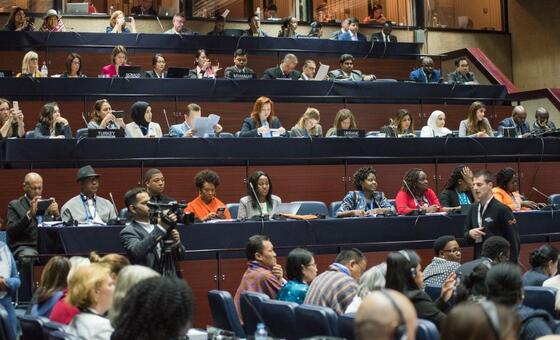
The IPU facilitates parliamentary diplomacy and empowers parliaments and parliamentarians to promote peace, democracy and sustainable development around the world.
We help parliaments build peaceful and inclusive societies, fight terrorism and violent extremism and curb the proliferation of weapons of mass destruction.
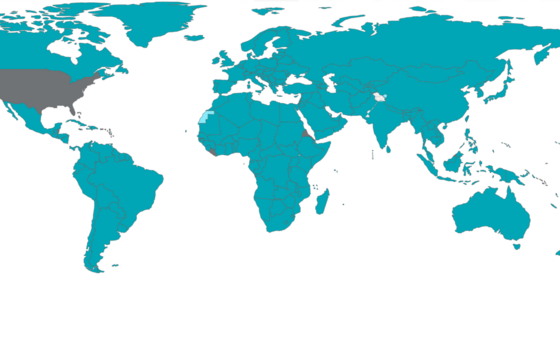
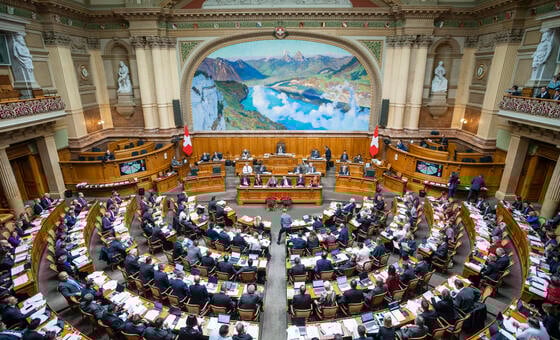
Nearly every country in the world has some form of parliament. Parliamentary systems fall into two categories: bicameral and unicameral. Out of 188 national parliaments in the world, 81 are bicameral (162 chambers) and 107 are unicameral, making a total of 269 chambers of parliament with some 44,000 members of parliament. IPU membership is made up of 183 national parliaments
Throughout the year, the IPU and its Members organize many events for parliamentarians to exchange good practices, acquire the latest information and identify avenues for action.
The IPU has been collecting data on parliaments since its inception in 1889, including information on women’s participation in politics since 1945. In this section, discover the IPU's knowledge bank for and about parliaments.
The Council of Representatives of Bahrain has achieved ISO/IEC 42001:2023 certification, becoming one of the first legislative bodies to earn formal recognition for its AI management systems – a landmark in responsible parliamentary governance aligned with democratic values.
In Indonesia, the House of Representatives has taken a deliberate four-phase path to digital transformation, building governance and data foundations before deploying AI – a model for parliaments that treat institutional readiness as fundamental to responsible technology adoption.
In Switzerland, the Parliamentary Library is piloting AI-powered topic indexing and retrieval, embedding democratic trust at every design stage. The initiative demonstrates how parliaments can improve efficiency while preserving transparency, human oversight and institutional integrity.
Applying the IPU’s Maturity Framework for AI in Parliaments, the Senate of Spain discovered that impressive technical achievements could conceal gaps in governance and democratic impact, offering practical lessons for parliaments at every stage of their AI journey.
The Inter-Parliamentary Union (IPU), with its 137 years of history and its status as the oldest international political organization, has, over time, built up an exceptionally rich archival collection. Its archives contain documents, images and various materials covering the period
The Inter-Parliamentary Union (IPU) will elect its ninth Secretary General at the 152nd IPU Assembly, which will be held in Istanbul, Türkiye from 15 to 19 April 2026. The Secretary General serves as the Chief Executive of the Organization, overseeing
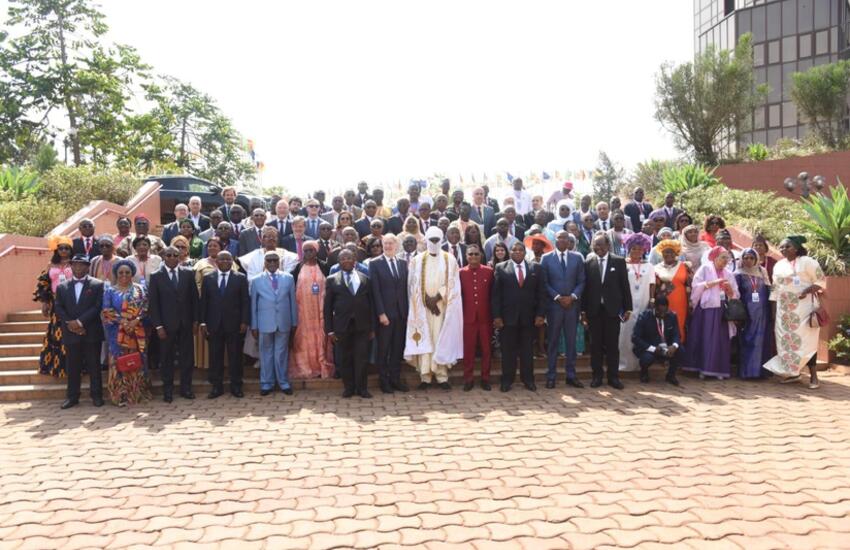
Yaoundé, Cameroon, 27 March 2026 The Inter-Parliamentary Union has concluded its Parliamentary Conference on the World Trade Organization (WTO) which took place at the Senate of Cameroon, on the eve of the WTO’s 14th Ministerial Conference (MC14). The Parliamentary Conference
Women constitute about 52% of Bhutan’s population, yet they remain significantly underrepresented in its Parliament. While Bhutan’s Constitution is grounded in the principle of equity, and progress has been made in women’s participation in local government and public services, their
As part of the IPU series ‘A Conversation With...’, we interview parliamentarians and experts from all over the world to find out who they represent and what motivates them. In this edition, we speak to Nicolae Ștefănuță, a member of